

Daily Dose Of Jazz…
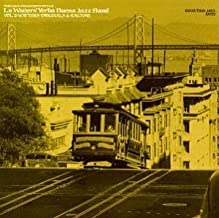
Lucius Carl Watters was born on December 19, 1911 in Santa Cruz, California and raised in Rio Vista, California. At St. Joseph’s military academy he belonged to the drum and bugle corps. In 1925, he moved with his family to San Francisco, California where he started a jazz band. Teaching himself how to arrange music, he found work playing trumpet on a cruise ship. He studied music at the University of San Francisco with help from a scholarship, but he dropped out of school to pursue a career.
During the Thirties, he went on tour across America with the Carol Lofner Big Band. While in New Orleans, Louisiana he became interested in traditional jazz. Back in California, he assembled jam sessions with Bill Dart, Clancy Hayes, Bob Helm, Dick Lammi, Turk Murphy, and Wally Rose. In 1938, he formed a band that included Hayes, Helm, Squire Gersh, Bob Scobey, and Russell Bennett. The band found steady work at Sweet’s Ballroom in Oakland, California and slipped in pieces of traditional New Orleans jazz into the repertoire until Watters was fired.
1939 saw Lu established the Yerba Buena Jazz Band to revive the New Orleans jazz style of King Oliver. He brought in pianist Forrest Browne, who taught the band music by Jelly Roll Morton. He wrote music and arrangements to add to the traditional repertoire. World War II interrupted their performing and he joined the Navy. After the war they reunited and started playing at different clubs and backing visiting musicians Kid Ory, James P. Johnson, and Mutt Carey.
In 1950 the band broke up and Watters left music. He became a carpenter, cook, and a student of geology. Coming out of retirement in 1963 he performed with Murphy at an anti-nuclear protest in California to prevent a nuclear plant from being constructed at Bodega Bay. He recorded an album for Fantasy with Rose, Helm, Bob Mielke, and Barbara Dane. It included the title track and another song named for the San Andreas Fault, which was consistent with his interest in geology.
Trumpeter and bandleader Lu Watters, who had a mineral from California named wattersite in his honor, passed away on November 5, 1989 in Santa Rosa, California at age 77.

More Posts: bandleader,history,instrumental,jazz,music,trumpet
Daily Dose Of Jazz…
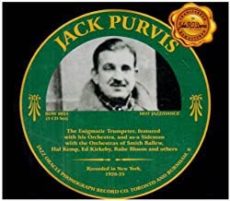
John “Jack” Purvis was born in Kokomo, Indiana on December 11, 1906 and became uncontrollable after his mother’s death in 1912. This resulted in being sent to a reform school, but while there, he discovered that he had an uncanny musical ability, and soon became proficient enough to play both the trombone and trumpet professionally. Leaving the reformatory he continued his high school education, while playing paying gigs on the side. One of the earliest jobs he had as a musician was with a band led by the Royal Canadian Mounted Police. Not long afterward, he worked with the dance band of Hal Denman.
After high school he worked in Indiana for a time then went to Lexington, Kentucky where he played with the Original Kentucky NightHawks. Around this time he learned to fly planes. In 1926 he was with Bud Rice and toured New England. The remainder of 1926 and the beginning of 1927 was with Whitey Kaufman’s Original Pennsylvanians. For a short time he played trumpet with Arnold Johnson’s orchestra, and by July 1928 he traveled to France with George Carhart’s band. A brush with the law forced him to return to New York City in 1928.
From 1929 on he joined Hal Kemp’s band and recorded with Kemp, Smith Ballew, Ted Wallace, Rube Bloom, the California Ramblers, and Roy Wilson’s Georgia Crackers. He led a couple of racially mixed recording sessions including the likes of J.C. Higginbotham, and Adrian Rollini. He worked with the Dorsey Brothers, Fletcher Henderson, Fred Waring, Charlie Barnet. the New Orleans Symphony Orchestra.
Moving to Los Angeles, California he found success with radio broadcasting, worked with the George Stoll Orchestra as a writer, and arranged for Warner Bros. Studios. He composed Legends of Haiti for a one hundred and ten piece orchestra.
Arrested in Texas in 1937, he spent a total of nine years in prison for robbery and breaking parole. After his final release he worked at non-musical careers which included working as a chef, aviator, carpenter, radio repairman and a mercenary. One of the earliest trumpeters to incorporate the innovations pioneered by Louis Armstrong in the late 1920s.
His mental stability was always in question, having attempted suicide on several occasions. Trumpeter Jack Purvis, who played trombone, harp, andcomposed Dismal Dan and Down Georgia Way, passed away on March 30, 1962.
More Posts: arranger,harp,history,instrumental,jazz,music,trombone,trumpet
Daily Dose Of Jazz…
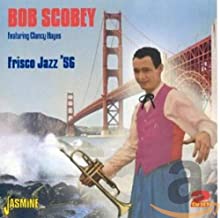
Robert Alexander Scobey Jr. was born on December 9, 1916 in Tucumcari, New Mexico and began his career playing in dance orchestras and nightclubs in the 1930s. By 1938 he was working as second trumpeter for Lu Watters in the Yerba Buena Jazz Band. By 1949, he was leading his own band under the name Bob Scobey’s Frisco Band.
In the Fifties the group continued to play a three-year residency at the Victor & Roxie’s, growing their popularity. Clancy Hayes joined the band to sing, play banjo and contributed his own compositions such as Huggin’ and a Chalkin’. The collaboration recorded over two hundred tracks until he left in 1959 to follow a solo career.
The Frisco Band broadcasted in 1952 and 1953 on Rusty Draper’s television show. In 1953, Louis Armstrong sang with them at the Pasadena Civic Auditorium. From 1954-57, blues singer Lizzie Miles recorded and toured with the band.
In 1955, Scobey and his band played dates at San Quentin Prison and at the Rancho Grande in Lafayette, California. Two years later he recorded for Verve Records and RCA Victor, and on the latter Bing with a Beat recorded with Bing Crosby in 1957. From early in 1956, he toured colleges and universities and, in 1958, he recorded many of the student favorites and released the album College Classics.
While touring in 1960, he was reportedly drinking half and half or heavy cream to ease the pain in his stomach. Trumpeter Bob Scobey passed away from cancer on June 12, 1963 in Montreal, Quebec, Canada. His wife Jan posthumously produced a biography titled He Rambled!.
More Posts: bandleader,history,instrumental,jazz,music,trumpet
Daily Dose Of Jazz…
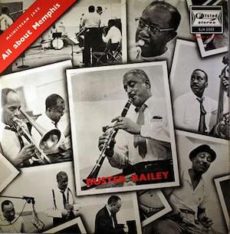
Herman Autrey was born into a musical family on December 4, 1904 in Evergreen, Alabama. He played alto horn before taking up trumpet as a teenager and performed locally in Pittsburgh, Pennsylvania and Florida. After Florida, he went on to work in Washington, DC, Philadelphia, Pennsylvania and New York City, where he played with Charlie Johnson in 1933.
He became well known through Fats Waller, who hired him in 1934 after signing a contract with Victor Records. He played with the drummer Harry Dial, guitarist Al Casey, and reedist Gene Sedric. Autrey went on to record extensively with Waller, Fletcher Henderson, and Claude Hopkins.
Into the 1940s Herman worked as a sideman with Stuff Smith, Sammy Price, and Una Mae Carlisle and his ensembles sometimes included pianist Herbie Nichols. By the early 1950s he was hurt in a car crash, sidelining his career for a year. He played with Saints & Sinners in the 1960s, including on their 1968/69 tours of Europe. In 1969, he played with Buzzy Drootin’s Jazz Family, which included Benny Morton, Herb Hall, pianist Sonny Drootin, and bassist Eddie Gibbs.
In the Seventies, he began to lose his playing capacity and spent more time as a vocalist. Trumpeter Herman Autrey passed away on June 14, 1980 in New York, at the age of 75.
More Posts: alto horn,history,instrumental,jazz,music,trumpet,vocal
Daily Dose Of Jazz…
Jolyon Hunter was born on December 1, 1926 in Ealing, London, England and moved with his actor parents to America in 1935. He studied the French horn at two military schools before switching to trumpet. By 1943 he returned home to Britain and attended the Royal College of Music before joining the war effort in the British Army.
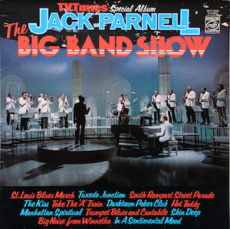
In 1950 Jo left Army service and joined the Kenny Graham Afro Cubists, working with them off and on until 1957. Departing the group, he then worked for a short time with Roy Fox, followed by a five year residence with the Jack Parnell Big Band. He went on to play with Oscar Rabin, replacing Jimmy Deuchar.
Moving to Brighton, he worked with local bands and was an active freelancer on both trumpet and piano. In his later years he worked on cruise ships and played harmonica. Trumpeter and pianist Jo Hunter, who also played pianist and harmonica, passed away on August 14, 2016 at the age of 89.
More Posts: harmonica,history,instrumental,jazz,music,piano,trumpet