

Daily Dose Of Jazz…
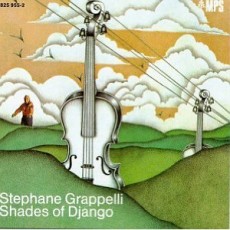
Stéphane Grappelli was born on January 26, 1908 in Paris, France. Losing both his parents he was accepted into Isadora Duncan’s dance school where he discovered his love for French impressionist music. His musical career began playing violin at age 12, attended the Conservatoire de Paris studying music theory and made his living busking on the streets of Paris and Montmartre.
While at the conservatory he worked as a silent film pianist and also playing the saxophone and accordion. Grappelli eventually gained fame in Paris as a violin virtuoso but piano was his other love. His early fame came playing with the Quintette du Hot Club de France with Django Reinhardt though the band disbanded in 1939 due to World War II. In 1940, a little known jazz pianist by the name of George Shearing made his debut as a sideman in Grappelli’s band.
After the war Stephane appeared on hundreds of recordings including sessions with Duke Ellington, Oscar Peterson, Michel Petrucciani, Claude Bolling, Jean-Luc Ponty, Stuff Smith, Toots Thielemans, Gary Burton, Joe Pass, Andre Previn and many, many others.
During the 1960s he played for cocktail hour at the Paris Hilton, recorded the title track of Pink Floyd’s “Wish You Were Here”, made a cameo appearance in “King of the Gypsies”, received the Grammy Lifetime Achievement Award in 1997 and was inducted into the Down Beat Jazz Hall of Fame.
Violinist Stephane Grappelli died in Paris after undergoing a hernia operation on December 1, 1997.
More Posts: violin
Daily Dose Of Jazz…
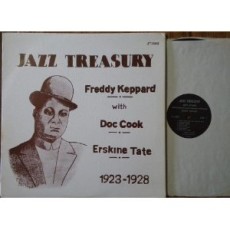
Erskine Tate born on December 19, 1895 in Memphis, Tennessee played violin and studied music at Lane College in Jackson, Tennessee. He moved to Chicago in 1912, studied at the American Conservatory and took his first professional gig at 17. By 1918 he was an early figure in the jazz scene and leading his band the Vendome Orchestra providing music during intermission and for the silent films that were shown in the Vendome Theatre at 31st and State streets.
The band was originally a nine-piece outfit but by the mid 20s had grown to 15. Among the members were Louis Armstrong, Freddie Keppard, Stomp Evans, Buster Bailey, Fats Waller and Teddy Wilson. They recorded during the period for Okeh and Vocalion Record labels.
By 1928 Erskine left the orchestra and led a band at the Metropolitan Theatre and then the Michigan Theatre. He had a long residency at the Cotton Club and continued to lead orchestras and play for dance marathons throughout the 1930s. In 1945 he retired from active performance, opened his own studio, began teaching music and became one of the city’s top instructors throughout the 50s and 60s.
Violinist, composer, conductor and bandleader Erskine Tate passed away on December 17, 1975 in Chicago, Illinois.
More Posts: bandleader,composer,conductor,violin
Daily Dose Of Jazz…
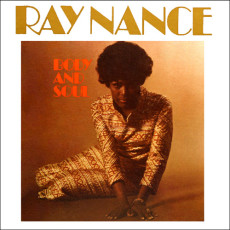
Ray Willis Nance was born on December 10, 1913 in Chicago, Illinois and as a child he studied piano, took violin lessons and was self-taught on trumpet. He led small groups from 1932-1937, then spent periods with the orchestras of Earl Hines and Horace Henderson through to 1940, however, he is best known for his long association with Duke Ellington through most of the 1940s and 1950s, after he was hired to replace Cootie Williams.
Shortly after joining the band, Nance was given the trumpet solo on the first recorded version of “Take The “A” Train” which became the Ellington theme, a major hit and jazz standard. Nance’s “A Train” solo is one of the most copied and admired trumpet solos in jazz history that even Williams upon his return to the some twenty years later would play Nance’s solo almost exactly as the original.
Ray was often featured on violin and was the only violin soloist ever featured in Ellington’s orchestra. He is also one of the well-known vocalists from the Ellington orchestra, having sung arguably the definitive version of “It Don’t Mean A Thing (If It Ain’t Got That Swing). It was Nance’s contribution to take the previously instrumental horn riff into the lead vocal, which constitute the now infamous, “Doo wha, doo wha, doo wha, doo wha, yeah!” The multi-talented trumpeter, violinist, vocalist and dancer earned him the nickname “Floorshow”.
He left the Ellington band in 1963 after having switched to and playing cornet alongside his predecessor Cootie Williams for a year. Over the course of his career he recorded a few albums as a leader and with Earl Hines, Rosemary Clooney and others. Ray Nance passed away on January 28, 1976 in New York City.
Daily Dose Of Jazz…
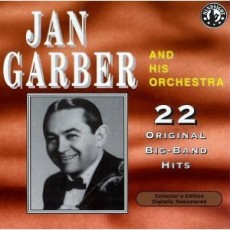
Jan Garber was born Jacob Charles Garber on November 5, 1894 in Indianapolis, Indiana. He had his own band by the time he was 21. He became known as “The Idol of the Airwaves” in his heyday of the 1920s and 1930s, playing jazz in the vein of contemporaries such as Paul Whiteman and Guy Lombardo.
It was during World War II that Garber began playing swing jazz with arranger Gray Rains and vocalist Liz Tilton. However, the recording restrictions in America during the war eventually made his ensemble unfeasible, and he returned to “sweet” music after the war, playing violin with the Philadelphia Symphony Orchestra.
Jan formed the Garber-Davis Orchestra with pianist Milton Davis from 1921–1924. After parting with Davis, he formed his own orchestra, playing both “sweet” and “hot” 1920s dance music. He was hit hard by the Great depression and in the thirties he refashioned his ensemble into a big band and recorded a string of successful records for Victor.
Violinist and bandleader Jan Garber continued to lead ensembles nearly up until the time of his death on October 5, 1977 in Shreveport, Louisiana.
More Posts: bandleader,violin
Daily Dose Of Jazz…
Ray Biondi was born Remo Biondi on July5, 1905 in Cicero, Illinois. As a child, he started with violin and down a road that was not supposed to lead to ditties with suggestive titles. His early training was classical at the American Conservatory of Chicago. Mandolin was a natural double at age 12 and a gateway into the world of string bands. He remained focused mostly on violin but added guitar and then trumpet into his musical arsenal as he began thinking outside the classical idiom.
In 1926 Ray began playing professionally with the Blanche Jaros Orchestra, and the following year started an eight-year period of heavy freelancing in Chicago, enjoying sets with trumpeter Wingy Manone and reedman Bud Freeman and many others. He joined Earl Burtnett’s band as a violin and trumpet double, ending up on the road gigging in Kansas City, Cincinnati, New York and distant destinations.
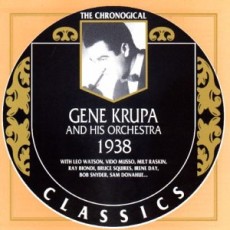
He played violin and trumpet with clarinetist Joe Marsala, often adding guitar when Eddie Condon double-booked himself. This relationship continued until 1938, when Gene Krupa hired Biondi to work solely as a guitarist. He left Krupa a year later and went on his own in a series of small groupings. He opened a short-lived club, rejoined Krupa on the road in the early ‘50s and became a guitar and mandolin session player outside straight jazz.
By 1961 Ray began made a serious shift to teaching all of his instruments except the trumpet, while continuing to perform with groups both large and small, including the Dick Schory orchestra and stride pianist Art Hodes in the latter. Multi-string instrumentalist Ray Biondi passed away on January 28, 1981 in Chicago, Illinois.