

Daily Dose Of Jazz…
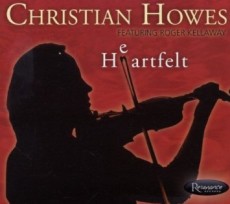
Christian Howes was born on February 21, 1972 in Rocky River, Ohio but grew up in Columbus. From the age of five he studied classical violin and by 16 was performing with the Columbus Symphony Orchestra. He would go on to matriculate through Ohio State University with a degree in philosophy.
When Christian turned twenty he began playing at regular gospel church services and his interest turned to becoming a jazz voice. Over the next few years he became one of the world’s most respected jazz violinists. He worked with Les Paul for eleven years. Since 2001 he has become an in-demand violinist on the New York jazz scene collaborating with Greg Osby, D.D. Jackson, Frank Vignola, Joel Harrison, Dafnis Prieto, Dave Samuels, Spyro Gyra and a 4-year chair in Bill Evans “Soulgrass” band.
Howes has been recognized by Jazz Times as one of three top violinists, Down Beat Critics Poll’s #2 Rising Star and the Minneapolis-St. Paul Star Tribune called him the fiercest violinist since Billy Bang.
As an educator he has taught as an Associate Professor at Beklee College of Music and established the Creative String Workshop and Festival. Teacher, composer, producer and violinist Christian Howes also plays the viola, guitar and bass guitar and continues to perform and record.

Give The Gift Of Knowledge
Daily Dose Of Jazz…
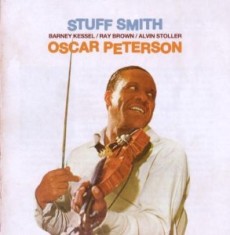
Hezekiah Leroy Gordon Smith was born August 14, 1909 in Portsmouth, Ohio and was better known in the jazz circles as violinist Stuff Smith. He studied violin with his father, cites Louis Armstrong as his primary influence and inspiration to play jazz, and like Armstrong, was a vocalist as well as instrumentalist.
In the 1920s, Smith played in Texas as a member of Alphonse Trent’s band. After moving to New York he had a regular gig with his sextet at the Onyx Club starting in 1935, performed with Coleman Hawkins as well as with younger musicians such as Charlie Parker, Dizzy Gillespie and later Sun Ra.
After signing with Vocalion in 1936, Stuff had a big hit with “I’se A Muggin'” and was billed as Stuff Smith and his Onyx Club Boys. He recorded for Decca in 1937 and Varsity in 1939-1940. He is well known for the song “If You’re A Viper” and is featured in several numbers on the Nat King Cole Trio album, After Midnight.
Part of Smith’s performance at what is considered the first outdoor jazz festival, the 1938 Carnival of Swing on Randall’s Island turned up unexpectedly on audio engineer William Savory’s discs, which were self-recorded off the radio at the time, then long-sequestered.
Smith was critical of the bebop movement, although his own style represented a transition between swing and bebop. He is credited as being the first violinist to use electric amplification techniques on a violin. He contributed to the 1938 tune “It’s Wonderful” often performed by Louis Armstrong and Ella Fitzgerald throughout their careers.
He moved to Copenhagen in 1965, performed actively in Europe, record with Oscar Peterson, Niels-Henning Orsted Pederson, Kenny Drew, Alex Riel, Stephane Grappelli and Jean Luc Ponty among others until his passing away in Munich on September 25, 1967.
Stuff Smith, one of the jazz industry’s preeminent violinists of the swing era is one of the 57 jazz musicians photographed in the 1958 portrait “A Great Day In Harlem”.
Put A Dose In Your Pocket
Daily Dose Of Jazz…
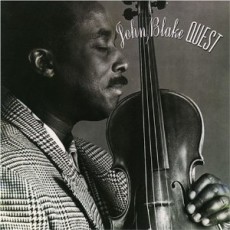
John Blake, Jr. was born in Philadelphia, Pennsylvania on July 3, 1947 and began studying violin in that city’s public school system and at the Settlement Music School. Graduating from West Virginia University, his postgraduate work was at the Institute for Advanced Studies in Montreux, Switzerland prior to receiving a grant to study studied East Indian music.
Classically trained, Blake first gained recognition on early-’70s recordings he made with Archie Shepp and in the mid-70s became established with a global audience during three years recording and touring as a member of Grover Washington, Jr.’s popular “crossover” jazz band. He then spent five years working extensively as a member of various ensembles led by pianist McCoy.
John is a four-time winner of the Down Beat Critics’ Poll Violinist Deserving Wider Recognition category he was also one of the top two jazz violinists in the 49th, 50th, and 51st Down Beat Readers’ Poll. He has performed and/or recorded with are the Duke Ellington Orchestra, Turtle Island String Quartet, Quartet Indigo, the Steve Turre Sextet, the Billy Taylor Trio, Avery Sharpe, Cecil McBee, Jay Hoggard and James Newton.
In addition to being a prominent violinist leading his own quartet, sideman and session player, John is an accomplished composer, arranger and producer as well as an author, educator and lecturer who presents hundreds of workshops annually to musicians at all levels. Violinist John Blake continues to perform, record and tour and lecture.
Give A Gift Of Jazz – Share
Daily Dose Of Jazz…
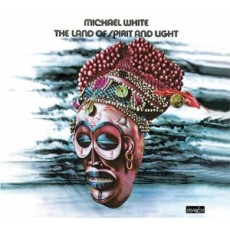
Michael White was born On May 24, 1933 in Houston, Texas and grew up in Oakland, California. He took up the violin when he was nine years old and not becoming known until 1965 when he played with the John Handy Quintet at the Monterey Jazz Festival. He would go on to record three albums with Handy.
White was among the first to play the violin in avant-garde jazz and by the late 1960s became one of the first jazz violinists to play jazz-rock fusion with his band Fourth Way. He has played with musicians such as Sun Ra, Prince Lasha, McCoy Tyner, Eric Dolphy, Wes Montgomery, Kenny Dorham, Joe Henderson, Alice Coltrane, Pharoah Sanders and Richard Davis. In early 2007, The Michael White Quintet’s “Mechanical Man” won in The 6th Annual Independent Music Awards for Best Jazz Song.
Now living in Kobe, Japan, Michael has experienced a long period of obscurity. However, in the mid 1990s he was involved in a reunion of the Handy Quintet, and recorded an album as co-leader with Bill Frisell titled “Motion Picture” and in 2006 White released his ninth album “Voices”.
Violinist Michael White has recorded nine albums as a leader and nine as a sideman with John Coltrane, The Dead Science, Sonny Simmons, The Fourth Way and John Handy. He still records and performs.
Put A Dose In Your Pocket
More Posts: violin
Daily Dose Of Jazz…
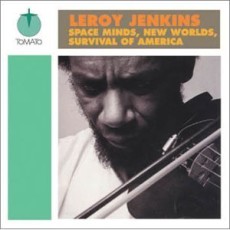
Leroy Jenkins was born on March 11, 1932 in Chicago, Illinois and began playing violin at eight years old, often in church. Another graduate of DuSable High under the tutelage of Walter Dyett, Leroy also played alto saxophone. He went on to graduate from Florida A&M, where he dropped the alto to concentrate on violin.
He returned to Chicago and divided his time from 1965 to 1969 between being involved in the Association for the Advancement of Creative Musicians (AACM) and teaching in the public school system. By the end of the decade he gave up Chicago for Europe and while in Paris, along with Anthony Braxton, Leo Smith and Steve McCall, he founded the creative Construction Company. Jenkins followed this with the Revolutionary Ensemble and formed a trio with Anthony Davis and Andrew Cyrille.
During 1987 he toured Europe as part of Cecil Taylor’s group. He gained recognition for music-theatre works such as “The Mother of Three Sons” and “The Negros Burial Ground”, two collaborations with Ann T. Greene, also “Fresh Faust”, and “The Three Willies”.
Leroy has played with Archie Shepp, Alice Coltrane and Rahsaan Roland Kirk; was a driving force in the free jazz circles and has written numerous pieces for soloists, small groups and large ensembles. Leroy Jenkins, composer, violist and free jazz violinist passed away February 24, 2007.