

The Quarantined Jazz Voyager
The Jazz Voyager is still taking the variants very seriously and wearing his mask and social distancing as conditions present themselves. There is no evidence that stipulates that this is over and recommendations are still in place to wear your mask when in indoor public spaces.
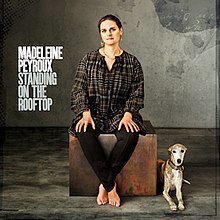
Standing On The Rooftop is the sixth studio album by jazz vocalist Madeleine Peyroux. It was produced by Craig Street and released on June 14, 2011 on the Decca/Universal record label. All songs except 1, 6, 8, & 11 were written by Madeleine Peyroux 2 to 5, 7, 9, 10, 12 to 15.
The fifteen songs were recorded in February 2011 at several studios – Sear Sound in New York City on February 14~17 and Motherbrain Studio in Brooklyn, NY on February 26th, with additional recording at Downtown Music Studios and Wild Arctic in NYC, Vel Studios~ Brooklyn, Phantom Vox~Los Angeles, The Odd Bedroom, Basement & Garage and Sterling Sound. The mixing was done by Kevin Killen (tracks: 5 to 8), Matthew Cullen (tracks: 1, 3, 4, 9 to 12), and Tony Maserati (tracks: 2, 13 to 15)
This was the first album of Peyroux with Decca Records and her first with producer Craig Street, interrupting her longtime collaboration with Larry Klein. Standing on the Rooftop featured originals, along with three covers, Martha My Dear, I Threw It All Away and Love In Vain, plus Marc Ribot’s Lay Your Sleeping Head, My Love. It also paired Peyroux with new songwriting partners.
Track List | 56:36- Martha My Dear (John Lennon, Paul McCartney) ~ 2:32
- The Kind You Can’t Afford (Peyroux, Bill Wyman) ~ 3:59
- Leaving Home Again (Peyroux, Wyman) ~ 3:35
- The Things I’ve Seen Today (Peyroux, Jenny Scheinman) ~ 3:44
- Fickle Dove (Peyroux, Scheinman) ~ 3:28
- Lay Your Sleeping Head, My Love (music by Marc Ribot, lyrics by W. H. Auden) ~ 3:23
- Standing on the Rooftop (David Batteau, Peyroux) ~ 5:46
- I Threw It All Away (Bob Dylan) ~ 3:15
- The Party Oughta Be Comin’ Soon (Peyroux) ~ 5:00
- Superhero (Jonatha Brooke, Peyroux) ~ 3:21
- Love In Vain (Robert Johnson) ~ 3:40
- Don’t Pick a Fight with a Poet (Peyroux, Andy Scott Rosen) ~ 4:28
- Meet Me in Rio (Peyroux) ~ 3:51
- Ophelia (Batteau, Peyroux) ~ 5:12
- The Way of All Things (Peyroux) ~ 4:02
- Madeleine Peyroux ~ vocals
- John Kirby ~ keyboards
- Glen Patscha – keyboards
- Patrick Warren ~ keyboards
- Allen Toussaint ~ piano
- Jenny Scheinman ~ violin
- Christopher Bruce ~ guitar
- Marc Ribot ~ guitar
- Meshell Ndegeocello ~ bass guitar
- Charley Drayton ~ drums
- Mauro Refosco ~ percussion
- Creative Director ~ Pat Barry (3)
- Design Concept [Package Coordination] ~ Rafael Hernandez (2)
- Design [Graphic] ~ Rebecca Meek
- Engineer ~ Matthew Cullen
- Photography By [Cityscape Panorama] ~ Keith Sirchio
- Photography By [Portrait] ~ Mary Ellen Mark

More Posts: adventure,album,club,festival,genius,jazz,museum,music,preserving,restaurant,travel,vocal
Three Wishes
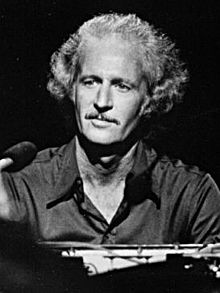
When Nica broached the subject of three wishes with Mose Allison he had but one reply:
- “If that ever happened to me, the first would be that every individual would contain his own destructiveness. And if this wish was granted, I wouldn’t need the others.”
*Excerpt from Three Wishes: An Intimate Look at Jazz Greats ~ Compiled and Photographed by Pannonica de Koenigswarter

More Posts: baroness,history,instrumental,jazz,music,pannonica,piano,songwriter,three,vocal,wishes

GLASS CITY JAZZFEST
Lineup: Each set is 1:15
12:00 pm ~ Brick Bar All-Stars Josh Silver on piano, Ray Parker on bass, Scott Kretzer on drums, with vocalists Kim Buehler, Deborah Gardner, Theresa Harris, and Lori Lefevre
1:35 pm ~ Latin Jazz Players of Lima, Ohio
3:10 pm ~ Larry Fuller Trio
4:45 pm ~ Joey Sommerville, Trumpet
6:20 pm ~ Lindsey Webster, Vocal
7: 50 pm ~ Marcus Johnson, Keyboards
The event includes a preamble of music being scheduled starting with free shows at Toledo Spirits on Aug. 23, and followed by other free ones on Aug. 24 at the Brick Bar, Aug. 25 at Peacock Cafe, and Aug. 26 at Ottawa Park. The only paid event connected to Glass City JazzFest will be a VIP show being scheduled for Aug. 27 at Lucille’s Jazz Lounge
More Posts: adventure,album,club,genius,jazz,museum,music,piano,preserving,restaurant,travel,trumpet,vocal
The Quarantined Jazz Voyager
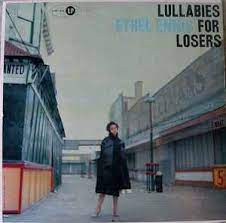
This Jazz Voyager is still being very cautious about masking indoors and social distancing as the new B variants are cropping up around the world and are now hitting the shores of America. In light of these occurrences, today we are going to listen to the 1955 Ethel Ennis album recorded titled Lullabies For Losers that was released the same year on the Jubilee record label.
The cover was designed by Si Leichman, the liner notes were written by Mort Goode, and the photography by Charles Varon.
Track List | 37:32
- Love For Sale (Cole Porter) ~ 3:19
- Dreamer~Dreamer (Irving Caesar, Oskar Strauss) ~ 4:30
- Blue Prelude (Gordon Jenkins, Joe Bishop) ~ 3:00
- Off Shore (Leo Diamond, Michael H. Goldsen) ~ 3:55
- Casually (Alan McCarthy, Richard Freitas) ~ 3:57
- Hey Jacques (Eden Ahnez, Wayne Shanklin) ~ 3:03
- Lullaby For Losers (Robert Stringer) ~ 3:00
- Say It Ain’t So, Joe (Al Frisch, Kathleen G. Twomey, Fred Wise) ~ 2:58
- You Better Go Now (Bickley Reichner / Robert Graham) ~ 3:29
- Blue Willow (Vic Harrington) ~ 3:23
- Bon Voyage (DeSylva-Brown-Henderson) ~ 4:18
- Ethel Ennis ~ Vocal
- Hank Jones ~ Piano
- Eddie Biggs ~ Guitar
- Abie Baker ~ Double Bass
- Kenny Clarke ~ Drums
More Posts: adventure,album,club,festival,genius,jazz,museum,music,preserving,restaurant,travel,vocal
Daily Dose Of Jazz…
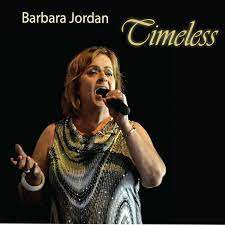
Barbara Jordan was born on July 13, 1951 in Montreal, Canada and when she was in her last year of high school she realized her singing ability. Her high school music teacher, Iwan Edwards, encouraged her to audition for the lead role of Laurie in the musical Oklahoma. Getting the part she received her first lessons in stage presence and delivering a song. She joined the high school choir, and took a vocal music class in her last year of high school.
Joining an acapella choir outside of school, she also spent five years in this choir performing around Montreal and touring Western Canada and competed in the Eisteddfod in Wales. Her professional musical career began as a folk singer prior to becoming a multi-lingual vocalist with several leading disco, pop and country/western bands in and around the Montreal area.
Settling in Toronto, Canada she has acquired a reputation over the years singing traditional and swing. She has continuously performed in clubs around the Toronto area, New York, and New Orleans, as well as at various jazz festivals in Ontario, Montana, St. Petersburg and Sarasota, Florida; Newcastle, England and Paris, France.
Trad jazz, dixieland and swing vocalist Barbara Jordan, whose influences were Mildred Bailey, Peggy Lee and Lee Wiley, continues to lead her quartet and appear regularly.

More Posts: bandleader,history,instrumental,jazz,music,vocal