

Hollywood On 52nd Street
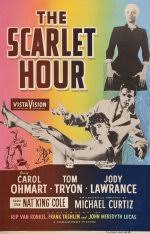
Never Let Me Go is a song composed and written by Jay Livingston and Ray Evans, that was performed by Nat King Cole in the 1956 American crime drama film, The Scarlet Hour. The movie was directed and produced by Michael Curtiz. The film stars Carol Ohmart, Tom Tryon, Jody Lawrance and Elaine Stritch. The screenplay was based on the story “The Kiss Off” by Frank Tashlin.
The Story
E. V. Marshall, known to all as “Marsh,” works for wealthy real-estate businessman Ralph Nevins and is having an affair with Ralph’s unhappy wife, Paulie. Not wanting to struggle Paulie refuses Marsh’s plea to get a divorce and live without her husband’s money.
Overhearing thieves planning a jewelry heist of the home of a doctor named Lynbury, Paulie pleads with Marsh to rob the jewels from the thieves as they leave the doctor’s house. Suspicious of his wife, Nevins follows, catches them in the act, and gets shot by Paulie. However, Marsh thinks that the thieves shot Nevins.
The police investigation reveals that Dr. Lynbury masterminded the burglary of his own home to collect insurance money after having replaced his wife’s jewels with worthless fakes. Police eventually place Lynbury under arrest and Paulie as well, with Marsh’s cooperation.

Daily Dose Of Jazz…
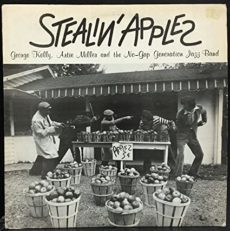
George Kelly was born on July 31, 1915 in Miami, Florida. In the 1930s Panama Francis was a sideman in Kelly’s band. During the Forties, he played in Al Cooper’s band.
Kelly played in Francis’s Savoy Sultans band in the 1970s, and had played of the same name in the 1940s. Leading his own bands he was also a sideman who worked with Tiny Grimes, Rex Stewart, and Cozy Cole.
Tenor saxophonist, vocalist, bandleader, and arranger George Kelly, who recorded seven albums as a leader, passed away at the age of 82 on May 24, 1998.

More Posts: arranger,bandleader,history,instrumental,jazz,music,saxophone,vocal
Daily Dose Of Jazz…
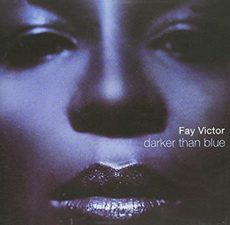
Fay Victor was born on July 26, 1965 in Brooklyn, New York City. After spending her early childhood years in New York, Zambia, and Trinidad & Tobago, her mother settled in Long Island, New York where she spent her teenage years. After her mother’s sudden death, she re-discovered music and singing, and after a three-month stint at a club in Fukui City, Japan with pianist Bertha Hope, she decided to start a career as a jazz singer.
In 1996, Fay settled in Amsterdam, The Netherlands and performed and toured through the country, as well as Spain, Germany, the UK, Sweden, Russia, and India. While living in the Netherlands, Victor branched out into blues, songwriting, and forms of improvising outside the standard jazz canon.
Returning to the States in 2003, Victor has made her home in New York City. She has worked with the likes of Randy Weston, Roswell Rudd, Anthony Braxton, Misha Mengelberg, Vijay Iyer, Tyshawn Sorey, Wadada Leo Smith, Nicole Mitchell, Marc Ribot, Martine Syms, Daniel Carter, William Parker, Darius Jones, Wolter Wierbos, Ab Baars, Joe Morris, Sam Newsome, and Reggie Nicholson.
Victor has coined the term “freesong” to describe her vocal approach. In her jazz repertoire, he has specialized in the work of Thelonious Monk, Ornette Coleman, and Herbie Nichols.
Vocalist, composer, lyricist, and educator Fay Victor, who originally sang in the traditional jazz field, has expanded her repertoire to include blues, opera, free improvising, avant-garde, modern classical music, and occasional acting, continues to perform and record.
More Posts: bandleader,composer,educator,history,instrumental,jazz,lyricist,vocal

The Quarantined Jazz Voyager
The Quarantined Jazz Voyager’s next selection from his library is the 1962 album release Lena Horne titled Lena On The Blue Side. This studio album, released by RCA Victor in stereo and monaural. The recording took place in New York City in the summer of 1961.
The album features mainly blues-inspired songs, a departure for Horne from her usual standards, and recordings from the Great American Songbook. The recordings were arranged and conducted by Marty Gold.
The album was received well by the music press and Billboard Music Week of February 1962 rated it with a four star. Charting in the Billboard 200 album chart at #102. The complete album has only been reissued on CD in Japan in 1991.
Track List | 33:39Paradise ~ 3:40; The Rules Of The Road ~ 3:36; Darn That Dream ~ 2:41; I Wanna Be Loved ~ 3:02; I Hadn’t Anyone Till You ~ 2:45; Someone To Watch Over Me ~ 3:41; It’s A Lonesome Old Town ~ 2:32; I’m Through With Love ~ 2:58; What’ll I Do ~ 1:57; It Might As Well Be Spring ~ 3:30; They Didn’t Believe Me ~ 2:15; and As You Desire Me ~ 3:02.
Personnel- Lena Horne – Vocals
- Andy Ackers – Piano
- George Duvivier – Bass
- Al Caiola – Guitar
- Osie Johnson – Drums
- Bernie Glow, Mel Davis – Trumpet
- Sy Berger, Tony Studd – Trombone
- Strings

More Posts: adventure,club,genius,jazz,museum,music,preserving,restaurant,travel,vocal,voyager
Hollywood On 52nd Street
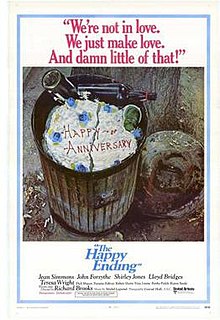
What Are You Doing the Rest of Your Life? is a song with lyrics written by Alan Bergman and Marilyn Bergman and original music written by Michel Legrand for the 1969 film The Happy Ending. The song was nominated for an Academy Award For Best Original Song but lost out to Raindrops Keep Fallin’ on My Head.
Alan Bergman would recall that after Michel Legrand had written eight melodies that were somehow not viable for the film, Marilyn Bergman suggested the opening line “What are you doing the rest of your life?”, and Legrand then completed the song’s melody based on that phrase.
Marilyn Bergman would later comment on the double meaning of the phrase “What are you doing the rest of your life?” within its parent film: as the romantic theme song’s title the question overtly references the marriage proposal Mary Spencer (played by Jean Simmons) received and accepted sixteen years earlier but, as Mary’s present-day angst becomes apparent, “What are you doing the rest of your life?” is recast as a question Mary must ask herself.
What Are You Doing the Rest of Your Life? was sung in The Happy Ending by Michael Dees whose version was included on the film’s soundtrack album. The Story
1953: Through the course of a Colorado autumn and winter, Mary Spencer (Simmons) and Fred Wilson (Forsythe) lead an idyllic existence. Mary drops out of college (with 6 months to go) to marry Fred. Their perfect wedding mirrors the happy endings of the films Mary loves. However, there are no fairytale happy endings and sixteen years later Mary is off to find her happiness, leaving behind her husband and daughter, which she eventually does despite her mother and her husband’s pleas.