

Daily Dose Of Jazz…
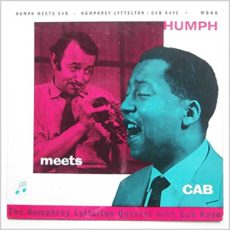
Cab Kaye was born Nii-lante Augustus Kwamlah Quaye on September 3, 1921 on St. Giles High Street in Camden, London to a musical family of Ghanaian ancestry. After his father’s death when he was four months they moved to Portsmouth where he was introduced to the timpani by a soldier who taught him how to count and use the mallets. At fourteen, he began visiting nightclubs where Black musicians were welcome, and where he eventually won first prize in a song contest and a tour with the Billy Cotton band. In 1936, he recorded his first song Shoe Shine Boy under the name Cab Quay.
During 1937 Kaye played drums and percussion with Doug Swallow and his band, the Hal Swain Band and Alan Green’s band. Until 1940 he sang and drummed with the Ivor Kirchin Band, with Steve Race on piano, in the Paramount Dance Hall on Tottenham Court Road. When a guest was refused entrance because of their skin colour, Kaye refused to perform, the incident led to the regular acceptance of black people and the venue grew into a sort of Harlem of London.
He would go on to play with Britain’s first black swing bandleader Ken “Snakehips” Johnson and His Rhythm Swingers, play in several radio broadcasts and joined the British Merchant Navy before his mother and Johnson were killed in bombings during World War II. A move to New York saw him playing in Harlem and Greenwich Village with Roy Eldridge, Sandy Williams, Slam Stewart, Pete Brown, Charlie Parker, Dizzy Gillespie and Willie “The Lion” Smith. Returning to London in 1943 he sang with clarinetist Harry Parry, then formed a band that included 16-year-old saxophonist Ronnie Schatt (Ronnie Scott), Ralph Sharon and Dick Katz on piano. Following this he sang with Vic Lewis, Ted Heath, Tito Burns and Jazz In The Town. Leading his own bands Ronnie Scott, Johnny Dankworth and Denis Rose. Throughout his career he formed several bands that included Mary Lou Williams, Dizzy Reece, Dennis Rose, Denny Coffey, Dave Smallman, Pat Burke and performed with Billy Daniels, Benny Payne Eartha Kitt, and 16 year old Shirley Bassey among numerous others
Opening his own club in Amsterdam he performed with visiting musicians such as Rosa King, Slide Hampton, Aart Gisolf, Dirk-Jan “Bubblin” Toorop, David Mayer, Gerrie van der Klei, Cameron Japp, Max Roach, Oscar Peterson, Pia Beck and others. During this period Cab played all the major festivals until the 1990s when he was diagnosed with mouth floor cancer that resulted in the loss of the ability to speak. On March 13, 2000 vocalist, pianist, guitarist, drummer and composer Cab Kaye, also known as Cab Quay, Cab Quaye and Kwamlah Quaye and who recorded for the Melody Maker label, passed away at the age of 78.

More Posts: composer Instruments Vocals,drums,guitar,piano,vocal
Daily Dose Of Jazz…
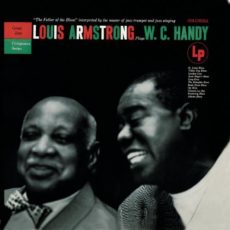
Velma Middleton was born September 1, 1917 in Holdenville, Oklahoma and later moved with her parents to St. Louis, Missouri. She started her career as a chorus girl and dancer, and throughout her career performed acrobatic splits on stage despite being overweight. After working as a solo performer, and singing with Connie McLean’s Orchestra on a tour of South America, she joined Louis Armstrong’s big band in 1942, and appeared with him in soundies.
When Armstrong’s orchestra disbanded in 1947, Velma joined his All-Stars, a smaller group. She was often used for comic relief, such as for duets with Armstrong on That’s My Desire and Baby, It’s Cold Outside. She did occasional features, recorded eight tracks as a solo singer for Dootone Records in 1948 and 1951. Although she was not widely praised for her voice as average but reasonably pleasing and good-humored, Armstrong regarded her as an important and integral part of his show.
While touring with Armstrong in Sierra Leone in 1961 she had a stroke or heart attack in January and passed away the following month on February 10, 1961 in a hospital in Freetown, Sierra Leone. Vocalist Velma Middleton was 43 years old.

More Posts: vocal
Daily Dose Of Jazz…
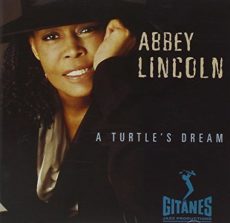
Abbey Lincoln was born Anna Marie Wooldridge on August 6, 1930 in Chicago, Illinois and raised in Calvin Center, Cass County, Michigan. One of many singers influenced by Billie Holiday, her 1956 album debut, Abbey Lincoln’s Affair – A Story of a Girl in Love, was followed by a series of albums for Riverside Records.
1956 saw lincoln’s first foray into acting in which she appeared in The Girl Can’t Help It, interpreting the theme song and working with Benny Carter. She would go on to be featured in movies and television shows like Gentlemen Prefer Blondes, Nothing But a Man, The Name of the Game, Mission: Impossible, Short Walk to Daylight, Marcus Welby, M.D., All in the Family, Mo’ Better Blues and For Love of Ivy, in which she received a Golden Globe nomination. Her song For All We Know is featured in the 1989 film Drugstore Cowboy.
Never straying far from music or the struggle for equality, in 1960 she sang on Max Roach’s landmark civil rights-themed recording, We Insist! Her lyrics often reflected the ideals of the civil rights movement and helped in generating passion for the cause in the minds of her listeners. She explored more philosophical themes during the later years of her songwriting career and remained professionally active until well into her seventies.
During the 1980s, Abbey’s catalogue of creative output was smaller and she released only a few albums. During the 1990s and until her death, however, she fulfilled a 10-album contract with Verve Records. These albums are highly regarded and represent a crowning achievement in Lincoln’s career. Devil’s Got Your Tongue (1992) featured Rodney Kendrick, Grady Tate, J. J. Johnson, Stanley Turrentine, Babatunde Olatunji and The Staple Singers, among others.
Vocalist, activist, songwriter, composer and actress Abbey Lincoln passed away eight days after her 80th birthday on August 14, 2010 in a Manhattan nursing home after suffering deteriorating health ever since undergoing open-heart surgery in 2007. She left a small but vital catalogue to the jazz canon.

More Posts: vocal
Daily Dose Of Jazz…
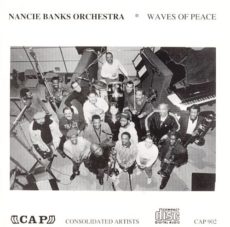
Nancie Banks was born Nancie Manzuk on July 29, 1951 in Morgantown, West Virginia and as a child sang in a church choir with her father. She learned piano from her mother beginning at age four. For a while she lived in Pittsburgh, then relocated to New York City in the Eighties where she studied with Edward Boatner, Barry Harris, and Alberto Socarras.
Performing with both small ensembles and big bands, during the late 1980s she joined Charlie Byrd’s band, met and married bandmate and trombonist Clarence Banks. Among the musicians she worked with were Lionel Hampton, Dexter Gordon, Walter Davis Jr., Bob Cunningham, Duke Jordan, Diane Schuur, George Benson, Woody Shaw, Jon Hendricks, Walter Booker, Bross Townsend, Charlie Persip, Walter Bishop, Jr., and Sadik Hakim.
In 1989 she founded her own big band and recorded four albums between 1992 and 2001. She also worked on film soundtracks, including Mo’ Better Blues and Housesitter, and in Broadway musicals such as Swingin’ On a Star. During the 1990s, she taught jazz at the City University of New York.
Vocalist, bandleader and educator Nancie Banks passed away in New York City in November 2002. Her body was discovered in her home and the precise day she died is unknown.
Sponsored By

Voices From The Community

#preserving genius
More Posts: vocal
Daily Dose Of Jazz…
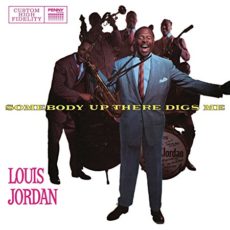
Louis Thomas Jordan was born on July 8, 1908 in Brinkley, Arkansas where his father was a music teacher and bandleader for the Brinkley Brass Band and the Rabbit Foot Minstrels. Losing his mother young, he studied music under his father, starting out on the clarinet, then piano and ultimately landed on the saxophone as his primary instrument. In his youth he played in his father’s bands instead of doing farm work when school closed. During his early career period he played the piano professionally, but alto saxophone became his main instrument. However, he would become even better known as a songwriter, entertainer and vocalist.
He briefly attended and majored in music at Arkansas Baptist College in Little Rock, but after a period with the Rabbit Foot Minstrels and with other local bands like Bob Alexander’s Harmony Kings, he went to Philadelphia and then New York. By 1932, Jordan was performing with the Clarence Williams band, and when he was in Philadelphia he played clarinet in the Charlie Gaines band.
1936 saw him joining the Savoy Ballroom orchestra, led by the drummer Chick Webb. A vital stepping-stone in his career, Louis introduced songs as he began singing lead, and often singing duets with up and comer Ella Fitzgerald. They would later reprise their partnership on several records, by which time both were major stars. In 1938, Webb fired Jordan for trying to persuade Fitzgerald and others to join his new band.
He became famous as one of the leading practitioners, innovators and popularizers of jump blues, a swinging, up-tempo, dance-oriented hybrid of jazz, blues and boogie-woogie. Jordan’s band also pioneered the use of the electronic organ.
Jordan was a talented singer with great comedic flair, and he fronted his own band for more than twenty years. He duetted with some of the biggest solo singing stars of his time, including Bing Crosby, Ella Fitzgerald and Louis Armstrong. An actor and a major black film personality, he appeared in dozens of “soundies” or promotional film clips, made numerous cameos in mainstream features and short films, and starred in two musical feature films made especially for him.
With his dynamic Tympany Five bands, Jordan mapped out the main parameters of the classic R&B, urban blues and early rock-and-roll genres with a series of highly influential 78-rpm discs released by Decca Records. These recordings presaged many of the styles of black popular music of the late 1940s, 1950s and 1960s and exerted a strong influence on many leading performers in these genres.
Known as The King of the Jukebox for his crossover popularity with both black and white audiences of the swing era, Louis was a prolific songwriter who wrote or co-wrote many songs that stayed in the top of the Billboard charts and that were influential classics of 20th-century popular music.
Pioneering alto saxophonist, pianist, clarinetist, singer, actor, songwriter and bandleader Louis Jordan, one of the most successful black recording artists of the 20th century, passed away on February 4, 1975 at age 66 in Los Angeles, California.
Sponsored By

#preserving genius