

Daily Dose Of Jazz…
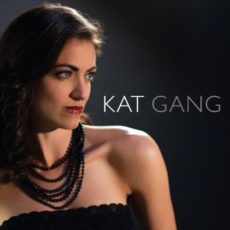
Kat Gang was born on August 9, 1980 in Boston, Massachusetts. She developed a passion for jazz at Berklee School of Music in her hometown and while matriculating received the Berklee College of Music Judges’ Choice Award and the Outstanding Vocalist Award. Honing her skills further at New York University, she earned a Bachelor’s degree while majoring in drama and voice.
A singer/songwriter, Kat takes on the traditional standards but is no stranger to interpretations of Joni Mitchell, Rickie Lee Jones, Arctic Monkeys or Oasis as she works as a duo with jazz guitar or piano. She is also known to work with many of Europe’s leading musicians in big bands, nonets, or as part of an eight piece Ella Fitzgerald tribute.
Currently with her own trio and quartet, vocalist Kat Gang stays in constant demand to perform in theaters, clubs, restaurants and even bateaux on London’s River Thames.

Inspire A Young Mind

More Posts: vocal
Daily Dose Of Jazz…
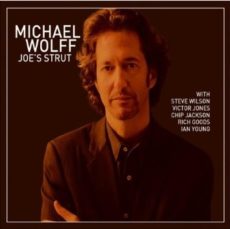
Michael Blieden Wolff was born July 31, 1952 in Victorville, California and raised in New Orleans, Louisiana. At age nine, his family moved to Berkeley, California where he continued his study of classical piano that began at age eight, before playing drums at age 12. While attending Berkeley High School he began playing piano with the University of California Jazz Ensembles. After graduating from high school, Wolff attended the University of California, Berkeley before enrolling at the University of California, Los Angeles.
Leaving college in 1972 Michael started his music career by joining Cal Tjader’s band, followed by Cannonball Adderley’s band three years later. By 1977, he formed the band Answering Service with saxophonist Alex Foster.
Wolff has worked with among others Warren Zevon, The Thad Jones/ Mel Lewis Orchestra, Sonny Rollins, Wayne Shorter, Jean-Luc Ponty, Children On The Corner and Terri Lyne Carrington. He has composed and played original music, and served as host for the Riverside Shakespeare Company production of The Mandrake in New York City. In 1978, singer Nancy Wilson chose Michael as her musical director, and in 1989, after being Wilson’s opening act, when Arsenio Hall was given his own talk show, he was chosen to serve as its bandleader and musical director.
In 1995, he released Jumpstart featuring Christian McBride and Tony Williams and in 1997 the trio released 2AM. Wolff was the leader of the jazz band Impure Thoughts which features Indian tabla player Badal Roy, drummer Mike Clark, percussionist Frank Colón and electric bassist John B. Williams.
He has written music for the films Who’s The Man?, The Tic Code and Made Up, as well as writing for and performing in other films. Michael has co-starred in The Naked Brothers Band on Nickelodeon, and was the co-executive producer and music supervisor, along with his wife, Polly Draper.
As an educator he is on the faculty at The New School For Jazz And Contemporary Music. He has been honored as a Steinway Artist and obtained a Broadcast Music, Inc. award. In between his teaching duties pianist, composer, producer Michael Wolff continues to compose, record and perform with his jazz-funk band Wolff & Clark Expedition, consisting of Wolff and Clark as band leaders, Steve Wilson and Lenny Pickett as saxophonists, and James Genus as the bassist.
Jazz Is Global – Share
Daily Dose Of Jazz…
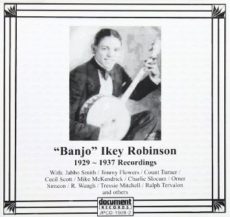
Ikey Robinson also known as Banjo Ikey was born Isaac L. Robinson on July 28, 1904 in Dublin, Virginia. He moved to Chicago, Illinois in 1926, playing and recording with Jelly Roll Morton, Clarence Williams, and Jabbo Smith during 1928-1929.
He went on to put together groups that included Ikey Robinson and his Band with Jabbo Smith, The Hokum Trio, The Pods of Pepper, Windy City Five, and Sloke & Ike.
His jazz style influenced many subsequent players, and his 1929 recording Rock Me Mama is often cited as an early use of the term “rock” as it evolved from black gospel into rock and roll.
Robinson reunited in the 1970s with Jabbo Smith for a global tour and appeared in the 1985 film Louie Bluie, a documentary about fellow musician Howard Armstrong. Having never previously met Armstrong he was initially hesitant to meet him because of their differing musical styles. However, the two got on well and perform together in the documentary. Banjoist and vocalist Ikey Robinson passed away on October 25, 1990.
Inspire A Young Mind
Daily Dose Of Jazz…
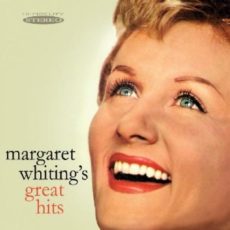
Margaret Eleanor Whiting was born in Detroit, Michigan on July 22, 1924 and her father Richard wrote popular hits such as Hooray for Hollywood, Ain’t We Got Fun? and On the Good Ship Lollipop. In 1929 when she was five years old, her family moved to Los Angeles.
In her childhood, Whiting’s singing ability had already been noticed, and at the age of only seven she sang for singer-lyricist Johnny Mercer, with whom her father had collaborated on Too Marvelous for Words. In 1942, Mercer co-founded Capitol Records and signed her to one of Capitol’s first recording contracts.
In the early years of her career Margaret would work with Freddie Slack and His Orchestra, Billy Butterfield’s Orchestra and Paul Weston and His Orchestra. By 1945 she began to record under her own name with songs like All Through The Day, In Love In Vain, Baby It’s Cold Outside and A Tree In The Meadow. She would work with Jimmy Wakely, Johnny Mercer, Bob Hope and Strange Sounding Names. Through to the mid-1950s she recorded for Capitol, but as hits waned she switched to Dot Records, then Verve Records, returned to Capitol in the early 1960s and finally signing with London Records by 1966. Her final solo albums were made for Audiophile in the Eighties and DRG Records in 1991. Her distinguished conductors and musical arrangers through the years included Buddy Bregman, Frank DeVol, Russell Garcia, Johnny Mandel, Billy May, Marty Paich, Nelson Riddle, Pete Rugolo, and Paul Weston.
Whiting would go on to co-star on the 15-minute radio musical programs The Jack Smith Show and Club Fifteen. She was a vocalist on The Eddie Cantor Show, was in the cast of The Philip Morris Follies of 1946 and The Railroad Hour. She was hostess on the Spotlight Revue and a featured singer on the transcribed Barry Wood Show and was casted as a young Sophie Tucker, in the Lux Radio Theater production No Time For Heartaches.
With her sister Barbara they starred as themselves in the CBS sitcom Those Whiting Girls produced by Desilu Productions, and was a regular over the years on tv variety shows The Big Record, The Bob Hope Show, The Colgate Comedy Hour, The David Frost Show, The Ed Sullivan Show, The George Jessel Show, The Jonathan Winters Show, The Merv Griffin Show, The Mike Douglas Show, The Nat King Cole Show, The Patti Page Show, The Red Skelton Hour, The Steve Allen Show, The Ford Show Starring Tennessee Ernie Ford, and The Tonight Show Starring Johnny Carson, among numerous others.
In the 2000s, Whiting was cast in several documentaries about singers and songwriters of her era, including Judy Garland: By Myself, Fever: The Music of Peggy Lee, Anita O’Day: The Life of a Jazz Singer, Johnny Mercer: The Dream’s on Me, The Andrews Sisters: Queens of the Music Machines and Michael Feinstein’s American Songbook.
Vocalist Margaret Whiting, who made her reputation during the 1940s & 50s, passed away of natural causes on January 10, 2011.
Put A Dose In Your Pocket
More Posts: vocal
Daily Dose Of Jazz…
Seger Ellis was born on July 4, 1904 in Houston, Texas. He began his career as pianist playing live for a local Houston radio station KPRC in the early 1920s. In 1925 he was added to the orchestra of Lloyd Finlay for a “field trip” recording session for Victor Records and was also allowed to cut two piano solos.
The recordings led to Ellis being invited to Victor’s regular recording studio in Camden, New Jersey to cut a number of piano solos, all or most of them compositions of his own. These were among the earliest records Victor made using the new electric microphone and recording equipment, a technique that was yet not perfected which probably explains why only four of the titles were eventually issued. Of these the coupling Prairie Blues and Sentimental Blues became a minor hit.
After his first recording experiences Seger returned to Houston and radio work as well as playing in vaudeville theaters. During this period he started adding singing to his piano playing and was well received by audiences. In 1927 he was invited to New York to make vocal test recordings, his first issued vocal record was Sunday on the Columbia label. This was followed by a string of records for Okeh Records and he chose the best musicians to play with him such as Tommy and Jimmy Dorsey, Joe Venuti, Eddie Lang, Andy Sannella and Louis Armstrong.
His first recording career ended in 1931, however towards the end of the decade he returned with a big band of his own, the Choirs of Brass Orchestra with himself conducting and taking occasional vocals and featuring his wife, Irene Taylor as a vocalist. In 1939 Ellis reorganized and his new band featured the conventional four-man reed section but disbanded in 1941 and enlisted in the Army-Air Force in 1942.
A move back to Texas saw him being less active as a performer and more involved in songwriting. Many of compositions were recorded by Harry James, Gene Krupa, Bing Crosby, Count Basie and the Mills Brothers. Pianist and vocalist Seger Ellis gradually retired and took up residence in Houston where he passed away in a retirement home on September 29, 1995.
Dose A Day-Blues Away