

Requisites
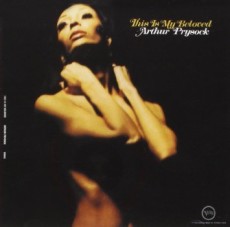
This is My Beloved, recorded by Arthur Prysock, eight years before the author, Walter Benton, death in 1976. His recitation of the poems written in diary form are addressed to Lillian and is set to a beautifully scored background of jazz. The book was first published in 1943 and became one of the bet selling books of poetry, selling over 350,000 copies at that time. This landmark recording is a necessity for every collector who has ever wanted to understand love.
Record Label: Verve
Record Date: December 16,1968 / Los Angeles, California
Producer: Hy Weiss, Pete Spargo
Music Accompaniment Composer: Mort Garson
Liner Notes: Helen Hanff
Playing Time: 37 Minutes
Songs: I Need Your Love, Your Eyes, Your Words, Your Body Makes Eyes At Me, Come Love Me, I Was Very Tired And Lonely, You Did Not Come, I Stood Long Where You Left Me, Each Season, Every Year, Eleven Years, Remembering How We Could Be Warm Together, Sleeping…So Still, So Still, I Shall Wish For You

More Posts: collectible,vocal
Daily Dose Of Jazz…
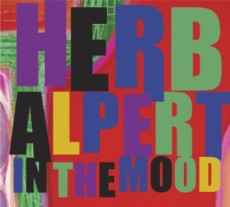
Herbert Alpert was born on March 31, 1935 and raised in the Boyle Heights section of East Los Angeles, California. His family was Jewish, emigrating from Radomyshl, now present day Ukraine and Romania. His father, a talented mandolin player, his mother taught violin, and his older brother a drummer. He began trumpet lessons at the age of eight and played at dances as a teenager. Acquiring an early wire recorder in high school, he experimented on this crude equipment.
Following graduation in 1952, he joined the U.S. Army and frequently performed at military ceremonies. After his service in the Army, Alpert tried his hand at acting, but eventually settled on pursuing a career in music. While attending the University of Southern California he became a member of the USC Trojan Marching Band, and appeared in the un-credited role as “Drummer on Mt. Sinai” in the film The Ten Commandments in 1056. In 1962, he had an un-credited part in a scene in the film Mr. Hobbs Takes A Vacation, playing a solo in a dance band.
In 1957, Alpert teamed up with Rob Weerts, co-wrote a number of Top 20 hits including Baby Talk for Jan & Dean and Wonderful World for Sam Cooke. By 1960 he was signed with RCA Records as a vocalist under the name of Dore Alpert.
In 1962 along with Jerry Moss they founded A&M Records and their very first hit was “The Lonely Bull” adapted from the mariachi bands and the cheers of bullfighting spectators. The title song reached No. 6 on the Billboard Pop Singles chart and became A&M’s first album with the original release number being #101.
By the end of 1964, with top session players he began touring with the Tijuana Brass. Television specials followed by 1967, as well as two albums, Whipped Cream and Other Delights and Going Places. The single “A Taste Of Honey” won a Grammy Award for Record of the Year.
The Brass would go on to perform the title tack to the first movie version of Casino Royale in 1967. His music would be used on The Dating Game, bringing him greater exposure. The band would win six Grammy Awards, fifteen of their albums went gold, fourteen platinum, and in 1966 outsold the Beatles.
Alpert’s only No. 1 single during this period, and the first No. 1 hit for his A&M label, was a solo effort of “This Guy’s In Love With You” by Bacharach/David. In the 1970s, 1980s, and 1990s, Alpert enjoyed a successful solo career. In 1979 he had his biggest instrumental hit titled “Rise”. He would go on to work with Jimmy Jam, Terry Lewis, Janet Jackson and Lisa Keith. He performs with Gato Barbieri, Rita Coolidge, Brian Culbertson, and others. With his wife kani Hall (Sergio Mendes fame), they have released the live album Anything Goes. In 2013, he released a new album, Steppin’ Out which won a Grammy.
Herb and Moss received a Grammy Trustees Award, a Grammy Lifetime Achievement Award, he was awarded the National Medal of Arts by President Obama in 2013, has a star on the Hollywood Walk Of Fame, and received the “El Premio Billboard” for his contributions to Latin music. Trumpeter, pianist, vocalist, composer, arranger, songwriter, record producer of jazz, Latin and pop music continues to perform, record and tour.

Give A Gift Of Jazz – Share
Hollywood On 52nd Street
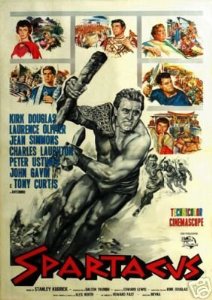
Love Theme From Spartacus, composed by Alex North for the 1960 American epic historical drama film directed by Stanley Kubrick, starred and produced by Kirk Douglas. The supporting cast included Laurene Olivier, John Gavin, Jean Simmons, Charles Laughton, Tony Curtis and Peter Ustinov, who won an Oscar for Best Supporting Actor, one of the four the film received. The film became the biggest moneymaker in Universal Studios’ history, until it w as surpassed by Airport in 1970.
The Story: It was inspired by the life story of the leader of a slave revolt in antiquity, Spartacus, and the events of the Third Servile War. In the 1st century BC, the Roman Republic has slid into corruption, its menial work done by armies of slaves. One of these, a proud and gifted man named Spartacus, is so uncooperative in his servitude that he is sentenced to fight as a gladiator. Spartacus forms a quiet relationship with a serving woman named Varinia, whom he refuses to rape when she is sent to “entertain” him in his cell. Rebellion ensues, the senate war is lost, and Spartacus is ultimately crucified but Varinia shows him his new born son before he dies.
Sponsored By

www.whatissuitetabu.com
Daily Dose Of Jazz…
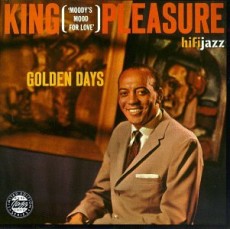
King Pleasure was born Clarence Beeks on March 24, 1922 in Oakdale, Tennessee. He moved to New York City in the mid-1940s and while working as a bartender, he became a fan of bebop music. He first achieved popularity by singing the Eddie Jefferson penned vocalese classic Mood’s Mood For Love, based on a 1949 James Moody saxophone solo to “I’m In The Mood For Love”. On a night in late 1951 at Amateur Night at the Apollo Theater, he won the competition and where Clarence Beeks became King Pleasure that night in Harlem.
Pleasure’s 1952 recording, featured vocalist Blossom Dearie, was his first after signing a contract with Prestige Records and is considered a jazz classic. He and Betty Carter also recorded a famous vocalese version of “Red Top”, a jazz classic penned by Kansas City’s Ben Kynard and recorded by Gene Ammons and others. Other notable recordings include “Parker’s Mood”, the year before Charlie Parker died in 1955, and Ammons’s “Hittin’ The Jug”, retitled as “Swan Blues” in 1962.
He would record with the Modern jazz Quartet, sans Milt Jackson, J.J. Johnson, Kai Winding, Lucky Thompson, with backup vocals by Eddie Jefferson and Jon Hendricks along with The Three Riffs. In Los Angeles in 1960 he was recording with Teddy Edwards and Harold Land. But by this time his popularity was waning and he faded into obscurity. However, his early work influenced Jon Hendricks, Annie Ross, Bob Dorough, Mark Murphy, Al Jarreau, The Manhattan Transfer and others.
Jazz vocalist King Pleasure, an early master of vocalese, where a singer sings words to a famous instrumental solo passed away on March 21, 1982, three days before his 60th birthday.
Give A Gift Of Jazz – Share
More Posts: vocal
Hollywood On 52nd Street
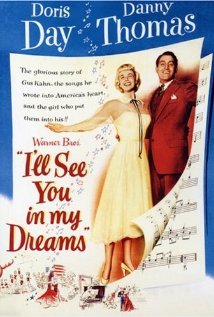
My Buddy was composed by Walter Donaldson with lyrics by Gus Kahn and was published in 1922. It was used in the Gus Kahn film biography “I’ll See You In My Dreams” in 1951 and became a Variety Hit Parade of a Half Century selection. The song also appeared in the non-musical film Buddy in 1997. I’ll See You in My Dreams is a 1951 musical film starring Doris Day and Danny Thomas, directed by Michael Curtiz.
The Story: Gus Kahn (Thomas) is the prolific tunesmith, whose fortunes take an upswing in 1908 when he meets and falls in love with Grace LeBoy (Day). Kahn’s career ascends to spectacular heights via such hits as Pretty Baby, My Buddy, Toot Toot Tootsie and Makin’ Whoopee only to go into eclipse when he loses his savings in the 1929 stock-market crash.
Sponsored By
www.whatissuitetabu.com