

Daily Dose Of Jazz…
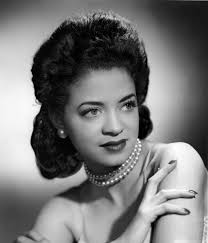
Kay Davis was born Katherine McDonald on December 5, 1920 in Evanston, Illinois. She studied voice and piano at Northwestern University, earning bachelor and master’s degrees.
In 1944 Kay joined Duke Ellington’s orchestra, singing alongside Joya Sherrill and Al Hibbler. She is best known for her wordless vocals in pieces such as “Transblucency” and “On a Turquoise Cloud” but also sang many lyrical compositions and is the only person Ellington ever allowed to reprise Adelaide Hall’s famous wordless vocal on “Creole Love Call”.
Although she never recorded as a solo artist, Davis’ tenure with Ellington’s band coincided with their increasing exposure on film, especially for Universal Pictures. She performed with Billy Strayhorn on the very first performance of his composition “Lush Life” at Carnegie Hall in 1948, though he wrote the song in the Thirties.
Kay toured England with Ellington alongside Ray Nance in 1948 and two years later with the full orchestra throughout Europe. In 1950 vocalist Kay Davis left the Ellington organization, got married and retired to Florida. After a long and full life, the vocalist passed away on January 27, 2012 in Apopka, Florida.

Give A Gift Of Jazz – Share
More Posts: vocal
Daily Dose Of Jazz…
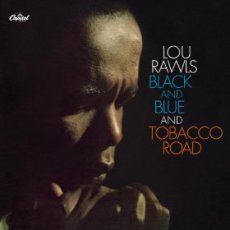
Lou Rawls was born Louis Allen Rawls on December 1, 1933 in Chicago, Illinois. Raised on the South side he began singing in church at age seven, and then started singing with local groups where he met Sam Cooke and Curtis Mayfield.
After graduating from Dunbar Vocational High School he sang briefly with Cooke in the Teenage Kings of Harmony followed by a stint with the Holy Wonders. He replaced Cooke in the Highway QC’s when Cooke went to the Soul Stirrers. He was recruited by the Chosen Gospel Singers, moved to Los Angeles and was subsequently joined the Pilgrim Travelers.
After serving in the Army he returned to the Travelers touring the South with Sam Cooke, was in a serious crash and off the music scene for a year. He returned to perform at the Hollywood Bowl, signed with Capitol Records, released his first jazz album Stormy Monday in 1962 and four years later opened for The Beatles in Cincinnati. His Live album went gold but it wasn’t until Love Is A Hurtin’ Thing winning his first Grammy Award for Dead End Street.
He would go on to co-host the Dean Martin Show, performed at the Monterey Pop Festival, left Capitol for MGM, then Bell and finally settling in at Philadelphia International Records, releasing his gold album All Things In Time that featured “You’ll Never Find Another Love Like Mine”, followed by a string of albums.
Over the course of his career he would act in motion pictures and on television, voiced-over cartoons and animated television series, receive a star on the Hollywood Walk of Fame in 1982, perform the national anthem at the Ernie Shavers-Muhammad Ali fight and several the World Series, and would start the Lou Rawls Parade of Stars Telethon in 1980 raising over $200 million in 27 years for the United Negro College Fund.
Lou Rawls, jazz, soul and blues singer known for his smooth vocal style, once lauded by Frank Sinatra as having “the classiest singing and silkiest chops in the singing game”, passed away from cancer on January 6, 2006.
Take A Dose On The Road
More Posts: vocal
Review: Tony Hightower | The New Standard
To take upon oneself the task of reviewing music, one must begin with simply listening. Not just for the instrument but every component that makes a recording session into something special. Sometimes it warrants a drive down the highway, accompanying a Saturday morning house cleaning or in some instances, a quiet place. Regardless of the locale, you approach each one with enthusiastic anticipation and pray the experience will be a pleasurable one.
In recent years there has been a cadre of singers who scour the Great American Songbook only to choose everyone’ favorite songs to record, leading the listener down a well-worn and tiresome road. However, there are an extraordinary few who hear something different and blaze new trails with the standards. I seek out those who choose to dip their proverbial ladles into the uncharted waters and successfully contribute impressive versions of great compositions and originals to the pantheon.
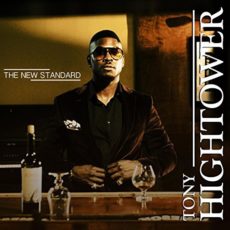
So, to step out and name a debut project The New Standard, in such revered footsteps as Herbie Hancock, takes not only faith but also a confidence in one’s ability to create something beyond ordinary. Unequivocally, this is what composer, arranger and vocalist Tony Hightower has accomplished with his penning of six original tunes, while taking out a loan from Burt Bacharach and Hal David, Eden Ahbez, and Thelonious Monk, thus making this an offering worthy of the title.
Throughout my Atlanta residency as a deejay I was privileged and honored to witness the maturation of the musicians and vocalists who keep the city alive with jazz. From this pool of talent Tony selected pianist Kenny Banks Jr., drummer Henry Conerway III and bassist Kevin Smith to be his principle rhythm section, interchanging pianists Phil Davis on “Minor Major”, Nick Rosen on “Close To You” and Mose Davis and Marcus Williams on “I Mean You”. It is evident he possessed clarity to hear the touch that is required to give each song new life.
Foresight is a gift that is given few and Mr. Hightower has blessed the world with an album of such magnitude. Enlisting Atlanta jazz royalty that defines the new face of the modern jazz generation, he brings the maturity of Kebbi Williams, Melvin Jones, Mike Burton, Dorran Thigpen, Frank Houston and Wilbert Williams to bear witness. If this is not enough to satiate your musical palate, he washes the orchestrations with the voices of Theresa Hightower, Natasha Brown, All Us Katz, Keasha Copeland, Sandra Miller, Donna Ector, Kelsie Broughton and Felicia Hardy.
As I listened to this project for the fourth, fifth and sixth time I never tired of hearing the “A” game this talented young man brought into the studio. Relentlessly he engulfs your senses with an accompaniment of strings by David Davidson, David Angell, Elizabeth Lamb and John Catchings. Wrap all this music up in a well-designed liner and you are told an equally compelling story through words and pictures, allowing you to take a peak into the mind of the man behind the music. I surmise, you will agree that this is a testament to his musical acumen and prowess.
The evidence lies before you. You only have to listen to the conversation to understand the brilliance of what you hear. Over a year ago, this young man said he was going to give me something I would enjoy. If this is what lies behind the marquee for the new standard, it was delivered as promised.
carl anthony | notorious jazz | november 30, 2014
Give A Gift Of Jazz ~ Share

#preserving genius
More Posts: bandleader,history,instrumental,jazz,music,review,vocal
Hollywood On 52nd Street
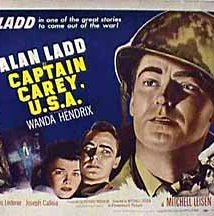
Mona Lisa, written for the 1950 film Captain Carey, U.S.A. by Ray Evans and Jay Livingston. The title and lyrics refer to the renaissance portrait of the same name painted by Leonardo da Vinci. The song won an Oscar for Best Original Song in 1950. The movie is a drama starring Alan Ladd, Wanda Hendrix and Francis Lederer.
The Story: A group of agents of the U.S. Office of Strategic Services is sent to German-occupied Italy during World War II to knock out the German-held Italian railroad system. In accomplishing this mission, most of them are killed because of an inside betrayal. After the war, one of the survivors, Captain Webster Carey (Alan Ladd), resolves to find the traitor. Captain Carey returns to Orta, near Milan, to find out who betrayed his World War II O.S.S. team and caused the deaths of several villagers. Much to his surprise, his old love Giulia whom he thought dead at the hands of the Nazis, is alive and married to a powerful Italian nobleman, Barone Rocco de Graffi.The villagers are unfriendly, but Carey persists in his clandestine efforts to flush out the traitor.
Sponsored By

www.whatissuitetabu.com
Daily Dose Of Jazz…
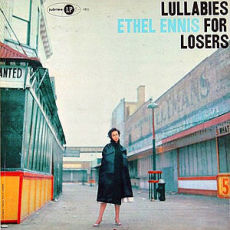
Ethel Llewellyn Ennis was born November 28, 1932 in Baltimore, Maryland and began performing on the piano in high school, but her natural vocal abilities soon eclipsed those as a pianist.
Embarking on a solo career Ethel recorded a number of songs for Atlantic Records before her 1955 debut of “Lullabies for Losers” on Jubilee Records. Two years later she moved to Capitol Records releasing “A Change of Scenery” followed by “Have You Forgotten”.
Ennis took a six-year hiatus from recording while she toured Europe with Benny Goodman. By the early Sixties she was back in the studio recording another four albums for RCA Records but unfortunately was dissatisfied with the creative direction and artist management left for a second recording hiatus of eight years. During this time she recorded the title song for the 1967 film Mad Monster Party and in 1973 the “10 Sides of Ethel Ennis” emerged on record store shelves.
That same year Ennis was invited to sing at the re-inauguration of Richard Nixon and her unusual a cappella rendition of the national anthem shocked some, but inspired many others. Ethel returned to Baltimore, rarely performing outside the area over the next several decades. 1980 saw her return to the studio releasing a live album, but it would be fourteen years later before her self-titled album came out, followed by the 1998 release of “If Women Ruled The World” was released on Savoy Jazz and a 2005 live recording of her performance at Montpelier was released to critical acclaim. Jazz vocalist Ethel Ennis passed away from a stroke on February 17, 2019, in her hometown. She was 86.
Give A Gift Of Jazz – Share