

Daily Dose Of Jazz…
Judy Bady was born on September 3, 1956 in Benton Harbor, Michigan. She went on to matriculate through William Paterson University with a degree in Music Studies. One hears the influence of her great predecessors with her vocal artistry, having a dramatic & rich vocabulary of musically composed American song. After a couple of auspicious performances with Bobby McFerrin at his concert performances, he advised her to leave Kalamazoo and pursue her singing career.
Moving to New York City in 1988 and delved into the artistic scene. Four years later she again appeared with McFerrin in an impromptu duet at the JVC Jazz Festival, again the following year for several songs at the Blue Note
She has performed and/or recorded with such luminaries as Hamiet Bluiett, Doug Carn, Andrew Cyrille, Jon Faddis, Billy Harper, Jon Hendricks, John Hicks, Oliver Lake, Bill Lee, Bobby McFerrin, Rene McLean, Hilton Ruiz, Paul Serrato and Francesca Tanksley, among others.
The vocalist, actress and writer has won multiple Down Beat music awards including Best Jazz Vocalist and was featured in the international award-winning documentary, “Jazzwomen: The Female Side of Jazz”.
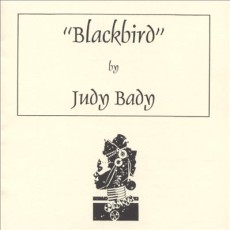
Vocalist Judy Bady, with an emotional range from tender to swinging in her singing, recorded her debut album as a leader and titled it “Blackbird” in 2003. She continues to perform and record.

Give The Gift Of Knowledge
More Posts: vocal
Hollywood On 52nd Street
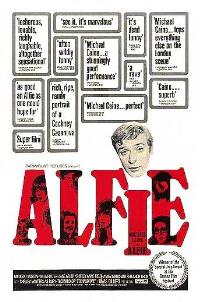
Alfie, the title song, written by Burt Bacharach and Hal David, for the 1966 British romantic comedy-drama directed by Lewis Gilbert. The film starred Michael Caine, with supporting roles by Shelley Winters, Millicent Martin and Vivien Merchant.
The original film soundtrack featured jazz saxophonist Sonny Rollins with local musicians from London including pianist Stan Tracey, who improvised “Little Malcolm Loves His Dad”, Rick Laird on bass, drummer Phil Seamen and tenor saxophonist Ronnie Scott. The released soundtrack album, recorded back in the States with orchestration by Oliver Nelson, featured Rollins, but with other musicians.
The Story: Alfie tells the story of a young womanizer who leads a self-centered life, purely for his own enjoyment, until events force him to question his uncaring behavior and his loneliness. He cheats on numerous women, and despite his charm towards women, he treats them with disrespect and refers to them as “it”, using them for sex and for domestic purposes. Alfie frequently breaks the fourth wall by speaking directly to the camera narrating and justifying his actions. His words often contrast with or totally contradict his actions.
Sponsored By

www.whatissuitetabu.com
More Posts: comedy,dance,drama,hollywood,instrumental,jazz,musical,suite ta bu,vocal
Daily Dose Of Jazz…
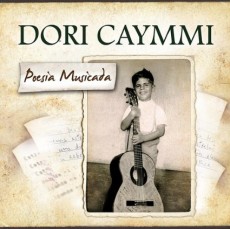
Born August 26, 1943, Dorival Tostes Caymmi, the son of famous Brazilian musicians Dorival Caymmi and Stella Maris. He began playing piano at age eight, studied music theory at the Conservatorio Lorenzo Fernandez and in 1959 made his professional debut accompanying his sister, Nana.
In 1960 Dori became a member of Groupo dos Sete, writing music for plays aired on Brazilian television. He co-directed and played viola in the play Opinião, an important transitional work between the styles of bossa nova and MPB and directed the play Arena Conta Zumbi. For a time he produced Edu Lobo, Eumir Deodato and Nara Leao, co-wrote the prize winning song “Saveiros” with Nelson Matta, a collaboration that lasted many years and produced some of Brazil’s biggest hits.
Caymmi played and toured with Paul Winter, arranged and directed albums by Caetano Veloso, Gal Costa and Gilberto Gil, and was involved with the tropicalia movement of the late 1960s, but did not record in this style himself due to his distaste for Euro-American pop music. He wrote scores for numerous films and television shows in the 1970s and 1980s, moved to Los Angeles, California in 1989 and has since played or recorded with Dionne Warwick, Toots Thielemans, Marilyn Scott, Oscar Castro-Neves, Eliane Elias, Richard Silveira and Edu Lobo; was a collaborator celebrating Tom Jobim at Carnegie Hall and arranged the music for Spike Lee’s film, Clockers.
Dori Caymmi has been nominated for Latin Grammys several times and is a two-time Grammy Award winner for Best Latin Song and Best Latin Samba Recording. The Brazilian singer, guitarist, songwriter, arranger, and producer has an extensive discography dating back to 1964 and he continues to perform and record.
Take A Dose On The Road
More Posts: arranger,composer,guitar,songwriter,vocal
Hollywood On 52nd Street
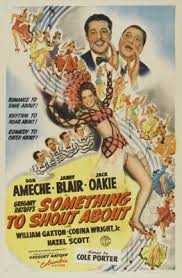
You’d Be So Nice To Come Home To is a popular song that became a jazz standard. Written by Cole Porter it premiered in the 1943 film Something To Shout About, nominated for two Oscars and introduced by Janet Blair and Don Ameche.
The Story: The movie takes place behind the scenes of a fictional vaudeville play and centers on a recently divorced woman. She decides to use her alimony settlement to produce her own show. Unfortunately her chief backer insists on starring in it but she is saved when a talented man puts everything at risk to replace the talentless chief backer.
Sponsored By
www.whatissuitetabu.com
More Posts: comedy,dance,drama,hollywood,instrumental,musical,suite ta bu,vocal
Daily Dose Of Jazz…
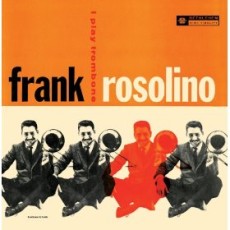
Frank Rosolino was born on August 20, 1926 in Detroit, Michigan. He studied the guitar with his father from the age of 9 and took up the trombone at age 14 while he was enrolled at Miller High School where he played with Milt Jackson in the school’s stage band and small group. Having never graduated, he joined the 86th Division Army Band during World War II.
Perhaps most influential of all was the street education Frank received after returning to Detroit following his period in the Army during which he sat in at the Mirror Ballroom or the Bluebird where other to-be-renowned musicians also congregated, the Jones brothers – Hank, Thad and Elvin, Tommy Flanagan, Kenny Burrell, Paul Chambers and later at the 3 Deuces on 52nd Street in New York City with Charlie Parker.
During this period Rosolino was also performing with the big bands of Bob Chester, Glen Gray, Tony Pastor, Herbie Fields, Gene Krupa and Stan Kenton. Leaving the Kenton outfit he settled in Los Angeles where he performed with Howard Rumsey’s Lighthouse All-Stars from 1954–1960 in Hermosa Beach.
Throughout the 1960s and 1970s, between nightclub engagements, Rosolino was active in many Los Angeles recording studios where he performed with such notables as Frank Sinatra, Sarah Vaughan, Tony Bennett, Peggy Lee, Mel Torme, Michel Legrand and Quincy Jones among others.
He can also be seen performing in “Sweet Smell of Success” in 1957 with Burt Lancaster and Tony Curtis, and in 1958 with Shelly Manne’s group in the film “I Want To Live!” starring Susan Heyward and also. He was also a regular on The Steve Allen Show, The Tonight Show and The Merv Griffin Show. A talented vocalist, renowned for his wild form of scat-singing, Frank recorded one vocal album, “Turn Me Loose!” featuring both his singing and trombone playing. He can also be seen performing in the half hour syndicated program Jazz Scene USA, hosted by Oscar Brown, Jr.
It was during the 1970s that he performed and toured with Quincy Jones and the Grammy Award winning group Suoersax. He recorded some two-dozen sessions as a sideman and a dozen as a leader. Trombonist and vocalist Frank Rosolino committed suicide on November 26, 1978 after shooting his two sons.
Put A Dose In Your Pocket