

Daily Dose Of Jazz…
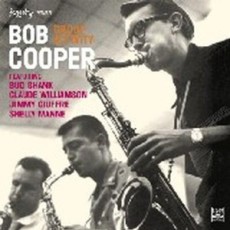
Bob Cooper was born on December 6, 1925 in Pittsburgh, Pennsylvania. He began to study the clarinet in high school and the following year he began working on the tenor saxophone. By 1945 he was joining Stan Kenton’s outfit when he was just 20, and as the new tenor saxophone player played alongside vocalist June Christy on “Tampico” that was to be a Kenton million-selling record. He would marry Christy two years later in Washington, DC.
Coop, as he was affectionately known, stayed with Kenton until he broke up the band in 1951. A naturally swinging jazz musician, Cooper and some other ex- Kenton men were hired to play at the Lighthouse Cafe in Los Angeles by the bassist Howard Rumsey. The Lighthouse became one of the most famous jazz clubs in the world, and the band, Howard Rumsey’s Lighthouse All Stars made history.
With a steady job he could work from home and he expanded his study of the oboe and English horn. While at the Lighthouse he made many momentous recordings, unique amongst them oboe and flute with Bud Shank, and composing a 12-tone octet for woodwind. Bob would go on to lead record sessions as part of a series of long-playing albums under “Kenton Presents” for Capitol Records.
His writing and playing on the album and its successor, “Shifting Winds” in 1955, were seminal in the creation of what was to become known as West Coast jazz. Imaginative writing and a well lubricated polish characterized the session and Cooper’s singing and stomping tenor style on his arrangement of “Strike Up The Band” boosted the record sales considerably.
Cooper would go on to tour Europe, South Africa and Japan with Christy, work as a studio musician in Hollywood, further develop his writing and compose film scores, join Kenton’s huge Neophonic Orchestra and have his composition ‘Solo For Orchestra’ premiered at one of its concerts. Much in demand for his beloved big-band work, he played regularly in other Los Angeles orchestras led by Shorty Rogers, Terry Gibbs, Bill Holman, Bill Berry, Bob Florence and Frankie Capp / Nat Pierce.
Bob Cooper, the West Coast jazz musician known primarily for playing tenor saxophone was also one of the first to play solos on oboe, passed away on August 5, 1993 in Los Angeles, California. Though maturing into one of the finest but least praised tenor saxophonists, he easily ranked with Stan Getz, Zoot Sims and Al Cohn in his talents. His last studio recording, released the year of his death, was on Karrin Allyson’s album Sweet Home Cookin on which he played tenor saxophone.
More Posts: arranger,composer,english horn,oboe,saxophone,vocal

Daily Dose Of Jazz…
Cassandra Wilson was born December 4, 1955 in Jackson, Mississippi, the youngest child of guitarist, bassist and educator Herman Fowlkes, Jr. and between her parent’s love of Motown and jazz, her early interest in music was ignited.
Wilson’s earliest formal musical education consisted of classical lessons, studying piano from age of six to thirteen and playing clarinet in the middle school concert and marching bands. She then took what she calls an “intuitive” approach to learning to play the guitar and began writing songs and adopting a folk style. While in college she spent nights working with R&B, funk and pop cover bands and singing in local coffeehouses. But it wasn’t until her association with The Black Arts Music Society that she got her first opportunity to sing bebop.
By 1981 Cassandra was working television public affairs in New Orleans but the pull towards jazz was strong and began working with mentors Earl Turbinton, Alvin Batiste and Ellis Marsalis. With their encouragement she moved to New York to seriously pursue jazz singing the following year. There her focus turned towards improvisation, heavily influenced by Abbey Lincoln and Betty Carter. She fine-tuned her vocal phrasing and scat while studying ear training with trombonist Grachan Moncur III and frequenting jam sessions under the tutelage of pianist Sadik Hakim.
A meet with altoist Steve Coleman reinforced Wilson to look beyond the jazz repertoire in favor of composing original music. This led her to become the vocalist and one of the founding members of the M-Base Collective in which Coleman was the leading figure, a stylistic outgrowth of the early-formed Association for the Advancement of Creative Musicians and Black Artists Group.
Cassandra recorded her first project as a leader “Point of View” in 1986 utilizing M-Base members Coleman, Jean-Paul Bourelly and James Weidman. As subsequent albums followed she would develop a remarkable ability to stretch and bend pitches, elongate syllables, manipulate tone and timbre from dusky to hollow. She would receive broad critical acclaim for “Blue Skies” that would eventually lead to her signing with Blue Note.
She has effectively reconnected vocal jazz with its blues roots, but is arguably the first to convincingly fashion post-British Invasion pop into jazz, trailblazing a path that many have since followed. Wilson was a featured vocalist with Wynton Marsalis’ Pulitzer Prize winning composition “Blood On The Fields”, paid tribute to her greatest influence Miles Davis with “Traveling Miles”.
Cassandra has been a side- woman and guest vocalist on numerous recordings of such jazz luminaries as Terence Blanchard, Regina Carter, Don Byron, Jacky Terrasson, Charlie Haden, David Murray and Teri Lynne Carrington among others. She has performed on 13 soundtracks, featured singer in two movies, has received an honorary doctorate from Millsaps College, been named America’s Best Singer by Time Magazine and has won two Grammy Awards.
Contralto Cassandra Wilson has an unmistakable timbre and approach as she is expanding the playing field by incorporating country, blues and folk with jazz while continuing to perform, tour and record.
More Posts: vocal
Daily Dose Of Jazz…
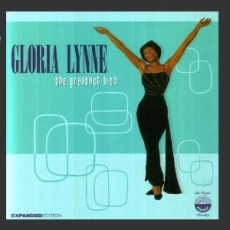
Gloria Lynne was born Gloria Wilson on November 23, 1931 in New York City and grew up in Harlem. Her professional career began in 1951 after winning first prize at the “Amateur Night” at the Apollo Theater. She shared the stage with contemporary nightclub vocal ensembles as well as with Ella Fitzgerald. During the Fifties she recorded as part of such groups as The Enchanters, The Del Tones and recording as a soloist under her birth name. However, most of her work was released under her stage name on both Everest and Fontana record labels.
Gloria showed much promise early on, especially after TV appearances, including the Harry Belafonte Spectacular, but her development suffered through poor management, some unscrupulous recording executives who profited while she was left virtually penniless, saved only by the fact that she was able to work steadily and earn her money from performance.
Throughout the 1960s she had several hits including “June Night”, “Love I Found You,” and “I Wish You Love” in 1964 that became a big hit and her signature song, “I’m Glad There Is You” and a pop tune “(You don’t have to be a) Tower Of Strength” that proved her versatility. Lynne went on to record such albums as “Soul Serenade”, “Love And A Woman”, “Where It’s At”, and “Here, There And Everywhere” all of which showcased her versatility in jazz, R&B, soul and melodic “pop”.
During her earlier years on-the-road she shared bills with Ray Charles, Billy Eckstine, Johnny Mathis, Ella Fitzgerald and Harry Belafonte. As Lynne moved into jazz in her later career she worked with top-flight musicians and arrangers and performed with many of the jazz greats, including Quincy Jones, Bobby Timmons, Philly Joe Jones and Harry “Sweets” Edison. She penned lyrics with Herbie Hancock for his “Watermelon Man” and “All Day Long” with Kenny Burrell.
She has been inducted into the National Black Sports and Entertainment Hall of Fame, honored with a Pioneer Award by the Rhythm & Blues Foundation, with Gloria Lynne Day in New York City, received the National Heritage Award, the Prestigious Eagle Award and Outstanding Achievement In Jazz at the New York MAC Awards.
Vocalist Gloria Lynne continued to record, perform and write until passing away on October 15, 2013 at age 83 in Newark, New Jersey.
More Posts: vocal
Daily Dose Of Jazz…
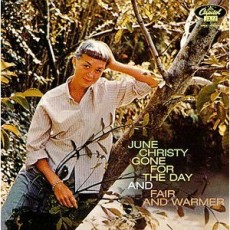
June Christy, born Shirley Luster on November 20, 1925 in Springfield, Illinois but grew up in Decatur, Illinois from the age of three. She began singing at 13 with the Decatur-based Bill Oetzel Orchestra continuing through high school and adding appearances with the Ben Bradley Band, and Bill Madden’s Band. Graduating she moved to Chicago, changed her name to Sharon Leslie, sang with the Boyd Raeburn group, then joined Benny Strong’s band and in 1944, with Strong’s band moved to New York.
In 1945, after hearing that Anita O’Day had left Stan Kenton’s Orchestra, she auditioned and got the role as a vocalist and her success was on the rise. She actually bore a heavy vocal and physical resemblance to Anita O’Day and it was during this time, she changed her name once again, finally becoming June Christy. I
n 1947 June started working on her own records with arranger and bandleader Pete Rugolo that produced her debut “Something Cool” in 1954 with husband Bob Cooper and Bud Shank. This album was instrumental in launching the vocal cool movement of the fifties. Throughout the decade she had a string of hits like Something Cool, Midnight Sun and I Should Care as she continued to release records, such as, “The Misty Miss Christy” that would set new standards for the music and influence future jazz vocalists.
During the 50s and 60s, Christy appeared on the top television programs of the day including Eddie Condon’s Floor Show, The Alan Young Show, The Jack Carter Show, The Jackie Gleason Show, The Tonight Show, The Nat King Cole Show, The Steve Allen Show, Playboy’s Penthouse, The Mike Douglas Show and The Joey Bishop Show. She embarked on dozens of concert tours throughout the U.S. and in Europe, South Africa and Japan.
June retired from the music business in 1969, only to take the stage again in financial crisis. In 1972, June sang at the Newport Jazz Festival in New York and reunited on stage with the Stan Kenton Orchestra. She recorded her final album “Impromptu” in 1977 but continued to perform at a few festivals over the next two decades with her final performance sharing the stage with Chet Baker in 1988. After struggling with illness for many years, vocalist June Christy passed away at her home in Sherman Oaks, California of kidney failure on June 21, 1990. She was 64.
More Posts: vocal

Daily Dose Of Jazz…
Ernestine Anderson was born November 11, 1928 in Houston, Texas. By age three she was singing along with the raw tunes of the legendary Bessie Smith and soon moved on to the more refined environs of her local church, singing solos in its gospel choir. She grew up listening to John Lee Hooker, Muddy Waters and other blues greats while listening to the live performances of the Jimmy Lunceford, Billy Eckstine, Erskine Hawkins and Count Basie big bands. At twelve she entered into a local talent contest and singing around the melody in the wrong key was told she was a jazz singer.
Moving to Seattle with her family when she was sixteen, Ernestine graduated from Garfield High and at eighteen went on the road with the Johnny Otis band. By 1952 she was with Lionel Hampton, then settled in New York working with Gigi Gryce, touring Europe with Rolf Ericson. She recorded her debut album “Hot Cargo” in Sweden and released by Mercury Records. She won Down Beat’s “New Star” award in ’59, continued to record for Mercury to sensational acclaim, splitting her time between the States and Europe.
Anderson stepped out of the limelight as the Sixties ushered in rock and roll but re-emerged in the mid 1970’s with Ray Brown as her manager. Her appearance at the Concord Jazz Festival led to a string of albums for the label working into the ‘90s with the Clayton-Hamilton Jazz Orchestra among others.
In 2008 she fell on hard times and her family home facing foreclosure, was saved by an outpouring of donations by friends and colleagues like Quincy Jones and Dianne Schuur. Ernestine Anderson, a jazz and blues singer has enjoyed a career that has spanned over half a century has recorded over 30 albums, been nominated four times for a Grammy Award, has performed at Carnegie Hall, the Kennedy Center and the Monterey Jazz Festival six times during her prolific career as well as jazz festivals and clubs all over the world.
More Posts: vocal