

Daily Dose Of Jazz…
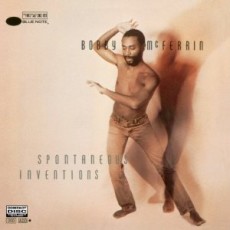
Robert “Bobby” McFerrin, Jr. was born March 11, 1950 in Manhattan, New York to the late Metropolitan Opera baritone Robert McFerrin and Broadway singer Sara Cooper. He spent his childhood surrounded by jazz, blues, R&B, classical, pop and world music, playing in jazz and cabaret bands until the age of twenty-seven.
Developing a vocal technique that switches rapidly and fluidly between normal and falsetto registers to create polyphonic effects, McFerrin performs both the main melody and the accompanying parts of songs. His use of percussive effects with his voice and tapping on his chest compliments his ability to overtone singing.
In 1984 McFerrin released his first solo album The Voice without accompaniment or overdubbing but he came to worldwide prominence with his 1988 hit “Don’t Worry, Be Happy” that garnered him two Grammys for Song and Record of the Year.
The ten-time Grammy winning vocalist and conductor has collaborated with Chick Corea, Herbie Hancock, Joe Zawinul, Tony Williams and Yo-Yo Ma. In addition he has lent his voice to the Cosby Show, to film and the 1989 Oscar winning documentary Common Threads: Stories from the Quilt in which his ten-person Voicestra was featured.
He is the creative chair of the Saint Paul Chamber Orchestra and has been a guest conductor for symphonies and philharmonics in San Francisco, New York, Chicago, Cleveland, Philadelphia, Los Angeles, Vienna and London. He has performed with comedian Robin Williams, consorted with the Muppets, interpreted Beatles songs and demonstrated with audience participation the power of pentatonic scale that became a viral Internet phenomenon.
Bobby McFerrin defies convention and categorization as he draws from all genres to showcase his matchless improvisational skill with an ability to create new vocabularies on the fly as he continues to explore and discover new territory in music.

More Posts: vocal
Daily Dose Of Jazz…
Zenzile Miriam Makeba was born on March 4, 1932 in the Prospect Township of Johannesburg, South Africa. Known to her many fans as simply Miriam Makeba or Mama Afrika, her career spanned more than 50 years.
As a child, she sang at the Kilmerton Training Institute in Pretoria, while attending for eight years followed by touring with an amateur group. Her professional career began in the 1950s with the Manhattan Brothers prior to her forming her own group, The Skylarks, singing a blend of jazz and traditional melodies of South Africa.
By 1959 she was performing in the musical King Kong with her future husband Hugh Masekela and though she became a successful recording artist, she received a pittance for her work without residual royalties. However in the same year her big break arrived when she was given a short guest appearance in the indie anti-apartheid documentary “Come Back, Africa” and she made such an impression that the director managed a visa for her to leave the country for the Venice Film Festival.
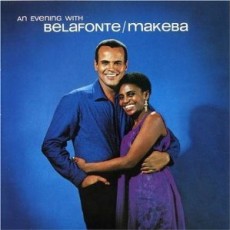
Traveling to London she met Harry Belafonte who assisted her in gaining entry to and fame in the United States. She released many of her most famous hits there including “Pata Pata”, “The Click Song” and “Malaika”. In 1966, Makeba, in collaboration with Belafonte received a Grammy for Best Folk recording “An Evening With Belafonte/Makeba” that dealt South African apartheid.
Miriam went on to perform at the 1974 Rumble In The Jungle between George Foreman and Muhammad Ali, on Paul Simon’s Graceland, authored an autobiography, starred in Sarafina, guest appeared on the Cosby Show, took part in Amandla: A Revolution in Four Part Harmony and returned to South Africa under the persuasion of Nelson Mandela.
She was awarded the Dag Hammarskjöld Peace Prize, was named Goodwill Ambassador for the UN Food and Agriculture Organization, was awarded the UN Gold Otto Hahn Peace Medal and voted 38th in the top 100 Great South Africans. While on a concert stage taking a stand against injustice against humanity singing her hit song “Pata Pata”, she succumbed to a heart attack on November 9, 2008.

More Posts: vocal
From Broadway To 52nd Street
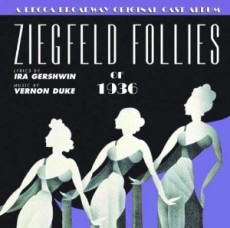
The Ziegfeld Follies of 1936 premiered on Broadway at the Winter Garden Theatre on January 30, 1936 and closed on May 9, 1936 after 115 performances due to Fanny Brice’s illness. The musical had a return engagement on Broadway at the Winter Garden Theatre on September 14, 1936, and closed on December 19, 1936 after 112 performances. Brice reprised her role, with the additional cast that included Gypsy Rose Lee.
The musical was produced by Billie Burke Ziegfeld, Lee Shubert and J. J. Shubert; directed by John Murray Anderson and Edward Clarke Lilley; choreographed by Robert Alton; sketches directed by Edward D. Dowling; ballets directed by George Balanchine and scenic design and costumes were by Vincente Minnelli.
Vernon Duke composed the music with lyrics by Ira Gershwin and a cast starring Fanny Brice, Bob Hope, Eve Arden, Josephine Baker and the Nicholas Brothers.
The Story: In the opening number Brice mocks her famous song (“My Man”) in “He Hasn’t a Thing Except Me”, standing against a lamp-post. In “The Sweepstakes Taker” Brice portrays a Jewish Bronx housewife who wins the Irish sweepstakes. In “Fancy Free’ she becomes the affected and bored British “Zuleika” as she exchanges witty remarks with her husband Sir Robert, and, leaving behind elegance, burps in his face and utters a trade-mark “Denk you.” As Baby Snooks, Brice stars with popular stars of the day such as Clark Gable. The only song to become popular from the musical was “I Can’t Get Started” sung by Bob Hope to Eve Arden.
Broadway History: The musical was not all that was spawned from within the hallowed walls of the Broadway theatre. A new age of American playwright with the emergence of Eugene O’Neill, whose successful plays such as Beyond the Horizon, Anna Christie and The Hairy Ape proved that there was an audience for serious drama on Broadway, thus ushering major dramatists like Elmer Rice, Maxwell Anderson, Robert E. Sherwood, Tennessee Williams and Arthur Miller. Comedy and classical revivals became the norm on Broadway and opened the doors for dramas addressing the rise of Nazism and America’s non-intervention in the approaching world war. The most successful was Lillian Hellman’s “Watch on the Rhine” that would open in April 1941.
Daily Dose Of Jazz…
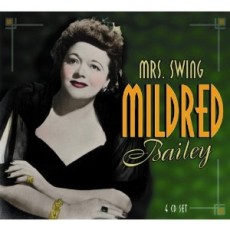
Mildred Bailey was born Mildred Rinker on February 27, 1907 in Tekoa, Washington. She began performing at an early age, playing piano and singing in movie theatres by 1920. Moving to Seattle to bolster her career, she retained the name of her first husband Ted Bailey, but it was her second husband Benny Stafford that helped establish her on the West Coast.
By 1925 she was headlining a Hollywood club performing pop, early jazz and vaudeville standards. Due to her success Mildred was able to secure work for her brother Al Riker and his partner Bing Crosby, who in turn, introduced Mildred to Paul Whiteman via singing at a party so he could “discover” her. Whiteman had a very successful radio show and big band and Mildred became the first woman to join a band as a full time singer.
An early jazz singer with a sweet voice that belied her plump figure, Mildred Bailey influences were Ethel Waters, Bessie Smith and Connie Boswell. She balanced popular success with a hot jazz slanted career as the better half of her third husband Red Norvo, who together were known and Mr. and Mrs. Swing.
Bailey’s debut recording was with Eddie Lang in 1929 and by ’32 her fame exploded with her signature hit “Rockin’ Chair” written especially for her by Hoagy Carmichael. Throughout the 30’s and into the 40’s she continued to record with the Whiteman orchestra, her husband Red, and recording arrangements written by Eddie Sauter that proved perfect for her voice.
She appeared on Benny Goodman’s Camel Caravan radio program, and gained her own series again during the mid-’40s. Hampered by health problems by the end of the decade suffering from diabetes and Mildred Bailey died of a heart attack on December 12, 1951 in Poughkeepsie, New York.
Jazz and blues vocalist Mildred Bailey, a major jazz vocalist and innovator who influenced Billie Holiday, Ella Fitzgerald and Rosemary Clooney was inducted into the Big Band and Jazz Hall of Fame in 1989.
More Posts: vocal

Daily Dose Of Jazz…
Harlem was originally a wealthy white suburb of the New York City borough of Manhattan at the turn of the 20th century, but over-speculation led to a collapse of the housing boom and by 1904, fed by the Great Migration, thousands of Blacks began to reside in Harlem, taking advantage of inexpensive rents. By the 1920’s it became the major residential, cultural and business center for Black people. It was also the center of a flourishing entertainment business with black theaters and black artist performing for black audiences.
Originally a Dutch village formally organized in 1658 and named Haarlem after a Dutch town in the Netherlands and has been defined by a series of boom-or-bust cycles. Harlem was in vogue during the Roaring Twenties and the Harlem Renaissance and white socialites flocked north to hear Duke Ellington, Cab Calloway, Fats Waller, Chick Webb, Louis Armstrong and Bessie Smith. The premiere dance hall was the Savoy Ballroom with the big four clubs were The Cotton Club, Connie’s Inn, Small’s Paradise and Barron Wilkins, which was the first to open in 1915.
The Cotton Club, opened by gangster Owney Madden in 1922 moved downtown in ’36; Connie’s Inn opened in 1923 by George and Connie Immerman and Ed Smalls opened Small’s Paradise in 1925 and endured until 1986. All four catered to white audiences with lavishly staged shows featuring black performers such as James P. Johnson, Bill “ Bojangles” Robinson and Ethel Waters.
Swing and jazz were at its height and over the next several decades attracted the nightlife of both wealthy and working patrons to witness the greatest black musicians and performers in music and entertainment at a proliferation of theatres and clubs.
The most popular nightspots within the boundaries of the Hudson and East Rivers and from 100th to 155th Streets were the Alhambra Theatre, the Apollo Theatre, Bamboo Inn, Bamville Club, Band Box, Barron’s, Brittwood, Capitol Palace, Club Basha, Count Basie’s, Dickie Wells Shim Sham Club, Garden Of Joy, Golden Gate Ballroom, Harlem Club, Harlem Opera House, Heat Wave, Lafayette Theatre, Lenox Club, Leroy’s, Lido Ballroom, Lincoln Theatre, Luckey’s Rendezvous, Minton’s Playhouse, Monette’s Supper Club, Monroe’s Uptown House, Nest Club, Pod’s & Jerry’s, Renaissance Ballroom, Rendezvous Cabaret, Rhythm Club, Saratoga Club, Ubangi Club and Yeah Man.
Harlem, which has recently been given the name Manhattan North, has former President Bill Clinton to have a visible presence, has skyrocketed rental costs and townhouse sales , given much of 125th Street a makeover, attracting thousands of tourists and an influx of residents who at one time not too long ago would never have crossed Central Park North or come down into the valley from Columbia University.
More Posts: club,dance,history,instrumental,jazz,music,vocal