Daily Dose Of Jazz…
Jeanne Lee was born on January 29, 1939 in New York City. Attending Bard College for dance, she began singing while still a student, formed a duo with classmate Ran Blake and recorded her first album, The Newest Sound Around. Jeanne was to become one of the foremost exponents of free vocal jazz extending her style to include moods that were sensual, somber, and sensitive while expressing standard lyrics as well as scatting.
During the 60’s and 70’s she recorded her distinctively independent and creative style either as a lead artist or a sidewoman for major performers of the jazz avant-garde, Archie Shepp, Anthony Brown, Rahsaan Roland Kirk, Enrico Rava, Carla Bley, Cecil Taylor and Mal Waldron to name a few, on independent labels in America and Europe. In 1967, she toured and recorded with her husband and vibraphonist Gunter Hampel.
In 1976 she sang in the spiritual tradition in John Cage’s “Apartment House 1776”, composed for the U.S. Bicentennial. By the 80’s Jeanne was concentrating on composing and performing/recording her original works that often included poetic and dance components.
Jeanne Lee combines acrobatic vocal maneuvers with a deeply moving sound and quality that allows her to alternate between soaring, upper register flights and piercing, emotive interpretations. The extremely precise and flexible Jeanne Lee who easily moved from a song or solo’s top end to its middle and bottom accompanying an instrument, passed away due to complications from cancer on October 25, 2000 in Tijuana, Mexico.
More Posts: vocal
Daily Dose Of Jazz…
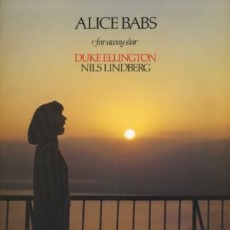
Alice Babs was born Hildur Alice Nilsson on January 26, 1924 in Kalmar, Sweden. The singer and actress has worked in a wide number of genres including Swedish folklore, Elizabethan songs and opera however, she is best known internationally as a jazz singer.
Alice made her recording debut in 1939 at the age of 15, her yodeling making her initially popular but it was her acting breakthrough in “Swing It, Teacher!” in 1940 and subsequent hit song that brought her more acclaim for her appealing voice and lightly swinging style. She appeared in more than a dozen Swedish language films and despite playing the well- behaved, good-hearted and cheerful girl; the youth culture made Alice its icon causing outrage among members of the older generation. A vicar called the Alice Babs cult the “foot and mouth disease to cultural life”.
In 1958, she was the first artist to represent Sweden in the Eurovision Song Contest finishing in 4th place. The same year, she formed “Swe-Danes”, touring the U.S. before dissolving in 1961. Fortune smiled and Alice began a long and productive collaboration with Duke Ellington in 1963, performing among other works his 2nd and 3rd Sacred Concerts. Because her voice had a range of more than three octaves, Duke Ellington said that when she did not sing the parts that he wrote for her, he had to use three different singers.
Ellington once remarked to the visitors of an Alice Babs recording session: “This voice, ladies and gentlemen, embodies all the warmth, joy of life, rhythm and tragedy that, for me, is the innermost secret of jazz”. She passed away from complications of Alzheimer’s disease on February 11, 2014 at age 90 in Stockholm, Sweden.

More Posts: vocal
Daily Dose Of Jazz…
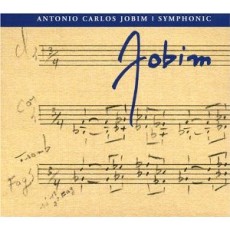
It has been said that Antonio Carlos Jobim was the George Gershwin of Brazil, and there is a solid ring of truth in that, for both contributed large bodies of songs to the jazz repertoire, both expanded their reach into the concert hall, and both tend to symbolize their countries in the eyes of the rest of the world.
Born Antônio Carlos Brasileiro de Almeida Jobim on January 25, 1927 in Tijuca neighborhood of Rio de Janiero studied to become an architect but the lure of music was too strong being firmly rooted in the music of Pixinguinha, who began modern Brazilian music in the 1930’s. By twenty he started playing piano in nightclubs and working recording sessions. He cut his first record in 1954 leader his group Tom and His Band, backing singer Bill Farr.
Tom, a nickname he affectionately carried throughout his life, was firmly planted in jazz having been impacted by Gerry Mulligan, Chet Baker, Barney Kessel and other West Coast musicians. He also gleaned influence upon his harmonies from Claude Debussy and Samba gave his music an exotic rhythmic underpinning. His piano is simple and melodic, his guitar gentle and his singing hauntingly emotional. Among his many themes his lyrics talked of love, political repression, betrayal, the natural beauties of Brazil and his home city of Rio.
Jobim first found fame in 1956 when he teamed with poet and diplomat Vinicius de Moraes to score part of the play Orfeo do Carnival, which would later gain them worldwide acclaim at Cannes when Black Orpheus debut in 1959.
In 1958, an unknown Brazilian singer João Gilberto recorded some of Jobim’s songs, which effectively launched bossa nova. Yet, Jobim’s breakthrough outside Brazil occurred in 1962 when Stan Getz and Charlie Byrd scored a surprise hit with his tune “Desafinado” – and later Getz teamed with Joao Gilberto and his wife Astrud resulting in Getz/Gilberto in 1963 and Getz/Gilberto 2 in 1964. The ’63 album became one of the best selling jazz albums of all time and grabbed 4 Grammy Awards. With their gracefully urbane, sensuously aching melodies and harmonies, Jobim’s songs gave jazz musicians in the 1960s a quiet, strikingly original alternative to their traditional Tin Pan Alley source.
Grammy award winning songwriter, composer, arranger, singer, pianist and guitarist while driving home after finishing recording for his next album Tom Jobim, collapsed and passed away of heart failure in New York City on December 8, 1994.

Daily Dose Of Jazz…
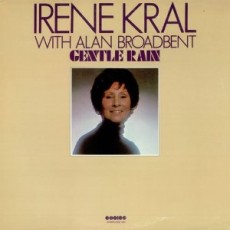
Vocalist Irene Kral was born in Chicago, Illinois on January 18, 1932. The younger sister of Roy Kral, an already a successful musician, she started singing professionally as a teenager making her debut with the Jay Burkhardt Big Band. She went on to work with Woody Herman and Chubby Jackson.
Freelancing around Chicago, Irene gigged with a vocal group called Tattle-Tales, spent nine months singing with Maynard Ferguson’s big band and also performed with groups led by Stan Kenton and Shelly Manne, After an association with the Herb Pomeroy Orchestra, she got married, moved to Los Angeles and stopped performing.
Fortunately for the jazz world by the late 50’s Irene embarked upon a solo career recording two sessions for United Artists, a ’65 date for Mainstream and from 1974 to 1977 recorded three great albums, “Kral Space” and two projects with pianist Alan Broadbent “Where Is Love” and “Gentle Rain”. Her rendition of Spring Can Really Hang You Up The Most is not only considered classic but also definitive.
Irene Kral died at the age of 46 of breast cancer in Encino, California on August 15, 1978. She attributed Carmen McRae as one of her inspirations and was brought back to the attention of the world posthumously by director Clint Eastwood when he used her recording in the Bridges of Madison County.
More Posts: vocal
Daily Dose Of Jazz…
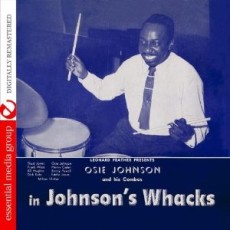
Osie Johnson was born James Johnson in Washington, DC on January 11, 1923. He started his drumming career in 1941 in Boston with the Sabby Lewis band and then during the war years in the Navy Band. Upon discharge from the service he freelanced around Chicago until he joined the Earl Hines band from 51-53.
He played stints with Dorothy Donegan and Illinois Jacquet prior to becoming one of the most in-demand drummers in the 50’s and first half of the 60’s in New York. As a busy session musician working with the likes of Coleman Hawkins, Dinah Washington, Wes Montgomery and Sonny Stitt, Paul Gonsalves, Zoot Sims and Mose Allison among the many who’s who list of musicians he kept time for.
On February 10, 1966 drummer, composer, arranger and singer Osie Johnson, who made a countless recordings as a leader and studio musician, passed away in New York City at the age of 43.