

Daily Dose Of Jazz…
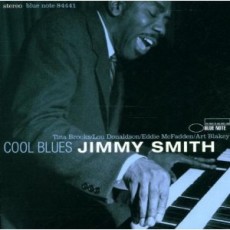
Jimmy Smith was born James Oscar Smith on December 8, 1925 in Norristown, Pennsylvania. He began as a pianist but switched to organ after hearing Wild Bill Davis, purchasing his first Hammond, renting a warehouse and emerging a year later with a fresh new sound. He was instrumental in revolutionizing the playing of the instrument. It only took one time for Alfred Lion to hear him play before signing him to Blue Note in 1956. It was the second album, “The Champ” that established him as a new star on the jazz scene, followed by “The Sermon”, “Home Cookin’” “Midnight Special” and “Back at the Chicken Shack”.
Forty sessions later Jimmy left Blue Note for Verve Records dropping his first album Bashin’ with a big band led by Oliver Nelson. With this album selling well he went on to collaborate over the next decade with Lalo Schifrin, Wes Montgomery, Kenny Burrell, Lou Donaldson, Lee Morgan, Stanley Turrentine, Grady Tate, Jackie McLean, George Benson and many other jazz greats of the day.
In the 1970s, Smith opened a supper club in Los Angeles where he played regularly; his career resurged in the 80s recording for Blue Note, Verve, Milestone and Elektra with Quincy Jones, Frank Sinatra, Michael Jackson, Dee Dee Bridgewater, B.B. King, Etta James and Joey DeFrancesco.
Smith’s virtuoso improvisation technique popularized the Hammond B3 and his style on fast tempo pieces combined bluesy “licks” with bebop-based single note runs, ballads had walking bass lines and up-tempo tunes he played the bass line on the lower manual with use of the pedals for emphasis of a string bass. He influenced the likes of Jimmy McGriff, Brother Jack McDuff, Richard “Groove” Holmes, Larry Goldings and Joey DeFrancesco as well as many rock keyboardists like Brian Auger or more recently The Beastie Boys.
Jimmy Smith, Hammond B3 pioneer in the hard bop, mainstream, funk and fusion jazz genres, was honored as an NEA Jazz Master shortly before his death on February 8, 2005 in Scottsdale Arizona.
More Posts: organ
From Broadway To 52nd Street
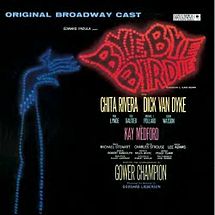
Bye-Bye Birdie opened at the Martin Beck Theatre on April 14, 1960 with Lee Adams and Charles Strouse composing the music. Running 607 performances the musical starred Dick Van Dyke, Chita Rivera, Dick Gautier, Kay Medford, Susan Watson and Paul Lynde. Two actors, Van Dyke and Lynde would go on to star in the film version. A Lot Of Livin’ To Do and Put On A Happy Face are two compositions that would go on to become jazz standards.
The Story: A popular rock star, Conrad Birdie, is about to be drafted and his agent, Albert, arranges a coup he hopes will keep revenues coming in during Conrad’s stint and allow him to marry Rosie. They pick a girl in a small American town to represent girls across the country to be sung to one last time before Conrad enters the service. Albert’s mother is against the marriage and breaks it up. Conrad goes off to have a wild night, Albert wins back Rosie but everything is turned upside down in the small town.
Broadway History: An Off-Off-Broadway production that features members of Actors Equity is called an Equity Showcase production, however, not all Off-Off-Broadway shows are Equity Showcases. The union maintains very strict rules about working in such productions, including restrictions on price, the length of the run and rehearsal times. Professional actors’ participation in showcase productions is frequent and comprises the bulk of stage work for the majority of New York actors. There has been an ongoing movement to revise the Equity Showcase rules, which many in the community find overly restrictive and detrimental to the creation of New York theatre.
The term indie theatre, or independent theatre, coined by playwright Kirk Bromley, has been adopted by many as a replacement for the term Off-Off-Broadway, and is used by groups such as The League of Independent Theater and the website nytheatre.com.
Sponsored By
www.whatissuitetabu.com

Daily Dose Of Jazz…
Mads Vinding, born December 7, 1948 in Copenhagen, Denmark, took up the basses as a child. By sixteen he was playing professionally becoming the house bassist at Copenhagen’s legendary Café Montmartre.
Along with the acoustic double bass, he has also refined his playing on the electric bass making him an outstanding artist and a sought-after soloist for his musical command and his maturity. Vinding has performed all over the world, produced several records and has been honored with numerous jazz awards such as the Ben Webster Prize, Palae Jazz Prize, Readers Polls and three Grammy Awards among others.
One of the “Aces of Basses” with more than 600 recordings to his credit as a sideman, Mads has performed or recorded with the likes of Herbie Hancock, Sonny Stitt, Tony Williams, Wayne Shorter, Dizzy Gillespie, Dollar Brand, Clark Terry, Chet Baker, Renee Rosnes, Stan Getz, Hank Jones, Gary Burton, Quincy Jones, Monty Alexander, Don Byas, Toots Thielemans, Ben Webster and Dexter Gordon, just to name a few in a long list of jazz luminaries. He continues to perform, record, tour and produce.
More Posts: bass
Daily Dose Of Jazz…
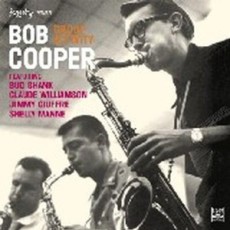
Bob Cooper was born on December 6, 1925 in Pittsburgh, Pennsylvania. He began to study the clarinet in high school and the following year he began working on the tenor saxophone. By 1945 he was joining Stan Kenton’s outfit when he was just 20, and as the new tenor saxophone player played alongside vocalist June Christy on “Tampico” that was to be a Kenton million-selling record. He would marry Christy two years later in Washington, DC.
Coop, as he was affectionately known, stayed with Kenton until he broke up the band in 1951. A naturally swinging jazz musician, Cooper and some other ex- Kenton men were hired to play at the Lighthouse Cafe in Los Angeles by the bassist Howard Rumsey. The Lighthouse became one of the most famous jazz clubs in the world, and the band, Howard Rumsey’s Lighthouse All Stars made history.
With a steady job he could work from home and he expanded his study of the oboe and English horn. While at the Lighthouse he made many momentous recordings, unique amongst them oboe and flute with Bud Shank, and composing a 12-tone octet for woodwind. Bob would go on to lead record sessions as part of a series of long-playing albums under “Kenton Presents” for Capitol Records.
His writing and playing on the album and its successor, “Shifting Winds” in 1955, were seminal in the creation of what was to become known as West Coast jazz. Imaginative writing and a well lubricated polish characterized the session and Cooper’s singing and stomping tenor style on his arrangement of “Strike Up The Band” boosted the record sales considerably.
Cooper would go on to tour Europe, South Africa and Japan with Christy, work as a studio musician in Hollywood, further develop his writing and compose film scores, join Kenton’s huge Neophonic Orchestra and have his composition ‘Solo For Orchestra’ premiered at one of its concerts. Much in demand for his beloved big-band work, he played regularly in other Los Angeles orchestras led by Shorty Rogers, Terry Gibbs, Bill Holman, Bill Berry, Bob Florence and Frankie Capp / Nat Pierce.
Bob Cooper, the West Coast jazz musician known primarily for playing tenor saxophone was also one of the first to play solos on oboe, passed away on August 5, 1993 in Los Angeles, California. Though maturing into one of the finest but least praised tenor saxophonists, he easily ranked with Stan Getz, Zoot Sims and Al Cohn in his talents. His last studio recording, released the year of his death, was on Karrin Allyson’s album Sweet Home Cookin on which he played tenor saxophone.
More Posts: arranger,composer,english horn,oboe,saxophone,vocal
Daily Dose Of Jazz…
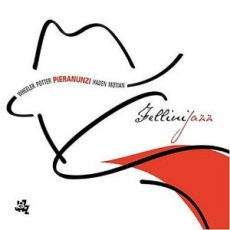
Enrico Pieranunzi was born December 5, 1949 in Rome, Italy. When he was only five and a half years old he began studying piano. At the same time his father, a guitarist, started introducing him to the wonders and challenges of jazz improvisation as well. From then on Enrico followed a double road in music developing his jazz style while studying classical piano.
At 19, Enrico began his professional career in Italy and since then he has worked with an abundance of bands, both Italian units and groups led by Americans. His wide-ranging experiences include collaborations with jazz luminaries such as Johnny Griffin, Chet Baker, Art Farmer, Lee Konitz, Jim Hall, Johnny Griffin, Phil Woods, Charlie Haden, Frank Rosolino, Mads Vinding, Lee Konitz, Billy Higgins and Kenny Clarke among others.
Since 1975 Pieranunzi has led his own groups, mostly trios, with which he has played clubs and festivals all over Europe and released his first album that year. He has performed as unaccompanied pianist and still does to this very day. As an educator he has taught both in the jazz and classical fields and is currently full professor of piano at the “Conservatorio di Musica” in Frosinone.
Pianist Enrico Pieranunzi is a very original musician and a talented composer, able to travel the high road with his own ideas and remarkable musical sensitivity. Voted “Musician of the Year” in the “Musica Jazz” critic’s poll in 1989, twice the recipient of the Djangodor Award “Best Jazz Musician” in 1992 & ’97 and the 2003 Django d’Or in Italy. In 2006 he started the Trans Alpine Jazz Project and since the beginning of his career has amassed a catalogue of fifty-one recordings as a leader. He continues to perform, tour and record.
More Posts: piano