

Daily Dose Of Jazz…
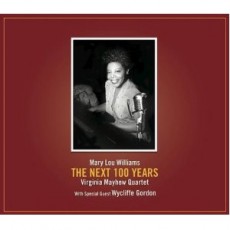
Virginia Mayhew was born on May 14, 1959 in San Francisco, California and took up the saxophone as a child. Early in her career she worked with trombonist Al Grey and contributing arrangements for several recordings. In 1987 she became active on the New York jazz scene, playing with the likes of Earl “Fatha” Hines, Junior Mance, Toshiko Akiyoshi, Doc Cheatham, Joe Williams, Kenny Barron, Ingrid Jensen, Chico O’Farrill and the list continues.
She has performed all over the world in concert and festivals, and has twice been a U.S. Jazz Ambassador. Mayhew would go on to work with Brazilian trumpeter Claudio Roditi, become a member of the Howard Williams Big Band, Carl Thompson and Friends, and the Lou Caputo “Not So Big Band” in conjunction with freelancing around New York.
Virginia is currently the Musical Director and saxophonist of the 9-piece Duke Ellington Legacy group, leads her own quartet and septet, recorded and released a Mary Lou Williams project featuring Wycliffe Gordon, and is working on a project that replaces drums with tap dancing.
As an educator she teaches privately, is on the faculty of the summer jazz camps at Stanford Jazz Workshop, Monterey Jazz Festival, Litchfield Jazz Camp along with conducting clinics at U-Mass, University of Louisville, Bloomington University, Williams College among others. She has worked with Don Braden’s “Jazz For Teens” and Melissa Walker’s “Jazz House Kids”. Tenor saxophonist Virginia Mayhew continues to perform, compose, arrange, adjudicate and teach and establish the “Jazz Workshop” at the Greenwich House Music School in New York City.
More Posts: bandleader,instrumental,jazz,music,saxophone

Daily Dose Of Jazz…
Grégoire Maret was born May 13, 1975 in Geneva, Switzerland. He began playing the harmonica at the age of 17. Upon graduating from the prestigious Conservatoire Supérieur de Musique de Genève he moved to New York City and studied jazz at the New School University.
Maret has performed with Youssn’Dour, Me’ Shell Ndegeocello, Pete Seeger, David Sanborn, George Benson, Cassandra Wilson, Toots Thielemans, Jeff “Tain” Watts, Gretchen Parlato and the Polish orchestra Sinfonia Viva to name a few. In 2005 he toured with the Pat Metheny Group, received a Grammy for Best Contemporary Jazz Album for their album The Way Up, and won the Jazz Journalists Association “Player of the Year Award”.
He embarked on a two-year tour with bassist Marcus Miller, and then joined Herbie Hancock’s band. He would co-lead the jazz trio Gaïa with pianist Federico Gonzales Peña and drummer Gene Lake, record the album Scenarios with Andy Milne and play The Concert for the Rainforest with Elton John and Sting.
The harmonica player who has recorded on over six-dozen albums as a sideman, and who has been compared to Toots Thielemans and Stevie Wonder. Grégoire Maret released his self-titled debut album as a leader in 2012 and continues to perform, tour and record.
More Posts: bandleader,harmonica,instrumental,jazz,music
Daily Dose Of Jazz…
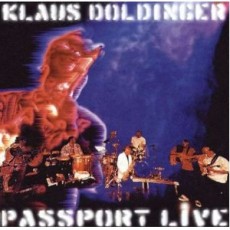
Klaus Doldinger was born on May 12, 1936 in Berlin, Germany. By age eleven he entered a Dusseldorf conservatory originally studying piano and then clarinet, graduating in 1957. During his student years, he gained professional performing experience in 1953 with the German Dixieland band The Feetwarmers, recording with them in 1955. Later that same year he founded Oscar’s Trio, modeled on Oscar Peterson’s work.
During the 1960s Klaus worked as a tenor saxophonist, working with visiting American jazz musicians and recording in his own right. Doldinger is perhaps best known for his film scores to the acclaimed German U-boat film Das Boot and The Never Ending Story. He was an honored recipient of the Bavarian Film Awards in 1997.
Doldinger created a recurring jazz project Passport in 1971 that mirrors Weather Report and still enjoys huge success in Germany. He has worked with Johnny Griffin, Brian Auger, Ernst Stroer, Pete York and Michael Hornek among others. Saxophonist Klaus Doldinger died on the evening of October 16, 2025 at his home in Icking, Germany at the age of 89.
More Posts: bandleader,history,instrumental,jazz,music,saxophone
Daily Dose Of Jazz…
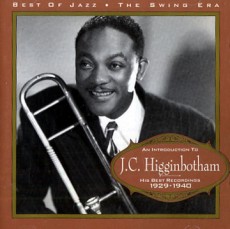
J. C. (Jack) Higginbotham was born on May 11, 1906 in Social Circle, Georgia and learned to play trombone in his youth. He made his start in jazz playing with territory bands in the Midwest and was heard at his best while a member of the Luis Russell Orchestra from 1928 to ’31. He would go on to play with Benny Carter’s, Red Allen’s and Fletcher Henderson’s big band during the swing era.
J. C. played with Louis Armstrong in the late Thirties to the end of the decade, played for a long period in the forties with his ideal partner Red Allen, and then disappeared from the scene for several years. By 1947 he was leading his own groups.
Higginbotham led several bands in the Fifties in Boston and Cleveland, appeared regularly at the Metropole in New York between 1956 and 1959, and led his own Dixieland band there in the Sixties. He went on his first European tour with Sammy Price, appearing in Scandinavia, and worked again briefly in 1964 with Louis Armstrong.
A robust and swinging trombonist he recorded extensively both as a sideman and as a leader. He is considered to be a vital player of the swing trombone and his strong, raucous sound and wild outbreaks are legendary. J. C. Higginbotham, who contributed to the acceptance of the trombone as a melodically capable jazz instrument, died on May 26, 1973 in New York.
More Posts: trombone
Requisites
After Lights Out ~ Tubby Hayes Quintet | By Eddie Carter
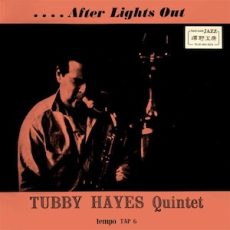
This morning’s spotlight shines on a 1956 release by the Tubby Hayes Quintet, After Lights Out (Tempo TAP 6). It was Tubby’s seventh release as a leader, showcasing his growing influence in jazz. Teddy was born on January 30, 1935, in St. Pancras, London, and grew up in the Raynes Park neighborhood in the southwest of the city. His father, a talented violinist at the BBC studios, started teaching him the instrument when he was very young. By the time he was ten, he was also playing the piano, and at eleven, he took up the tenor saxophone. One of his earliest musical inspirations was the trumpeter Dizzy Gillespie. He’s joined on this date by Dickie Hawdon on trumpet, Harry South on piano, Peter Elderfield on bass and Bill Eyden on drums. The copy I own is the 2011 Japanese limited-edition mono reissue, sharing the original catalog number.
Side One kicks off with Ode to Ernie by Harry South. The quintet brings this upbeat tune to life with their brisk melody. Hawdon leads the way with a spirited solo, then Hayes takes the next performance for a lively ride. Young adds the exclamation mark with a concise comment before the ensemble returns for the closing chorus, including a short remark by Eyden. No, I Woodyn’t by Tubby Hayes is built on the changes of “Woody ‘n You,” by Dizzy Gillespie, and the group begins with a Latin-flavored theme. Tubby sinks his teeth into the opening statement, then Hawdon follows with a happy tone that’s sure to get your toes tapping. Young takes the reins next and delivers a delightful performance. Both horns share a short conversation with Eyden before his first solo of the set ahead of the closing ensemble.
Up next is Foolin’ Myself, a beautiful and little-known ballad by Jack Lawrence and Peter Tinturin. The front line takes the lead for a warm, affectionate melody. Hawdon opens with a thoughtfully tender solo, then Hayes unfolds a sensuously sweet statement, while the rhythm section provides a lush foundation, leading into the gentle reprise and close. The first side ends with a lightly swinging rendition of Nicole by Howard McGhee. The quintet sets the song’s tone with the easy-flowing theme. Hayes comes out cooking in the opening solo, then Hawdon builds on what Hayes began with a few attractive ideas. Young takes charge next in the third statement, then steps aside for Hayes and Hawdon, who engage in a brief exchange. The full ensemble returns for the theme’s reprise, during which Eyden has a short workout.
The quintet opens the second side with Message to the Messengers by Harry South, a leisurely-paced melody that gets things started. Hayes is up first with a bluesy interpretation that gets things off to a good start. Hawdon takes over on muted trumpet and provides a tremendous compliment to the saxophonist. Young brings out the best in the third reading, and Elderfield makes a brief point during the theme’s restatement. Hall Hears The Blues by Harry South is the pianist’s tribute to Tony Hall’s Record Mirror weekly jazz column. The trio’s introduction and melody segues into Young’s opening statement. Hayes follows with a model of melodic creativity; next, Hawdon treats us to authentic down-home cooking in a soulful solo. The front line shares a carefree exchange before Elderfield has the last word, before the group takes the song out.
Tony Hall supervised the session and wrote the album’s liner notes. Bert Steffens was behind the dials of the recording console. The album’s sound quality is superb, with a stunning soundstage that transports listeners to the studio where the musicians are performing. Tubby Hayes amassed a large discography as a leader and worked with many elite musicians, including co-leading The Jazz Couriers with Ronnie Scott. If you’re in the mood for an excellent hard bop album by one of the best British saxophonists, I offer for your consideration After Lights Out by the Tubby Hayes Quintet, the next time you’re out record-shopping. It’s a terrific album to enjoy with family and friends after dinner, or to have on hand for a quiet moment alone after the lights are out!
© 2026 by Edward Thomas Carter

More Posts: choice,classic,collectible,collector,history,instrumental,jazz,music,saxophone