

Requisites
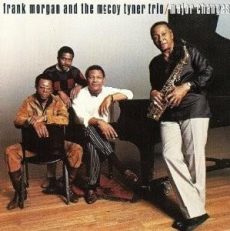
Major Changes ~ Frank Morgan and The McCoy Tyner Trio | By Eddie Carter 6.15.25
During the five years I lived in Cincinnati, Ohio, Everybody’s Records was a favorite shop I regularly visited. It was there that I heard Major Changes (Contemporary Records C-14039) by Frank Morgan and the McCoy Tyner Trio spinning on the turntable. As I listened, memories of when I first became a jazz fan came rushing back, and I picked it up immediately. Frank was born in Minneapolis, Minnesota, and began playing the guitar at a young age. His father introduced him to Charlie Parker, who inspired him to play the clarinet at age seven. Morgan later graduated to the soprano sax, then the alto sax, which became his primary instrument. Rounding out the ensemble are McCoy Tyner on piano, Avery Sharpe on bass, and Louis Hayes on drums. My copy of the album is the 1988 U.S. stereo release.
The quartet kicks off the first side with Changes by McCoy Tyner. The pianist’s brisk introduction sets the tone for their feisty melody. McCoy takes the first bite of this jazzy apple with a high-spirited solo. Frank follows with a vigorous statement, then Avery’s vivacious interpretation guides the group back to the theme’s reprise and fadeout. Irving Berlin’s How Deep Is The Ocean starts on a deceptively slow note, with the alto sax and piano sharing a private conversation ahead of the foursome’s sprightly theme. Tyner leads the charge with a swinging opening statement. Morgan builds on this momentum with a feisty reading. Sharpe rounds out the solos with a brief presentation leading to the out-chorus and exit.
Emily is a lovely composition by Johnny Mandel and Johnny Mercer. Frank begins delicately expressing each note of the melody with heartfelt sensitivity. McCoy’s opening solo is delivered with tenderness and warmth. Frank concludes with a gentle presentation, leading to a serene and graceful finish. Search For Peace by McCoy Tyner begins with Hayes’s introduction, leading into the quartet’s theme, which moves at a bright and brisk clip. The pianist starts the opening solo with remarkable precision and vibrant enthusiasm. Sharpe and Hayes share a brief interlude, then Morgan effortlessly glides over the rhythm section, perfectly attuned to Hayes’s flawless timing, until the closing chorus fades into nothingness.
McCoy Tyner announces Frank’s Back with a smooth lead-in, segueing into the opening ensemble at medium-tempo to begin the second side. Frank sets a stellar example for the group in the first solo. McCoy follows with a charismatic interpretation, then Frank and Louis share an exchange of notes, leading back to the reprise and conclusion. Oscar Hammerstein II and Jerome Kern’s All The Things You Are opens with the saxophonist’s soothing introduction ahead of the group’s mellow theme. Morgan’s opening statement starts strong and doesn’t let go until Tyner takes his turn. The pianist launches into a taut second reading that holds the listener’s attention until Morgan returns briefly, leading to the theme’s reprise and a graceful exit.
Theme From Love Story by Francis Lai and Carl Sigman comes from the 1970 romantic drama. The rhythm section’s introduction is simultaneously delicate and inviting, leading Frank to explore the intricately beautiful melody. McCoy captures the song’s essence with lively exuberance in the opening statement. Frank then weaves a tapestryof grace and elegance before the theme resurfaces, and the quartet fades into a poignant stillness. Richard Bock produced Major Changes. Ed Rak was the engineer behind the direct-to-digital recording, and George Horn mastered this release. The album boasts a superb soundstage that envelops the listener’s sweet spot, as if they’re seated in the studio alongside the musicians.
Frank Morgan battled heroin addiction for much of his life, mirroring the path of Charlie Parker. This struggle led him to spend a significant portion of his adult years in and out of prison. However, by the mid-1980s, he managed to overcome his dependency, remaining clean for the final two decades of his life, though he continued taking methadone daily. Morgan recorded twenty-one albums as a leader and contributed to twelve more as a sideman. Despite suffering a stroke in 1998, he made a remarkable recovery and continued to perform and record music during the last nine years of his life. Toward the end of his career, Morgan successfully completed his first European tour. He passed away from complications of colorectal cancer on December 14, 2007, just nine days before his seventy-fourth birthday.
The album’s title reflects the significant shifts in Morgan’s life and music, while highlighting the extraordinary chemistry between the musicians. Whether you're a seasoned jazz aficionado or a newcomer to Morgan’s music, Major Changes by Frank Morgan and the McCoy Tyner Trio is a treasure trove of captivating tracks and stunning solos. It also serves as a delightful showcase of his talent, and I wholeheartedly recommend checking it outthe next time you’re out record-shopping!
~ All The Things You Are – Source: JazzStandards.com
~ Theme From “Love Story” – Source: Wikipedia.org
© 2025 by Edward Thomas Carter

More Posts: choice,classic,collectible,collector,history,instrumental,jazz,music,piano,saxophone