

The Jazz Voyager
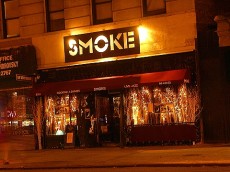
Smoke Jazz & Supper Club-Lounge: 2751 Broadway, New York, NY 10025 (Broadway between 105th Street and 106th Street (aka Duke Ellington Boulevard) in Manhattan / Telephone: 212-864-6662 / smokejazz.com / Nearby Subway Stop – #1, A, B, C @ 103rd Street
Smoke presents world-class jazz seven nights a week with candlelit tables, plush velvet banquets, antique chandeliers. A historic full-length bar creates a real jazz vibe to go with the intimate acoustics and intimate sight lines. The club serves as the perfect complement to classic jazz—the innovative American Bistro cuisine of critically acclaimed executive chef Patricia Williams. Smoke was named “Best New Jazz Club” in 2000 by New York Magazine.
Sponsored By

Daily Dose Of Jazz…
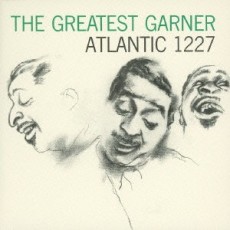
Erroll Louis Garner was born on June 15, 1921 in Pittsburgh, Pennsylvania and began playing piano at age 3. Self-taught, he never learned to read music and remained an “ear player” all his life. At the age of 7, Erroll began appearing on radio station KDKA with a group called the Candy Kids, by 11 he was playing on the Allegheny riverboats and by the time he turned 14 in 1937, he joined local saxophonist Leroy Brown.
He moved to New York in 1944, worked with bassist Slam Stewart and though not a bebop musician in 1947 played with Charlie Parker on the famous “Cool Blues” session. Short in stature (5 foot 2 inches), Garner performed sitting on multiple telephone directories except in New York, where a Manhattan phone book was sufficient. He was also known for his occasional vocalizations while playing, which can be heard on many of his recordings and he helped bridge the gap for jazz musicians between nightclubs and the concert hall.
His best-selling album recorded at an Army base in Carmel, California was Concert By The Sea; and his best-known composition, the ballad “Misty” is a jazz standard and was featured in the 1971 Clint Eastwood vehicle “Play Misty for Me”. The brilliant virtuoso with a distinctive swing style was reportedly Tonight Show host Johnny Carson’s favorite jazz musician, toured both at home and abroad until his death from lung cancer on January 2, 1977.

Give The Gift Of Knowledge
More Posts: piano
Hollywood On 52nd Street
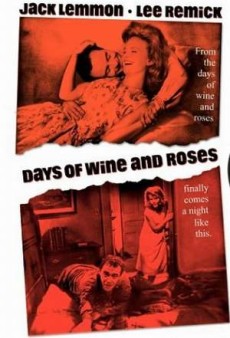
Days of Wine and Roses is a popular song and jazz standard from the 1962 movie of the same name. Henry Mancini composed the music with lyrics by Johnny Mercer. They received the Academy Award for Best Original Song for their work. The song is composed of only two sentences, one for each stanza. Though the best-known recording of the song was by Andy Williams in 1963, several others have recorded the song, including the composer Henry Mancini, Perry Como, Wes Montgomery (1963: Boss Guitar), Lenny Breau, and Joe Pass and Ella Fitzgerald on their Pablo Records album Easy Living.
Sponsored By

www.whatissuitetabu.com
More Posts: hollywood,instrumental,vocal
Daily Dose Of Jazz…
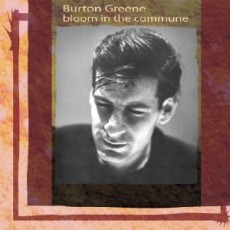
Burton Greene was born June 14, 1937 in Chicago, Illinois and rose to popularity in the Sixties on New York’s free jazz scene gigging with Alan Silva and Marion Brown. He credited the Free Form Improvisation Ensemble in 1963, then joined Bill Dixon’s and Cecil Taylor’s Jazz Composers Guild in ’64.
During this period he gigged with Rashied Ali, Albert Ayler, Gato Barbieri, Byard Lancaster, Sam Rivers, Patty Waters and others while recording two albums as a leader. Burton moved to Europe in 1969, first to Paris then to Amsterdam delving into the Klezmer medium and recording with several different group configurations into the 90s.
Since the mid-1990s Greene has often performed and recorded in New York and along the East Coast with a modest catalogue that includes eleven recordings.. His autobiography written over 20 years, Memoirs of A Musical Pesty-Mystic, was published in 2001. His recent performances and recorded groups based in New York include duets, trios, quartets and quintets with Mark Dresser, Roy Campbell, Lou Grassi, Adam Lane, Ed and George Schuller, Russ Nolan and Paul Smoker.
Take A Dose On The Road
More Posts: piano
Daily Dose Of Jazz…
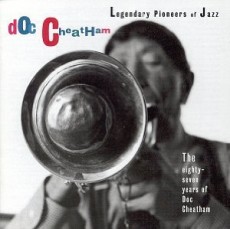
Adolphus Anthony Cheatham, better known as Doc Cheatham was born on June 13, 1905 in Nashville, Tennessee. Growing up without jazz, he was introduced by early recordings and touring bands of the late 1910s. Abandoning family plans to be a pharmacist to play music, he retained the name Doc and started with the soprano and tenor saxophone in addition to trumpet in the African American Vaudeville theatre.
He toured the TOBA circuit (Theatre Owners Booking Association) accompanying blues singers but it wasn’t until his move to Chicago and hearing King Oliver that his focus turned to jazz. A year later Louis Armstrong added his influence on Doc’s playing. Cheatham went on to play with Ma Rainey, worked in the big bands of Bobby Lee, Wilbur de Paris, Chick Webb, Sam Wooding, Cab Calloway, Fletcher Henderson, Benny Carter, Claude Hopkins and Teddy Wilson through the 30s and 40s.
By the late 40s into the 50s Doc play in New York City Latin bands of Ricardo Ray, Marcelino Guerra, Perez Prado and Machito. In the 60s he led his own band for five years then worked with Benny Goodman. In the 70s he began singing after scatting during a Paris recording session, was well received and he continued to sing for the rest of his life.
Cheatham created his best work after the age of 70, winning a Grammy with Nicholas Payton and Butch Thompson for the Verve Record release of “Doc Cheatham and Nicholas Payton”. Trumpeter, singer and bandleader Doc Cheatham continued playing until two days before his passing on June 2, 1997, eleven days shy of his 92nd birthday.
Dose A Day – Blues Away
More Posts: trumpet