


Daily Dose Of Jazz…
Harold de Vance Land was born on February 18, 1928 in Houston, Texas but was raised in San Diego, California. He started playing tenor saxophone at 16 and made his first recording as leader of the Harold Land All-Stars in 1949 for Savoy Records. By 1954 he had joined the Clifford Brown/Max Roach Quintet but due to family problems he moved to Los Angeles in 1955. There he led his own groups, played with Curtis Counce, and co-led groups with Bobby Hutcherson, Blue Mitchell and Red Mitchell.
Harold developed his hard bop playing with the Max Roach/Clifford Brown band into a personal, modern style. His tone was strong and emotional, yet displayed a certain fragility that made him easy to recognize. From the 1970s onwards his style showed the influence of John Coltrane.
In the early 1980s through to the early 1990s he worked regularly with the Timeless All Stars, a group consisting of Cedar Walton, Buster Williams, Billy Higgins, Curtis Fuller, and Bobby Hutcherson and sponsored by the Timeless jazz record label. Land also toured with his own band during this time, often including his son on piano and usually featuring Bobby Hutcherson and Billy Higgins as well. During these years he played regularly at Hop Singh’s in Marina Del Ray in the L.A area and the Keystone Korner in San Francisco.
As an educator he was a professor at the University of California, Los Angeles joining the Jazz Studies Program in 1996 teaching instrumental jazz combo. Tenor saxophonist Harold Land became a major contributor to hard bop and post bop jazz history, passing away from a stroke on July 27, 2001 at age 73.
More Posts: saxophone
Daily Dose Of Jazz…
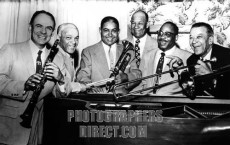
Wallace Bishop was born February 17, 1906 in Chicago, Illinois and started on drums as a teenager, studying under Jimmy Bertrand. His first professional gig was with Art Sims and his Creole Roof Orchestra in Milwaukee in 1926. Around this time he also played with Jelly Roll Morton, Bernie Young, Hughie Swift, Richard M. Jones and Tommy Dorsey.
Often addressed as “Bish”, from 1928 to 1930 he played with Erskine Tate followed with the Earl Hines Orchestra from 1931-1937. By the 1940s he was playing with Jimmie Noone, Coleman Hawkins, Don Redman, Phil Moore, Foots Thomas, John Kirby and Sy Oliver among others.
While touring Europe with Buck Clayton in 1949, Wallace elected to remain there, and found work both with noted European jazz musicians and with touring or expatriate Americans, including Bill Coleman, Don Byas, Ben Webster, Kid Ory, Milt Buckner, Buddy Tate and T-Bone Walker. Bishop recorded only two pieces as a bandleader in 1950, with a trio, but he continued to record regularly into the 1970s.
Wallace Bishop, a subtle and supportive jazz drummer who was one of the finest drummers of the swing era, passed away on May 2, 1986 in Hilversum, Holland.

The Jazz Voyager
Jazz Club Wheels: Natoseviceva 4, Novi Sad, Serbia / Telephone: 381 21 522 557 / Contact: Family Dujin. Founded in 1998, Jazz Club Wheels is situated in the center of Novi Sad, in Natoseviceva St. 4.
Since it opened the club hosted over 500 noncommercial music events. The main goal of the line up schedule is to promote and expand urban, jazz inspired culture. The program meets the needs of the people who stop by regularly. Even twelve years ago the club was recognized as the only club in Vojvodina with regular jazz line up or theme nights. On the menu are tapas different taste and cheeses.
The Jazz Club Wheels was called after the Aleksandar Dujin jazz album from 1993 “Wheelz Around the World”, symbolically representing time and music travel going on in the club. From the start Jazz Club Wheels was the place where the gigs were organized not because of the money and engagement, but because of the pleasure, experimenting and promoting the music, in which, all the musicians in Novi Sad took part in.
From Broadway To 52nd Street
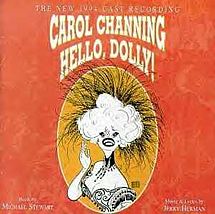
Hello Dolly opened at the St. James Theatre on January 16, 1964 with music composed by Jerry Herman. The show starred Carol Channing & David Burns, Eileen Brennan, Sondra Lee and Charles Nelson Reilly, running for a record 2,844 performances landing it amongst the grand collection of blockbuster hits. It was revived in 1967 with Pearl Bailey & Cab Calloway in the lead roles and in 1969, Barbra Streisand & Walter Matthau took the characters to the silver screen. The title song Hello Dolly and It Only Takes A Moment went on to become a part of the jazz catalogue.
The Story: At the turn of the 20th century in New York City, a brassy and intrepid matchmaker Dolly Galagher Levi is in town to find wealthy Horace Vandergelder a wife. However, unbeknownst to Horace, Ms. Levi has her sights set on him herself. While helping two rich pretenders to find love, Dolly finds romance and a husband for herself in this spoof on love and marriage.
Broadway History: Broadway, previously the home to jazz influenced choreographers like Cole, Fosse, and Robbins, saw a part of its nature change to reflect the mood of the country. While there were still blockbuster musicals of the old type – like My Fair Lady, Hello Dolly, Mame – a new generation of musicals reflected the changes in American society, and dance. Hair was a depiction of the rebellious nature of the hippie movement. And Fosse, that champion of syncopated, tap and minstrel based movement, absorbed the new 60s feel of dance with his hit musical Sweet Charity. In this show, Fosse based much of his movement on the social dances of the 1960s, while injecting his own unique brand of style and angular movement and jutting body parts. The movements of jazz dance had evolved to absorb the blossoming social scene. Broadway was no longer the spawning ground for theatrical jazz dance. It had become a pastiche of old standard styles and movements, and an incubator for a new form of jazz dance.
Sponsored By
www.whatissuitetabu.com
Daily Dose Of Jazz…
Henry Threadgill was born February 15, 1944, in Chicago, Illinois and first performed as a percussionist in his high school marching band before taking up the baritone saxophone and later a large portion of the woodwind instruments. He soon settled upon the alto saxophone and flute as his main instruments.
He was one of the original members of the legendary AACM – Association for the Advancement of Creative Musicians in Chicago, working under the guidance of Muhal Richard Abrams before leaving to tour with a gospel band. In 1967, he enlisted in the Army, playing with a rock band in Vietnam through 1968. Discharged in 1969 he returned to Chicago, formed a trio that eventually became “Air”, one of the most celebrated and critically acclaimed avant-garde jazz groups of the 1970s and 1980s.
Threadgill had moved to New York City and began pursuing his own musical visions, exploring musical genres in innovative ways with his first nonet X-75. In the early Eighties, Threadgill created the Henry Threadgill Sextet, his first critically acclaimed ensemble as a leader, with two drummers as a single unit. He has recorded three albums under X-75 for About Time Records, reformed his sextet and released three albums on the Novus label.
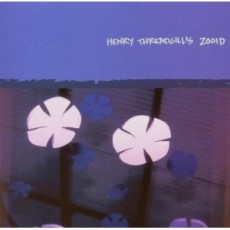
Since the 90s Threadgill has continued to compose, create, perform and record music with various group configurations such as “Very Very Circus” and “Zooid” utilizing electric guitars, French horn, Latin percussion, accordion, cello and tuba.