


The Jazz Voyager
The Jazz Garden: 1053 Veres Pálné u. 44/a, Budapest, Hungary / Tel: (+ 36-1) 266-7364 Fax: (+36-1) 266-7365
The Jazz Garden Music Club & Restaurant is a very special attraction in the very heart of Budapest where you can enjoy the atmosphere of a summer night in a starlit garden even though you are in a cellar. “Jazz Garden” proudly presents the celebrities of the Hungarian and international jazz scene nightly.
On the premises is a casual jazz club, a sophisticated restaurant and a nicely designed banquet room is available for your special events and parties. Food is served throughout every day and night.

Daily Dose Of Jazz…
Hadley Caliman was born December 1, 1932 in Los Angeles, California. While at Jefferson High School he studied with his fellow classmates trumpeter Art Farmer and saxophonist Dexter Gordon, and was known in the Central Avenue corridor as “Little Dex”. It was here during the 50s and by the 60s where he primarily gigged and the tenor was soon seen playing with Mongo Santamaria, the Gerald Wilson Big Band, Willie Bobo and Don Ellis and was briefly a member of a jazz-rock fusion group led by Ray Draper.
By the Seventies Hadley had moved to San Francisco and was performing and/or recording with Joe Henderson, Nancy Wilson, Carlos Santana, Joe Pass, Hampton Hawes, Bobby Hutcherson, Flora Purim, Elvin Jones, Freddie Hubbard, Jon Hendricks, Earl Andreza, Phoebe Snow and Patrice Rushen among others. He later moved to Seattle, Washington where he had been on the faculty of the Cornish College of the Arts and a featured soloist with the Seattle Repertory Jazz Orchestra.
Though one can hear Coltrane’s influence in his playing, it never overshadowed the earlier West coast bop or the myriad of musical genres he played that created his modern jazz sound. Tenor saxophonist and flautist Hadley Caliman passed away on September 8, 2010 at age 78 in Seattle, Washington where he had been an active player leading both a quartet and quintet.
More Posts: saxophone
From Broadway To 52nd Street
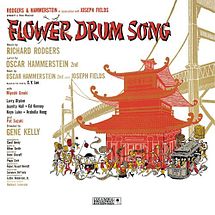
Flower Drum Song opens the curtains of the St. James Theatre on December 1, 1958 and runs for 600 performances. The music composed by Richard Rodgers and Oscar Hammerstein for actors Pat Suzuki, Juanita Hall, Miyoshi Umeki, Larry Blyden, Jack Soo, Arabella Hong, Ed Kenney and Keye Luke leave the world with the jazz classic Love, Look Away.
The Story: Wang Chi-yang, a wealthy 63-year-old man Chinese refugee lives in San Francisco’s Chinatown with his two sons. He has a cough, which symbolizes his authority and his resistance to American culture and refusal to adopt Western ways. He is also at odds with his sister-in-law and his sons who are assimilating. Older son Wang Ta woos nightclub dancer Linda, but discovering she has many men dumps her. Linda’s seamstress friend Helen cannot find a man and gets Ta drunk, seduces him, has a short-lived affair. Ta eventually abandons her and then she commits suicide.
Impatient at Ta’s inability to find a wife, Wang arranges a marriage for his son. However, before she arrives, Ta meets a young woman, May Li, and with his father’s approval he and May Li fall in love. He vows to marry her after she is falsely accused of stealing a clock. Wang struggles to understand the conflicts that have torn his household apart; his hostility toward assimilation is isolating him from his family. In the end Wang decides to go to a Chinese-run Western clinic, symbolizing that he is beginning to accept American culture.
Jazz History: Hard bop, an extension of bebop or “bop” music that incorporates influences from rhythm and blues, gospel and blues especially in the saxophone and piano playing. Hard bop was developed in the mid-1950s, partly in response to the vogue for cool jazz in the early 1950s. The hard bop style coalesced in 1953 and 1954, paralleling the rise of rhythm and blues. Miles Davis’ performance of “Walkin” the title track of his album of the same year, at the very first Newport Jazz Festival in 1954, announced the style to the jazz world. The quintet Art Blakey and the Jazz Messengers fronted by Blakey featured pianist Horace Silver and trumpeter Clifford Brown, who were leaders in the hard bop movement along with Davis.
Sponsored By

www.whatissuitetabu.com
Daily Dose Of Jazz…
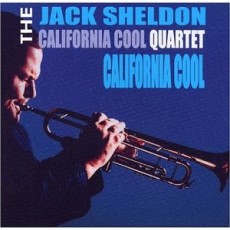
Jack Sheldon was born November 30, 1931 in Jacksonville, Florida became a professional trumpet player at the age of thirteen. It was during his teen years he moved to Los Angeles and subsequently joined the air force playing in military bands in Texas and California. He first gained recognition as part of the West Coast jazz movement in the 1950s performing and recording with Art Pepper, Gerry Mulligan and Curtis Counce.
Sheldon played the trumpet, sang, performed and was the sidekick and comedic foil on the Merv Griffin show. During the sixties he ventured further into television as an actor on such shows as Dragnet, The Girl With Something Extra, the Cara Williams Show and Run Buddy Run. He was also the voice used for “Conjunction Junction” and “I’m Just A Bill” on Schoolhouse Rock. He voice later appeared on such sitcoms as The Simpsons and Family Guy.
He has played with Jimmy Guiffre, Herb Geller, Mel Torme, Wardell Gray, Helen Humes, Gary Burton, June Christy, Rosemary Clooney and the big bands of Stan Kenton, Bill Berry, Tom Kubis and Benny Goodman.
Jack performed the trumpet solo for the theme song “The Shadow Of Your Smile” on the soundtrack of the 1965 movie, The Sandpiper, appeared in the Oscar-nominated documentary “Let’s Get Lost” about the life of fellow jazz trumpeter Chet Baker, performed a trumpet solo in the Coppola film “One From The Heart”, appeared as an ill-fated trumpeter in Radioland Murders, and is the subject of an award winning feature documentary, “Trying to Get God: The Jazz Odyssey of Jack Sheldon”. The trumpeter continued to be an active performer of the bebop and cool jazz schools until his transition on December 27, 2019.
Give A Gift Of Jazz ~ Share

#preserving genius
More Posts: trumpet
Daily Dose Of Jazz…
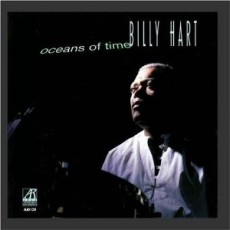
William “Billy” Hart was born November 29, 1940 in Washington, D.C. is a drummer who worked first with soul groups Sam & Dave and Otis Redding then later with locals Buck Hill and Shirley Horn. This led to work as a sideman with the Montgomery Brothers, Jimmy Smith, and Wes Montgomery prior to his death in 1968.
Hart moved to New York and started playing with Eddie Harris, Pharoah Sanders, Marian McPartland and recording with McCoy Tyner, Wayne Shorter and Zawinul. In 1969 he became a member of Herbie Hancock’s sextet followed by another stint with McCoy Tyner, then Stan Getz, Quest and Miles Davis along with extensive freelancing. In the nineties he worked with Charles Lloyd, Joe Lovano, Tom Harrell and performed with the Three Tenors – Dave Liebman, Joe Lovano and Michael Brecker.
Billy Hart is one of the most in-demand jazz drummers and educators alive and has recorded more than 500 albums as a sideman. Since the early 1990s has spent considerable time at the Oberlin Conservatory of Music, is an adjunct professor at the New England Conservatory of Music and at Western Michigan University. He conducts private lessons through The New School and New York University. He also often contributes to the Stokes Forest Music Camp and the Dworp Summer Jazz Clinic in Belgium, while leading a quartet Mark Turner, Ethan Iverson and Ben Street.
More Posts: drums