

Daily Dose Of Jazz…
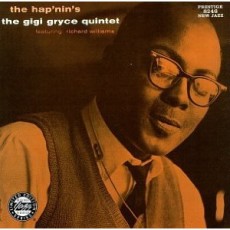
Gigi Gryce was born George General Grice, Jr. on November 28, 1925 in Pensacola, Florida but grew up in Hartford Connecticut. He studied classical composition at the Boston Conservatory, studied with private teachers, then won a Fulbright scholarship and continued his studies in Paris.
His performing career was relatively short in comparison to other musicians of his generation, his work little known, however, several of his compositions have been covered extensively – “Minority,” “Social Call,” and “Nica’s Tempo” are frequently heard in mainstream jazz venues. Gigi’s compositional bent includes harmonic choices similar to those of Benny Golson, Tadd Dameron and Horace Silver in the contemporaneous period. Gryce’s playing, arranging, composing is consonant with the hard bop classic period was generally considered to be 1953-1965.
During the 1950s he achieved some renown for his innovative bebop playing, his primary instrument being the alto saxophone. Among the musicians with whom Gryce performed were Thelonious Monk, Tadd Dameron, Lionel Hampton, D, Howard McGhee, Clifford Brown, Art Farmer, Lee Morgan, Max Roach, Oscar Pettiford, Teddy Charles and Benny Golson. In 1955, Gryce formed the Jazz Lab Quintet, which included trumpeter Donald Byrd.
In the mid-1950s he converted to Islam and adopted the name Basheer Qusim. By the 60s he stopped using the name Gigi Gryce partly due to personal problems that took their toll on his financial and emotional state, withdrawing from performing. During this last period of his life he taught at a series of public schools in Long Island and New York City and the Community Elementary School 53 on 168th Street in the Bronx, the last school renamed the Basheer Qusim School in his honor.
Gigi Gryce, saxophonist, flautist, clarinetist, composer, arranger, educator, and big band leader died of an apparent epileptic seizure on March 14, 1983 in Pensacola, Florida.

Daily Dose Of Jazz…
Wessell “Warmdaddy” Anderson was born on November 27, 1966 in Brooklyn, New York and grew up in the tough Bedford-Stuyvesant and Crown Heights neighborhoods. By 14 he was deeply immersed in jazz at the urging of his father, who was a drummer. He played alto saxophone in local clubs from his early teenage years, and studied at the Jazzmobile workshops with Frank Wess, Charles Davis and Frank Foster. He met Branford Marsalis who convinced him to study with clarinetist Alvin Batiste at Southern University in Louisiana.
Anderson began touring with the Wynton Marsalis Septet, collaborating with Marsalis through the middle of the 1990s helping to make some of the most defining music. He continued to sit in the first alto chair with the Lincoln Center Jazz Orchestra. In 1994, he signed and released his debut album, “Warmdaddy In The Garden of Swing” with Atlantic Records followed by his sophomore release “The Ways of Warmdaddy” and then “Live at the Village Vanguard”.
Over the years he develop his sound combining New Orleans jazz with the sweeping blues style of Cannonball Adderley. He has played with contemporaries Eric Reed, Irvin Mayfield, Steve Kirby, Xavier Davis, Jaz Sawyer and Ben Wolfe among others while maintaining an East Lansing, Michigan restaurant called “Gumbo & Jazz”.
More Posts: saxophone
Daily Dose Of Jazz…
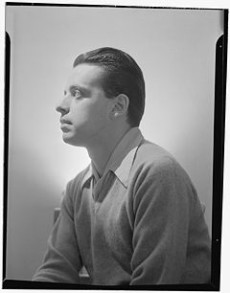
Nesuhi Ertegun was born November 26, 1917 in Istanbul, Turkey, moving to Washington, DC when his father was appointed Ambassador to the United States in 1935. From an early age, Nesuhi’s primary musical interest was jazz, having attended concerts in Europe. While at the Turkish Embassy he also promoted jazz concerts during 1941-44.
After his father’s death in 1944, Ertegun stayed in the U.S., moved to California, got married and established the Crescent record label. He purchased Jazz Man Records and issued traditional jazz recordings producing classic Kid Ory revival recordings plus sessions with Pete Daily and Turk Murphy. He went on to work with Contemporary Records and Imperial Records developing their jazz catalog for the later.
In 1955, he was preparing to work for Imperial Records to develop their jazz record line and develop a catalog of LPs. However, his younger brother Ahmet Ertegun and Jerry Wexler persuaded him to become a partner in Atlantic Records over the jazz and LP department.
As a producer he worked with John Coltrane, Charles Mingus, Ornette Coleman, the Modern Jazz Quartet, Ray Charles, Chris Connor, the Drifters, Bobby Darin, Roberta Flack and numerous others while being first recruiting songwriters and producers Leiber and Stoller. He went on to establish WEA International venturing into Latin-American rockers and other world music groups and remained at the helm until his retirement in 1987.
Nesuhi Ertegun, writer, editor, producer, educator, art collector and soccer promoter died on July 15, 1989, at the age of 71, due to complications following cancer surgery. He was posthumously inducted into the Rock and Roll Hall of Fame, awarded the Grammy Trustees Award for lifetime achievement, the National Soccer Hall of Fame and had the Nesuhi Ertegun Jazz Hall of Fame at Jazz at Lincoln Center dedicated to him.
Daily Dose Of Jazz…
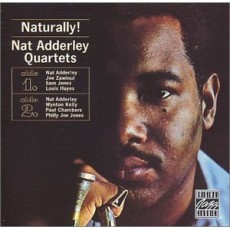
Nathaniel Adderley was born on November 25, 1931 in Tampa, Florida but grew up in Tallahassee when both his parents were hired to teach at Florida A&M University. While living in Tallahassee in the early 40s, he and his brother Julian played with Ray Charles, in the ‘50s he worked with his brother’s original group, and with Lionel Hampton and J. J. Johnson.
In 1959 joined his brother’s new quintet and stayed with it until Cannonball’s death in 1975. It was during this tenure that Nat composed “Work Song,” “Jive Samba,” and “The Old Country” for this group that have since become jazz standards.
After his brother’s death he led his own groups and recorded extensively working with Ron Carter, Sonny fortune, Johnny Griffin, Antonio Hart and Vincent Herring, among others. Adderley moved to Harlem in the 1960s, Teaneck, New Jersey in the 1970s, before moving to Lakeland, Florida where he was instrumental in the founding and development of the annual Child of the Sun Jazz Festival, held annually at Florida Southern College.
Nat Adderley, cornetists and trumpeter in the hard bop and soul jazz genres, lived with diabetes throughout his career, an illness that resulted in his death from complications on January 2, 2000. He left the jazz world a body of work that has been memorialized by a host of jazz musicians.

Daily Dose Of Jazz…
Teddy Wilson was born Theodore Shaw Wilson in Austin, Texas on November 24, 1912. By his teenage years he was enamored with the music of Bix Beiderbecke and King Oliver and decided to make a living playing jazz. He studied piano and violin at Tuskegee Institute where his father was head of the English Department and his mother was chief librarian. A year later he joined Speed Webb’s band as one of seven arrangers, re-orchestrating in close harmony the songs of Beiderbecke and Hodges. He went on to join Louis Armstrong, understudying Earl Hines in his Grand Terrace Café Orchestra, and Benny Carter’s Chocolate Dandies.
By 1935 Teddy joined Benny Goodman trio with Gene Krupa becoming the first black musician to perform in public with a previously all-white jazz group. With the help of jazz producer John Hammond, Wilson got a contract with Brunswick Records in 1935 and started recording hot swing arrangements of popular songs of the day with the growing jukebox trade in mind. He recorded fifty hit records with various singers including Lena Horne, Helen Ward and Ella Fitzgerald while also participating in sessions with Lester Young, Roy Eldridge, Charlie Shavers, Red Norvo, Buck Clayton and Ben Webster.
Wilson formed his own short-lived big band in 1939 and then led a sextet at Café Society from 1940 to 1944. In the 1950s he taught at the Julliard School, appeared as himself in the motion picture The Benny Goodman Story, and during the next two decades lived quietly in suburban New Jersey. Pianist and arranger Teddy Wilson passed away on July 31, 1986 in New Britain, Connecticut at age 73.

More Posts: piano