


From Broadway To 52nd Street
West Side Story opened at the Winter Garden Theatre on September 26, 1957. Stephen Sondheim and Leonard Bernstein composed and wrote the score for the musical that ran 732 performances. Larry Kert, Carol Lawrence, Chita Rivera, Mickey Cain and Ken Leroy were the stars of the show that gave the jazz world such classics as Somewhere, I Feel Pretty, Tonight, Maria and Cool.
The Story: On the streets of West Side Manhattan in the late summer of 1957, there is mounting racial tension between rival white American and Puerto Rican gangs to maintain control of the neighborhood – the Jets and the Sharks. An interracial relationship blossoms between Tony and Maria who see past their ethnic differences. However, Maria’s brother Bernardo and leader of the Sharks does not want this love-match to succeed. Destined to be short-lived, a rumble between the two gangs ensues, Maria begs Tony to stop it, the fight escalates from lists to knives and Tony ultimately kills Bernardo.
When Bernardo’s girlfriend Anita learns of his death she is overcome with emotion and seeking out Maria, who already knows, discovers Tony is with her. Tony leaves for refuge at Doc’s drugstore after which they learn that Chino was seeking revenge for Bernardo by shooting Tony. Maria begs Anita to go tell Tony but after a mock rape at the hands of the Jets, Anita delivers a different message – that Maria is dead. In shock Tony runs out screaming for Chino to come kill him. On the playground Tony and Maria see each other but before they can embrace Chino shoots and kills Tony.
Broadway History: The Off-Off-Broadway movement began in 1958 as a reaction to Off-Broadway, and a “complete rejection of commercial theatre”.[2] Among the first venues for what would soon be called “Off-Off-Broadway” were coffeehouses in Greenwich Village, particularly the Caffe Cino at 31 Cornelia Street, operated by the eccentric Joe Cino, who early on took a liking to actors and playwrights and agreed to let them stage plays there without bothering to read the plays first, or to even find out much about the content. Also integral to the rise of Off-Off-Broadway were Ella Stewart at La MaMa and Al Carmines at the Judson Poets’ Theater, located at Judson Memorial Church, Playbox Studio, New York Theatre Ensemble, The Old Reliable, The Dove Company and the Nuyorican Poets Cafe.
Sponsored By

www.whatissuitetabu.com
Daily Dose Of Jazz…
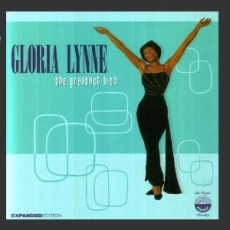
Gloria Lynne was born Gloria Wilson on November 23, 1931 in New York City and grew up in Harlem. Her professional career began in 1951 after winning first prize at the “Amateur Night” at the Apollo Theater. She shared the stage with contemporary nightclub vocal ensembles as well as with Ella Fitzgerald. During the Fifties she recorded as part of such groups as The Enchanters, The Del Tones and recording as a soloist under her birth name. However, most of her work was released under her stage name on both Everest and Fontana record labels.
Gloria showed much promise early on, especially after TV appearances, including the Harry Belafonte Spectacular, but her development suffered through poor management, some unscrupulous recording executives who profited while she was left virtually penniless, saved only by the fact that she was able to work steadily and earn her money from performance.
Throughout the 1960s she had several hits including “June Night”, “Love I Found You,” and “I Wish You Love” in 1964 that became a big hit and her signature song, “I’m Glad There Is You” and a pop tune “(You don’t have to be a) Tower Of Strength” that proved her versatility. Lynne went on to record such albums as “Soul Serenade”, “Love And A Woman”, “Where It’s At”, and “Here, There And Everywhere” all of which showcased her versatility in jazz, R&B, soul and melodic “pop”.
During her earlier years on-the-road she shared bills with Ray Charles, Billy Eckstine, Johnny Mathis, Ella Fitzgerald and Harry Belafonte. As Lynne moved into jazz in her later career she worked with top-flight musicians and arrangers and performed with many of the jazz greats, including Quincy Jones, Bobby Timmons, Philly Joe Jones and Harry “Sweets” Edison. She penned lyrics with Herbie Hancock for his “Watermelon Man” and “All Day Long” with Kenny Burrell.
She has been inducted into the National Black Sports and Entertainment Hall of Fame, honored with a Pioneer Award by the Rhythm & Blues Foundation, with Gloria Lynne Day in New York City, received the National Heritage Award, the Prestigious Eagle Award and Outstanding Achievement In Jazz at the New York MAC Awards.
Vocalist Gloria Lynne continued to record, perform and write until passing away on October 15, 2013 at age 83 in Newark, New Jersey.
More Posts: vocal
Daily Dose Of Jazz…
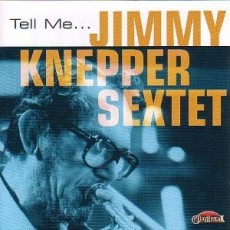
James M. Knepper was born November 22, 1927 in Los Angeles, California. He began playing trombone at nine, started playing professionally at 15 and worked with the big bands Freddie Slack, Roy Porter, Charlie Spivak, Charlie Barnet, Woody Herman and Claude Thornhill during the late forties and early ‘50s.
A good friend and arranging/transcribing partner of bassist and composer Charles Mingus, Knepper was twice on the receiving end of Mingus’ legendary temper. The first incident was being a punch in the mouth while onstage at a memorial concert in Philadelphia, the second punch landed in Mingus’ apartment broke one of his teeth ruining his embouchure and resulting in the permanent loss of the top octave of his range on the trombone, thus ending their working relationship.
Throughout his career Jimmy worked with Lee Konitz, Stan Kenton, Herbie Mann, Gil Evans, Benny Goodman, Thad Jones/Mel Lewis Orchestra, toured Africa and the Soviet Union, and cut sessions as a leader several albums on Debut, Bethlehem, Blackhawk, Steeplechase and Criss Cross labels among others.
Knepper’s nimble technique enabled him to articulate the trombone more in the manner of a saxophone coupled with the slurs and tonal variations of his predecessors. His improvisation was filled with subtle surprises and his reputation has remained strong in the jazz world over the years. After a long battle with Parkinson’s disease, Jimmy Knepper passed away on June 14, 2003.
More Posts: trombone
Daily Dose Of Jazz…
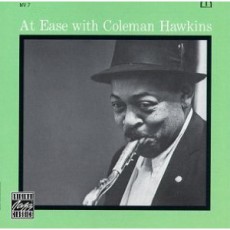
Coleman Randolph Hawkins was born on November 21, 1904 in St. Joseph, Missouri and named after his mother’s maiden name. He started out playing piano and cello prior to playing saxophone at age nine. By the time he turned 14, he was playing around eastern Kansas while attending Topeka High School and simultaneously studying harmony and composition for two years at Washburn College.
In 1921 Hawkins joined Mamie Smith’s Jazz Hounds, toured through 1923 and settled in New York City. Hawkins joined Fletcher Henderson’s Orchestra doubling on clarinet and bass saxophone and becoming a star soloist. He recorded with band mates Louis Armstrong and Henry “Red” Allen, a number of solo recordings with either piano or a pick-up band of Henderson musicians. In late 1934, he played with Jack Hylton’s band in London, toured Europe as a soloist until 1939 and worked with Django Reinhardt and Benny Carter in 1937 Paris.
Returning to the States he worked Kelly’s Stables, recorded two choruses of Body and Soul, his landmark recording of the Swing Era. Recorded as an afterthought at the session, it is notable in that Coleman ignores almost all of the melody, only the first four bars are stated in a recognizable fashion. In its exploration of harmonic structure it is considered by many to be the next evolutionary step in jazz recording from where Louis Armstrong’s “West End Blues” in 1928 left off.
Over the course of his long and prolific career Hawkins had an unsuccessful attempt at a big band, led a combo at Kelly’s Stables, played with Thelonious Monk, Oscar Pettiford, Miles Davis, Oscar Peterson, Herb Ellis, Ray Brown, Ben Webster, Max Roach, Howard McGhee, Sonny Rollins, John Coltrane, Roy Eldridge, J.J. Johnson, Fats Navarro and Duke Ellington among others, recorded a session with Dizzy Gillespie that is considered the first bebop recording and toured with Jazz at the Philharmonic. After 1948 Hawkins divided his time between New York and Europe, making numerous freelance recordings. In the 1960s, he appeared regularly at the Village Vanguard.
Tenor saxophonist Coleman Hawkins directly influenced many future bebop musicians such as Sonny Rollins and John Coltrane. In his later years he stopped recording, began drinking heavily and died of pneumonia on May 19, 1969 in New York.
Daily Dose Of Jazz…
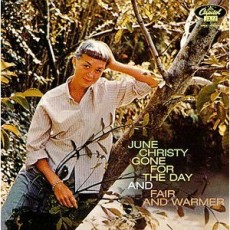
June Christy, born Shirley Luster on November 20, 1925 in Springfield, Illinois but grew up in Decatur, Illinois from the age of three. She began singing at 13 with the Decatur-based Bill Oetzel Orchestra continuing through high school and adding appearances with the Ben Bradley Band, and Bill Madden’s Band. Graduating she moved to Chicago, changed her name to Sharon Leslie, sang with the Boyd Raeburn group, then joined Benny Strong’s band and in 1944, with Strong’s band moved to New York.
In 1945, after hearing that Anita O’Day had left Stan Kenton’s Orchestra, she auditioned and got the role as a vocalist and her success was on the rise. She actually bore a heavy vocal and physical resemblance to Anita O’Day and it was during this time, she changed her name once again, finally becoming June Christy. I
n 1947 June started working on her own records with arranger and bandleader Pete Rugolo that produced her debut “Something Cool” in 1954 with husband Bob Cooper and Bud Shank. This album was instrumental in launching the vocal cool movement of the fifties. Throughout the decade she had a string of hits like Something Cool, Midnight Sun and I Should Care as she continued to release records, such as, “The Misty Miss Christy” that would set new standards for the music and influence future jazz vocalists.
During the 50s and 60s, Christy appeared on the top television programs of the day including Eddie Condon’s Floor Show, The Alan Young Show, The Jack Carter Show, The Jackie Gleason Show, The Tonight Show, The Nat King Cole Show, The Steve Allen Show, Playboy’s Penthouse, The Mike Douglas Show and The Joey Bishop Show. She embarked on dozens of concert tours throughout the U.S. and in Europe, South Africa and Japan.
June retired from the music business in 1969, only to take the stage again in financial crisis. In 1972, June sang at the Newport Jazz Festival in New York and reunited on stage with the Stan Kenton Orchestra. She recorded her final album “Impromptu” in 1977 but continued to perform at a few festivals over the next two decades with her final performance sharing the stage with Chet Baker in 1988. After struggling with illness for many years, vocalist June Christy passed away at her home in Sherman Oaks, California of kidney failure on June 21, 1990. She was 64.
More Posts: vocal