

Daily Dose Of Jazz…
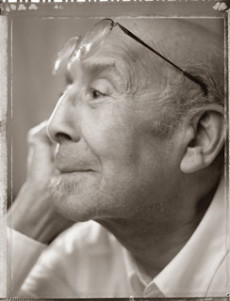
Allen “Al” Tinney was born on May 28, 1921 in Ansonia, Connecticut. As a child he was taught piano, worked in local dance bands and as a stage actor/dancer in several Broadway plays and was an original cast member in the production of George Gershwin’s Porgy and Bess. His piano playing was so good that he became rehearsal pianist and assistant to Gershwin.
From 1939 to 1943 he held sway in the house band at Monroe’s Uptown House playing with young musicians who gravitated to him like Charlie Parker, Max Roach, Little Bennie Harris, George Treadwell and Victor Coulsen. An influential bebop pianist his playing was light, flowing and occasionally percussive, while his improvisations were harmonically advanced for the period and his style can be heard in the playing of Bud Powell, George Wallington, Al Haig, and Duke Jordan.
Abhorring the connection between jazz and drugs, by 1946 Tinney began to play less jazz and more in other styles. He was a member of The Jive Bombers who were one hit wonders with “Bad Boy” in 1957. He moved to Buffalo in 1968, played local jazz clubs, worked in the state prison music program, and lectured at SUNY Buffalo. He recorded one album as a leader with Peggy Farrell titled Peg & Al in 2000.
Pianist Allen Tinney passed away on December 11, 2002 in Buffalo, New York at age 81.
More Posts: piano
Daily Dose Of Jazz…
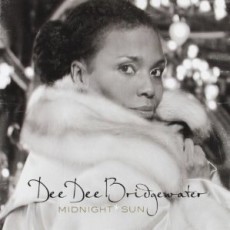
Dee Dee Bridgewater was born Denise Eileen Garrett on May 27, 1950 in Memphis, Tennessee but grew up in Flint, Michigan. Exposed to jazz as a young girl by her father who was a jazz trumpeter and music teacher, she was singing in rock and R&B bands by age sixteen. Two years later she enrolled at Michigan State University, then transferred to the University of Illinois and toured the Soviet Union with their jazz band in 1969. Then in 1970 she met trumpeter Cecil Bridgewater, married and moved to New York City where he got a gig playing with Horace Silver.
In the early seventies Bridgewater joined the Thad Jones-Mel Lewis Jazz Orchestra as lead vocalist, marking her commencement of her jazz career. She subsequently performed with such greats as Sonny Rollins, Dizzy Gillespie, Dexter Gordon, Max Roach, Rahsaan Roland Kirk and others over the course of a career spanning four plus decades.
Dee Dee Bridgewater is a two-time Grammy Award winning singer-songwriter, a Tony Award winning actress, host of NPR’s Jazzset, and a United Nations Ambassador for the Food and Agriculture Organization. She has paid musical tribute to Ella Fitzgerald with her 1997 Grammy winning Dear Ella recording, to Horace Silver with her Love and Peace, and Billie Holiday with her 2010 Eleanora Fagan (1915-1959) To Billie With Love from Dee Dee.
Her album This Is New investigated the music of Kurt Weill, sang French classics on J’ai Deux Amours and brought the contributions of African musicians of Mali alive with Red Earth. She has performed on nearly every major stage around the world and continues to record, perform and tour.
More Posts: vocal
Daily Dose Of Jazz…
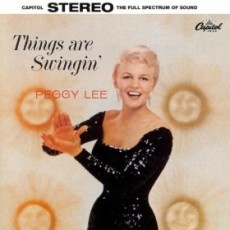
Peggy Lee was born Norma Deloris Egstrom on May 26, 1920 in Jamestown, North Dakota. The seventh of eight children of Norwegian and Swedish ancestry, her mother died when she was four. She began singing on a local radio station during her high school years, and then ventured to Fargo where Ken Kennedy of WDAY changed her name to Peggy Lee. At 17 she left home for Los Angeles.
Making her way to Chicago’s Buttery Room, Lee caught the attention of Lady Alice Duckworth who was so impressed brought her fiancé Benny Goodman the next night. That chance encounter landed her a gig with Goodman for two years, replacing Helen Forrest in 1941.
Peggy had her first #1 hit with “Somebody Else Is Taking My Place” in1942 followed by the million record seller “Why Don’t You Do Right” that made her famous by 1943. Her signature song became “Fever” to which she added some lyrics. In 1948 she joined Perry Como and Jo Stafford as one of the rotating host of NBC’s Chesterfield Supper Club. As a composer she collaborated with Laurindo Almeida, Duke Ellington, Quincy Jones, Johnny Mandel, Marian McPartland, Dave Grusin and Lalo Schifrin among others.
Lee played opposite Danny Thomas in the 1952 remake of the Jazz Singer, in 1955 played a despondent, alcoholic blues singer in Pete Kelly’s Blues that garnered her an Oscar nomination for Best Supporting Actress, and voiced several characters in Disney’s Lady and the Tramp for which she later had to sue Disney for video royalties.
From her humble beginnings as a vocalist on local radio she forged her own sophisticated persona, evolving into a multi-faceted artist and performer, receiving 12 Grammy nominations, three wins including a Lifetime Achievement Award and induction into the Songwriters Hall of Fame among other awards and accolades. Peggy Lee, whose career as a jazz and pop singer, songwriter, composer and actress spanned nearly seven decades passed away due to complications from diabetes and a heart attack on January 21, 2002.
More Posts: vocal
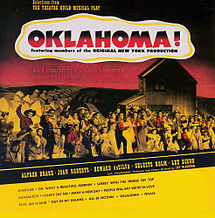
From Broadway To 52nd Street
The curtain rose on Oklahoma on the stage at the St. James Theatre on March 3, 1943. The cast consisted of Alfred Drake, Joan Roberts, Celeste Holm and Lee Dixon performing music and lyrics by Richard Rodgers and Oscar Hammerstein. Running 2,212 performances, the musical would go on to receive rave reviews as a film thirteen years later and str such greats as Shirley Jones, Gordon McRae, Rod Steiger and Eddie Albert. From the play came two songs that became jazz standards – People Will Say We’re In Love and The Surrey With The Fringe On Top.
The Story: The musical is about Laurie, a country girl, who is courted by a cowboy, Curly, and is pursued by the villain Jud, who also sees her as a love interest.
Broadway History: As change came to the Broadway play in the early 1940s, jazz musicians also sought change by looking for new directions to explore. A new style of jazz was born, called bebop. It had fast tempos, intricate melodies and complex harmonies. Bebop was considered jazz for intellectuals. The demise of the huge big bands was imminent to be replaced by smaller groups that did not play for dancing audiences but for listening audiences.
Sponsored By

www.whatissuitetabu.com
More Posts: broadway
Daily Dose Of Jazz…
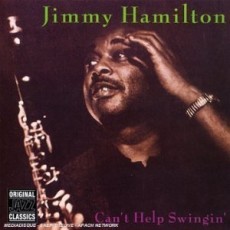
Jimmy Hamilton was born on May 25, 1917 in Dillon, South Carolina but grew up in Philadelphia. He learned to play piano and brass instruments and by the thirties he was playing the latter in local bands. He switched to clarinet and saxophone and by 1939 was playing with Lucky Millinder, Jimmy Mundy and Bill Doggett, then going to work for Teddy Wilson in 1940.
After a two-year stay with Wilson he played with Eddie Heywood and Yank Porter before replacing Barney Bigard in Duke Ellington’s orchestra in 1943. Over the next twenty-five years with Ellington his sound on saxophone had an R&B style while his clarinet was more precise, correct and fluent and it was during this time that he wrote some of his own material.
Leaving the Ellington orchestra, Hamilton played and arranged on a freelance basis, before spending the 1970s and 1980s in the Virgin Islands teaching music, occasionally returning to the U.S. for performances with John Carter’s Clarinet Summit. He retired from teaching but continued to perform with his own groups from 1989 to 1990.
The clarinetist, saxophonist, arranger, composer and music educator Jimmy Hamilton died in St. Croix, Virgin Islands at the age of seventy-seven on September 20, 1994.