

From Broadway To 52nd Street
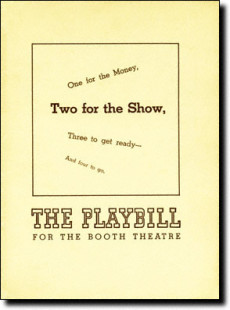
Two For The Show opened on Broadway at the Booth Theatre on February 8, 1940 and after 124 performances the curtain came down for its final descent on May 25, 1940. Directed by John Murray Anderson with the sketches directed by Joshua Logan and musical staging by Robert Alton, the original cast included later Hollywood notables as Eve Arden, Alfred Drake, Betty Hutton and Keenan Wynn.
The Story: This was a revue with several sketches being performed such as “The Age Of Innocence” and “Cookery” written by Richard Hadyn. There were two other revues in this series, all conceived and directed by John Murray Anderson: One for the Money (February 4, 1939-May 27, 1939), and Three to Make Ready (March 7, 1946-December 14, 1946). The most notable song introduced in the show was “How High The Moon” which subsequently has been recorded by many jazz artists, becoming a well-known standard
Jazz History: Bebop or bop is a style of jazz characterized by fast tempo, instrumental virtuosity and improvisation based on the combination of harmonious structure and melody. It was developed in the early to mid-1940s and first surfaced in musicians’ argot sometime in the first two years of American involvement in WWII.
The origins of the term “bebop” has been debated by numerous authorities and researchers usually stated to derive from nonsense syllables or vocables used in scat singing, and is supposed to have been first attested in 1928. However, some researchers speculate that it was a term used by Charlie Christian because it sounded like something he hummed along with his playing.Yet, Dizzy Gillespie’s version of the story relates that the audiences coined the name after hearing him scat the then-nameless tunes to his players and the press ultimately picked it up, using it as an official term: “People, when they’d wanna ask for those numbers and didn’t know the name, would ask for bebop.”
Sponsored By

www.whatissuitetabu.com
Daily Dose Of Jazz…
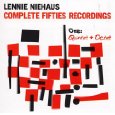
Lennie Niehaus was born June 1, 1929 in St. Louis, Missouri. A musical family heralded a concert pianist sister and a father who was an excellent violinist who started his son on the violin at seven, then switched to the bassoon. At 13 he began learning the alto saxophone and clarinet.
Always interested in composing and writing music Lennie studied music in college and in 1946 began playing professionally with Herb Geller, Herbie Steward and Teddy Edwards in 1946. Six months later he joined Stan Kenton, then drafted in 1952 but two years late rejoined Kenton after his discharge.
Leaving Kenton in 1959, Niehaus began composing, moved back to Los Angeles and arranged for the King Sisters, Mel Torme, Dean Martin, and Carol Burnett. Three years later saw him orchestrating for film composer Jerry Fields, a relationship that yielded more than sixty TV shows and films.
He orchestrates his own pieces and never forgets his jazz roots in film, writing jazz and using jazz musicians like Marshall Royal, Bill Perkins, Pete Jolly, Mike Land, and Clint Eastwood. He was the musical director for the Charlie Parker bio-feature, Bird.
After many years of not playing his alto saxophone at all, Niehaus returned to performing, reportedly in top form. He continues to arrange, compose and play alto on the West Coast jazz scene.
Daily Dose Of Jazz…
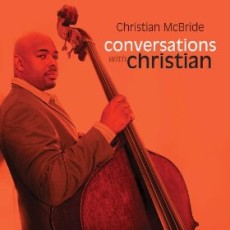
Christian McBride was born May 31, 1972 in Philadelphia, Pennsylvania into a family of bassists, his father Lee Smith and great uncle Howard Cooper who served as his early mentors.
Widely considered to be one of the best bassists of his generation in the jazz community, McBride has performed and recorded with Freddie Hubbard, Joe Henderson, McCoy Tyner, Herbie Hancock, Pat Metheny, Diana Krall, Roy Haynes, Joshua Redman, Chick Corea and Sonny Rollins to name a few as well as in the hip hop, soul, pop and classical genres with The Roots, Kathleen Battle, Carly Simon, Sting, James Brown and others.
Since 2000 Christian has fronted his own band and has become one of the least predictable bands if not intoxicating. Equally adept on the electric bass he was part of The Philadelphia Experiment with Uri Caine and Ahmir “Questlove” Thompson. He took over the relinquished Creative Chair of Jazz with the L.A. Philharmonic from Dianne Reeves, that he held until Herbie Hancock took over four years later in 2010. He is co-director of the new National Jazz Museum in Harlem.
McBride released his first big band album, titled “The Good Feeling” in 2011 for which he won his third Grammy for Best Large Jazz Ensemble Performance.
He currently leads four groups – “Inside Straight” featuring alto/soprano saxophonist Steve Wilson, vibraphonist Warren Wolf, pianist Peter Martin and drummer Carl Allen; a trio with pianist Christian Sands and drummer Ulysses Owens, Jr.; an 18-piece big band, and an experimental group called “A Christian McBride Situation” with pianist/keyboardist Patrice Rushen, turntablists DJ Logic and Jahi Sundance, saxophonist Ron Blake and vocalist Alyson Williams.
More Posts: bass
Daily Dose Of Jazz…
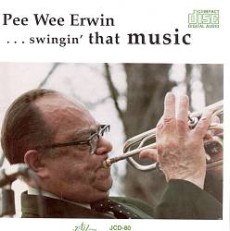
Pee Wee Erwin was born on May 30, 1913 in Falls City, Nebraska. Erwin started on trumpet at age four. He played in several territory bands before joining the groups of Joe Haymes from 1931-1933 and Isham Jones from 1933 to 1934.
By 1934 Pee Wee moved to New York City where he became a prolific studio musician, performing on radio and in recording sessions. He played with Benny Goodman in 1934-35, then with Ray Noble in 1935. The next year he joined Goodman again, taking Bunny Berigan’s empty chair. In 1937 he again followed Berigan, this time in Tommy’s Dorsey’s orchestra, where he remained until 1939.
Erwin led his own big band in 1941-42 and 1946. In the 1950s he played Dixieland in New Orleans, and in the 1960s formed his own trumpet school with Chris Griffin; among its graduates was Warren Vache. Erwin played up until the year of his death, recording as a leader for United Artists in the 1950s and issuing six albums in 1980 and ’81, the last two years of his life.
Trumpeter Pee Wee Erwin passed away on June 20, 1981 in Teaneck, New Jersey.
More Posts: trumpet
Daily Dose Of Jazz…
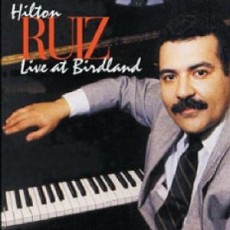
Hilton Ruiz was born in New York City on May 29, 1952 of Puerto Rican heritage. He began playing piano at the age of eight, and gigged with Freddie Hubbard and Joe Newman when he was young. Later, he was Rahsaan Roland Kirk’s main pianist from 1974 to 1977 and was featured on such records as The Case of the 3 Sided Dream in Audio Color and The Return of the 5000 Lb. Man.
Hilton recorded several solo albums between the 1980s and 2000s. On May 19, 2006, found unconscious on Bourbon Street in New Orleans, police concluded that he stumbled and fell and was not attacked. As a result of the accident, he remained in a coma until eventually passing away on June 6, 2006 at the age of 54.
Hilton Ruiz, jazz pianist steeped in Afro-Cuban music, was also a talented bebop musician.
More Posts: piano