

Daily Dose Of Jazz…
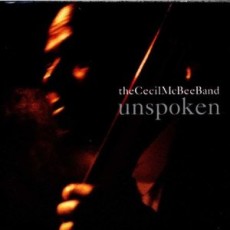
Born May 19, 1935 in Tulsa, Oklahoma bassist Cecil McBee studied clarinet at school before switching to the bass at 17 and began playing in local clubs. After matriculating through Ohio Central State University with a degree in music, he spent two years in the army conducting the band at Fort Knox.
Cecil McBee was working with Dinah Washington by 1959, three years later moved to Detroit and worked with Paul Winters folk-rock band, then moved to New York in the mid-60s where his jazz career took an earnest turn. He began working with Miles Davis, Andrew Hill, Sam Rivers, Jackie McLean, Wayne Shorter, Charles Lloyd, Yusef Lateef, Keith Jarrett, Freddie Hubbard, Wood Shaw and Alice Coltrane all by the time 1972 arrived.
In 1975 he started his own group and made a number of recordings, became a member of the group Almanac but is best known for his as a sideman over the past several decades. One of the most influential bassist in jazz, Cecil McBee teaches at the New England Conservatory in Boston, Massachusetts and remains one of post-bops versatile bassist who delivers a rich, full-bodied tone.

More Posts: bass

From Broadway To 52nd Street
Lady In The Dark took the stage at the Alvin Theatre on January 23, 1941. The musical starred Gertrude Lawrence, McDonald Carey, Dianne Kaye and Victor Mature with the music composed by Kurt Weill and lyrics by Ira Gershwin. It ran for four hundred and sixty-seven performances. Beyond its Broadway run, Lady In The Dark would b staged in the United Kingdom in 1981, was also made into a 1944 film and a live 1954 television special. Except for the final song, all the music in the play is heard in three extended dream sequences: the Glamour Dream, the Wedding Dream, and the Circus Dream which, to some extent, become three small operettas integrated into a straight play. The final song, “My Ship”, which went on to become a jazz standard, functioned as a leitmotif for Liza’s insecurity: as each dream commences, a snippet of the tune is heard, as it is a haunting melody which Liza recognizes but cannot name, or sing with words, until her anxiety is resolved.
The Story: The protagonist, Liza Elliott, is the unhappy albeit successful editor of a fashion magazine, Allure, who is undergoing psychoanalysis. Relating a dream to her analyst, all the familiar male figures in her life appear in her dream but they act in unfamiliar ways. By recounting her dream, Liza realizes that her father’s disdain for her as a child has warped her relations with men.
Broadway History: Innovations to Broadway would come in 1943 with Rodgers & Hammerstein’s Oklahoma, which integrated music, song, and dance with a detailed plot. West Side Story followed in these footsteps in 1957 by introducing serious themes, causing the genre to be called simply “musicals”. In 1967 Hair would herald the rock musical to prominence.
Sponsored By

www.whatissuitetabu.com
Daily Dose Of Jazz…
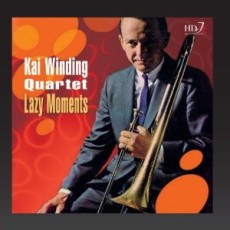
Kai Chresten Winding was born in Aarhus, Denmark on May 18, 1922 and when he was 12 his family immigrated to the United States. Graduating from Stuyvesant High School in 1940 and immediately commence on a professional path in Shorty Allen’s band. He followed with stints in the bands of Sonny Durham and Alvino Rey prior to service in the Coast Guard during WWII.
After the war, Winding worked with Benny Goodman, Stan Kenton, and participated in the Birth of the Cool sessions. In 1954 he joined forces with J.J. Johnson and the collaboration produced some of the greatest trombone duet recordings, first on Savoy then Columbia. During this period he arranged and composed many of the songs they recorded and experimented with different instrumentation in brass ensembles and used a trombonium during an octet session.
During the 1960s, Kai had a long stint at Verve Records working with Creed Taylor that produced his hit recording “More” the theme from the movie Mondo Caine. In the 1970s and early 1980s, Kai recorded for a number of independent record labels, conducted clinics, wrote instructional jazz trombone books, played jazz concerts and even reunited with Johnson for a live concert in Japan. Kai Winding, jazz trombonist, composer and arranger died of a brain tumor in New York City on May 6, 1983.
More Posts: trombone
Daily Dose Of Jazz…
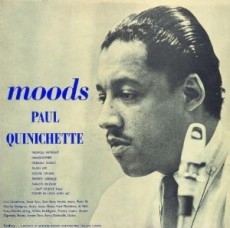
Paul Quinichette was born on May 17, 1916 in Denver, Colorado. Known as the Vice President or Vice Prez for his emulation of the breathy style of Lester Young a.k.a. Prez, but Quinichette was also capable of a gruffer style of playing.
The young Paul started playing the saxophone and clarinet, first on alto and then switching to tenor as R&B work started rolling in. Gaining experience playing with Nat Towles, Lloyd Sherock and Ernie Fields he became a feature in Jay Mcshann’s band from 42-46. He followed with stints on the west coast with Johnny Otis, and in New York with Louis Jordan, Lucky Millinder, Red Allen and Hot Lips Page.
Quinichette’s big break came when Basie hired him to play solos like Lester Young. His success with Basie garnered him an Emarcy record contract, the release of several albums and a modicum of fame. Over the course of his career Quinichette worked with Benny Goodman, recorded with Lester Young, John Coltrane, Billie Holiday, Sammy Price and Buddy Tate but mainly led his own group sessions.
In the late 50s he left music to become an electrical engineer only to return briefly in the Seventies. Poor health forced retirement for tenor saxophonist Paul Quinichette who passed away on May 25, 1983 in New York City.
More Posts: saxophone
Daily Dose Of Jazz…
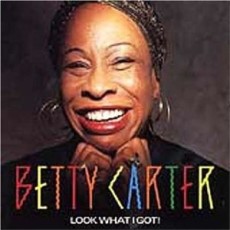
Betty Carter was born Lillie Mae Jones on May 16, 1929 in Flint, Michigan but grew up in Detroit. The first music she heard was church music as her father led a choir. She studied piano at the Detroit Conservatory and winning a talent contest became a regular on the local club circuit. By 16 she was singing with Charlie Parker and would later perform with Dizzy Gillespie and Miles Davis.
Honing her scatting while touring with Lionel Hampton in the late 40s, it was Hampton’s wife Gladys who nicknamed her “Betty Bebop”, a name she reportedly detested. In the fifties she recorded with King Pleasure and Ray Bryant, and released her first solo LP, Out There With Betty Carter in 1958.
Although her career was eclipsed somewhat through the 60s and 70s, she made a series of duets with Ray Charles that rendered “Baby, It’s Cold Outside” which brought her a modicum of new recognition. She established Bet-Car in 1970, her own record label, after an A&R man attempted to run off with her master recordings. Her private label produced some of her most famous recordings including the double album “The Audience With Betty Carter”.
In the last decade of her life she won a Grammy for “Look What I Got”, appeared on the Cosby show, performed at the White House, was awarded the National Medal of Arts by President Clinton and headlined Verve’s 50th Anniversary at Carnegie Hall.
Betty Carter remained active in jazz until her death from pancreatic cancer on September 26, 1998 at the age of 69. The singer renowned for her improvisational technique and idiosyncratic vocal style was devoted to the jazz idiom. Her fellow vocalist Carmen McRae once claimed: “There’s really only one jazz singer – only one Betty Carter”.
More Posts: vocal