

Daily Dose Of Jazz…
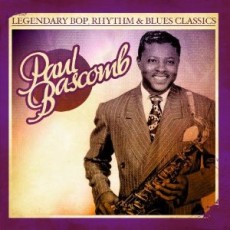
Paul Bascomb was born into a family with nine siblings on February 12, 1912 in Birmingham Alabama. From an early age he felt the urge to create music and by his late teens he was an accomplished clarinetist and tenor saxophonist. Attending Alabama State Teacher’s College he was a founding member of the Bama State Collegians, a respected regional swing band that stayed together from the mid-thirties on assuming leadership under Erskine Hawkins. Paul was a part of this band till the mid 40’s, save a stint with Count Basie’s band from 38-39. During this period he co-wrote the tune Tuxedo Junction with Hawkins but by 1945 left the band a co-led small combos with his brother Dud.
1946 saw Bascomb in New York recording with a small combo for Alert records. A year later he moved to the Jersey based Manor label recording a series of sides for them, went to the London label and recorded Pink Cadillac and in ’48 did a session with The Riffs who eventually became famous with King Pleasure.
In 1950 Paul relocated to the Midwest and began a long association with the Chicago and Detroit nightclubs where owners were allowing black and white musicians to play together. By 1952 he started recording extensively with United Records and later for Mercury as he ventured into the R&B world.
By the late fifties he demand changed and took a job with the city of Chicago. He returned to music in the late 70s, was inducted into the Alabama Jazz Hall of Fame in 1979, and played well into the 80s for well receiving European audiences. It was the last hurrah for tenor saxophonist Paul Bascomb, who passed away at 74 years old on December 2, 1986.

More Posts: saxophone
Daily Dose Of Jazz…
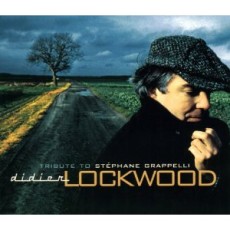
Didier Lockwood was born on February 11, 1956 in Calais, France and began studying classical violin and composition at the Calais Conservatory at six years old. But thanks to his brother Francis, Didier’s world was opened to other forms of music and he quit his studies in 1972. Entranced by the improvisation of Jean-Luc Ponty’s playing he took up the amplified violin. He credits being influenced by Polish violinist Zbigniew Siefert and fellow Frenchman Stephane Grappelli with whom he toured. By 1975 he joined progressive rock group Magma followed by fusion group Uzeb.
During the 70’s he played in Paris with Aldo Romano and Daniel Humair among others, led a fusion group called Surya and recorded with Tony Williams. The 80’s saw Didier performing at the Montreux Jazz Festival teamed with guitarist Allan Holdsworth, bassist/vocalist Jack Bruce, drummer Billy Cobham and keyboardist David Sancious, playing in the U.S. and recording with violin colleagues John Blake and Michal Urbaniak.
Lockwood’s career has been diverse ranging from fusion to swing to advanced hard bop but he first gained fame for exploring new musical landscapes and performing various sound imitations such as seagulls and trains. Although slated as the heir apparent to the line of great French violinists behind Grappelli and Ponty, by the nineties he maintained a very low profile. He established a string instrument improvisation school in 2001 called Centre des Musiques Didier Lockwood, has been touring with jazz guitarist Martin Taylor since 2006 and written several film scores.

More Posts: violin
Daily Dose Of Jazz…
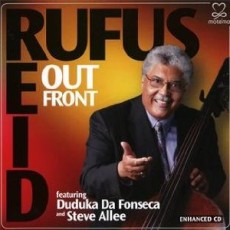
Rufus Reid was born on February 10, 1944 in Atlanta, Georgia but was raised in Sacramento, California where he played the trumpet through junior high and high school. Shortly after graduation he entered the Air Force and it was there that he became seriously interested in the bass.
Following his honorable discharge from the military, Reid moved to Seattle to begin studies with James Harnett of the symphony. Then continued at Northwestern University graduating with a music degree as a performance major on double bass.
His professional career began in Chicago playing with Sonny Stitt, James Moody, Milt Jackson, Curtis Fuller and Dizzy Gillespie, recording with Kenny Dorham, Dexter Gordon, Lee Konitz and Howard McGhee, and touring internationally with the Hutcherson-Land quintet, Freddie Hubbard, Nancy Wilson, Eddie Harris and Dexter Gordon in the ‘70s. Moving to New York in 1976 he began playing and recording with Thad Jones & Mel Lewis who are just the few colleagues among the hundreds of world’s greatest musicians.
A prolific bassist, Reid has spanned generations of jazz appearing on countless hard bop, bebop, swing and pop sessions with his restrained yet emphatic tone, time, harmonic sensibility and has made him one of the most sought after bassists in the industry. He has co-led a group with Akira Tana called TanaReid since the late eighties.
Rufus Reid began teaching at William Patterson College in 1979 and the bassist, educator and composer continues to record and perform around the world.

More Posts: bass
From Broadway To 52nd Street
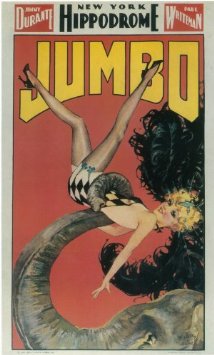
The Richard Rodgers and Lorenz Hart music written for Jumbo was first heard on November 16, 1935 on the stage of the Hippodrome. Rodgers and Hart wrote three timeless classics that became jazz standards: My Romance, Little Girl Blue and The Most Beautiful Girl In The World. The musical ran for 233 performances and starred Jimmy Durante, Donald Novis, Gloria Grafton and a number of circus specialty acts.
The Story: It’s a Circus tale about two feuding circus magnates, Mulligan & Considine, who are dismayed to learn their children have fallen in love. Considine’s problems compound by his drinking and imminent bankruptcy. His money difficulties are solved when his agent burns down his house allowing him to collect his insurance. When the kids reconcile the fathers, Considine puts the bottle on the shelf.
Jazz History: Jazz standards are musical compositions that are widely known, performed and recorded by jazz artists as part of the genre’s musical repertoire. This list includes compositions written in the 1930s that are considered standards by at least one major fake book publication or reference work. Some of the tunes like Summertime, All The things You Are, My Funny Valentine and Body and Soul were already well known standards by the 1940s, while others were popularized later.
Sponsored By

www.whatissuitetabu.com
More Posts: broadway
Daily Dose Of Jazz…
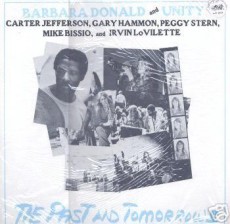
Barbara Donald was born February 9, 1942 in Minneapolis, Minnesota. At 9 she was playing the cornet, listening to Dixieland, Louis Armstrong and Benny Goodman and showed physical abilities unusual for a woman. She soon switched to the trumpet, receiving a good musical education on various reed instruments and vocals.
In 1955 her parents moved to California where she was denied access to the high school big band, so she formed her own groups. By age 19, she was sharing bandstands with Dexter Gordon, Stanley Cowell and Bert Wilson, a daringly unusual position for a white woman. Ironically, she faced the same denial with jazz big bands refusing to audition women. Therefore she paid her dues to rhythm & blues, rock and roll and dance bands.
A brief stay in New York City strengthened her determination and upon her return to Los Angeles, Barbara started hanging out with jazz musicians and studying the art of playing bebop with “Little” Benny Harris, who co-wrote “Ornithology” with Charlie Parker. Settling in San Diego in 1964 she met mentor Sonny Simmons and taught her structure with hard keys and hard chords. Simmons’ own innovation stressed playing the melody and staying on top of the beat.
From 1964 to 1972, Barbara and Sonny lived, performed and struggled together. Their career, if too often chaotic with irregular engagements and recordings, remained underground, producing brilliant and singular music. However, Barbara’s presence balanced her husband’s revolutionary moods at a time when Sonny was prone to radical sojourns between tradition and modernity.
Her voluble and powerful, somehowunadorned playing, indicating a perfect control of the bop idiom, characteristic of the immediate post-Trane free expression, was the perfect supporting structure of Simmons’ angular themes and improvisations.
Barbara Donald parted from Sonny, moved to Washington in the early 80’s, formed Unity and began to expose and refine her own concept. In 1984, Barbara presented Unity at the Kool Jazz Festival with then rising star Charnett Moffett on bass. By 1992, Barbara Donald’s health was failing and one of the top female jazz trumpeters, after experiencing a series of strokes that rendered her unable to actively play live, Donald had been living in an assisted care facility in Olympia, Washington, from 1998 until her death on March 23, 2013.

More Posts: trumpet