

Daily Dose Of Jazz…
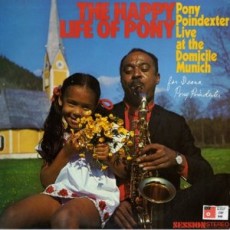
Saxophonist Pony Poindexter was born Norwood Poindexter on February 8, 1926 in New Orleans, LA. Poindexter began on clarinet and switched to playing alto and tenor sax growing up. In 1940 he studied under Sidney Desvigne followed by his move to Oakland to attend Candell Conservatory.
From 1947 to 1950 he played with Billy Eckstine, 1950 he played in a quartet with Vernon Alley, from 1951 to 1952 he was with Lionel Hampton and in 1952 he played with Stan Kenton. Neal Hefti wrote the tune “Little Pony”, named after Poindexter, for the Count Basie Orchestra.
Through the end of the 1950s Poindexter played extensively both as a leader and as a sideman, recording with Charlie Parker, Nat King Cole, T-Bone Walker and Jimmy Witherspoon. In the early sixties he backed up Lambert, Hendricks & Ross, who together also recorded a vocal version of “Little Pony”.
He was one of the first bebop saxophonists to begin playing soprano saxophone in the early 60’s, recording with Eric Dolphy and Dexter Gordon before moving to Paris in ’63 and recording with Annie Ross, Phil Woods, Lee Konitz and Leo Wright. He lived in Spain and Germany before returning to the states in ’77, residing in San Francisco to record again.
Pony Poindexter published his autobiography, Pony Express in 1985 but he had already slipped away into obscurity and never gained the recognition he deserved by the time of his passing on April 14, 1988 in Oakland.

More Posts: saxophone
Daily Dose Of Jazz…
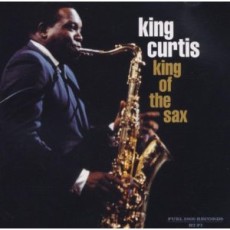
Born Curtis Ousley on February 7, 1934 in Fort Worth, Texas he was known to the jazz world as King Curtis. He learned to play the saxophone and as a youth he played in the same high school band as Ornette Coleman. He led his own group while in school and by 19 was touring with Lionel Hampton before settling in New York. Once there he led a trio containing Horace Silver.
Becoming involved in session work in the mid-50’s Curtis’ prominence rose, playing behind the Coasters and others, then replaced Red Prysock in the Alan Freed radio show band. Regular live appearances at Small’s Paradise and the Apollo Theatre between the late 50’s and early 60’s led him to become musical and studio director for Aretha Franklin and others. During this period he recorded a number of singles for Atco, Prestige and Capitol and Atlantic record labels cranking out hits like Soul Serenade, Memphis Soul Stew and Ode To Billy Joe.
Curtis played tenor, alto and soprano saxophones and was the last of the great R&B tenor sax giants. He was known for his distinctive riffs and solos and loved playing jazz, funk, and rhythm and blues, but chose to make his living playing rock and roll.
All aspects of his career were in full swing at the time he became embroiled in an argument with two men outside his 86th Street apartment in New York City. One of the men stabbed him in the heart and after being rushed to Roosevelt Hospital, King Curtis died from his wound on August 13, 1971. He was 37 years old. On the day of his funeral, Atlantic Records closed its offices.

More Posts: saxophone
Daily Dose Of Jazz…
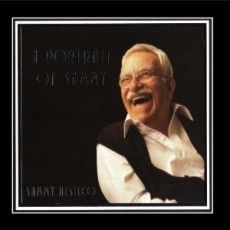
Sammy Nestico was born Samuel Lewis Nestico on February 6, 1924 in Pittsburgh, Pennsylvania. Studying and learning to play the trombone, he started his professional career in 1941 at age 17 as a staff arranger for ABC radio affiliate WCAE.
Over the course of his career he arranged for Count Basie from 1967-1984, for the US Air Force and Marine Bands for twenty years while in Washington, DC, and played trombone in Tommy Dorsey, Woody Herman, Gene Krupa and Charlie Barnet big bands.
A professor at the University of Georgia from 1998-99 Nestico taught commercial orchestration and conducting the Studio Orchestra, but was unable to find the necessary administrative support to remain there. He has also directed music programs at Los Angeles Pierce College, and the Westinghouse Memorial High School in Wilmerding, PA.
During his life in the television and film industry, Sammy has arranged and conducted projects for artists such as Bing Crosby, Sarah Vaughan, Frank Sinatra, Toni Tennille, Phil Collins, Barbra Streisand among others and orchestrated nearly seventy television programs such as Mission Impossible, Mannix, Charlie’s Angels and The Mod Squad.
He has written commercial jingles for numerous companies including Ford, Dodge, Anheuser-Busch and Mattel and has published nearly 600 numbers for school groups and professional big bands. A trombone player and a prolific, well-known composer and arranger of big band music, he is best known for his arrangements for the Count Basie orchestra. Sammy Nestico continues to compose, arrange, conduct and perform.
Daily Dose Of Jazz…
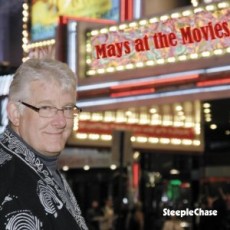
Bill Mays was born William Allen Mays on February 5, 1944 in Sacramento, California. Coming from a musical family he learned to play piano and at sixteen he became interested in jazz after attending an Earl Hines concert.
From 1969 to the early 1980s Bill worked Frank Sinatra, Al Jarreau, Dionne Warwick, Anita O’Day, Mark Murphy and accompanied other vocalists in Los Angeles with Sarah Vaughan, while also working sessions with such luminary musicians as Art Pepper, Shelly Manne, Bud Shank, Red Mitchell, and Bobby Shew to name a few from an esteemed list of luminaries.
In 1984, Mays moved to New York and became best known as a sideman or accompanist, but starting in the 1990s he began to do more work as a bandleader, composer, and arranger. As far back as the 70’s on, he recorded over two-dozen albums under his own name, in different configurations, and has been heard as a sideman on many more. He continues to perform, record and tour.

More Posts: piano
Daily Dose Of Jazz…
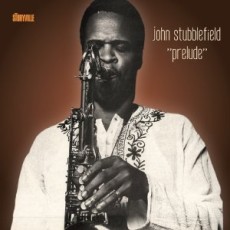
John Stubblefield was born on February 4, 1945 in Little Rock, Arkansas. He first studied the piano and then moved to saxophone as a teen absorbing the music of the itinerant blues and gospel performers moving in and out of his strictly segregated Black neighborhood.
At 17 Stubblefield made his recording debut with local R&B combo York Wilburn & the Thrillers, spent a year on the road with soul legend Solomon Burke, then studied music at A&M College in Pine Bluff while concurrently leading his own modern jazz quintet. In 1967 after graduation he settled in Chicago and signed on with the pioneering avant-garde jazz collective the Association for the Advancement of Creative Musicians. During this period he studied under Muhal Richard Abrams and appeared on Joseph Jarman’s landmark 1968 set As If It Were The Seasons.
Relocating to New York, John joined the Collective Black Artists playing with Mary Lou Williams, Tito Puente, and the Thad Jones/Mel Lewis Orchestra. By 1972 he joined Charles Mingus adding alto saxophone, oboe, flute, and bass clarinet to his arsenal. Suffering a falling-out with Mingus that effectively left Stubblefield blacklisted throughout much of the New York jazz community, he finally landed with Nat Adderley’s quintet. He briefly played behind Miles Davis in 1973 and during the mid-’70s served as an instructor with the famed Jazzmobile program.
He cut his first album Midnight Sun in 1976 followed by a few more projects in the eighties for the Enja and Soulmate labels. After the death Of Charles Mingus, his widow Sue formed the Mingus Big Band in 1992 and Stubblefield held the lead tenor chair and was an occasional director. Diagnosed with cancer in 2004 he remained a guiding force conducting much of the I Am Three album from his wheelchair.
Tenor saxophonist John Stubblefield collaborated with a who’s who list of modern jazz and avant-garde giants includes Charles Mingus, passed away on July 4, 2005. His contribution ranks him among the most powerful and innovative soloists of the post-Coltrane generation.

More Posts: saxophone