

Daily Dose Of Jazz…
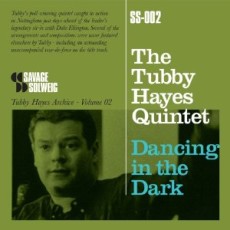
Tubby Hayes was born Edward Brian Hayes on January 30, 1935 in London and started playing the violin at the age of 8, changed to the tenor at twelve and started playing professionally at fifteen. His early influences were Charlie Parker, Sonny Rollins and Stan Getz. In 1951 he joined Kenny Baker and playing in the big bands of Ambrose, Vic Lewis and Jack Parnell.
Tubby led his own octet in 1956 and encourage by Victor Feldman he started playing the vibes in December of that year. Following his octet, Tubby co-led the Jazz Couriers with Ronnie Scott from ’57 to ’59 and toured Germany with Kurt Edelhagen. His international reputation grew rapidly and he was the first British contemporary to appear regularly in the U.S. at the Blue Note, the Boston Jazz Workshop and Shelly Manne’s Manne-Hole.
In 60’s London he led his own big bands, hosted his own TV show, sat in with Duke Ellington’s orchestra, and with Charles Mingus, Dave Brubeck and others. Tubby appeared in All Night Long, and with his own quintet in The Beauty Jungle and House of Horrors.
Hayes was a virtuoso musician on tenor and flute, an excellent vibist, and a composer/arranger of rare talent. He toured extensively through Europe playing the major festivals, such as Antibes, Lugano, Vienna and Berlin. He was one of the few Brits that recorded as a leader of all-American groups with Clark Terry, Roland Kirk and James Moody.
Plagued with heart trouble he underwent open-heart surgery in the late Sixties, putting him out of action until 1971. Working again was brief and while undergoing a second heart operation, Tubby Hayes died on June 8, 1973 in Hammersmith, London, England. He was just 38 years old.

More Posts: flute,saxophone,vibraphone

Daily Dose Of Jazz…
Jeanne Lee was born on January 29, 1939 in New York City. Attending Bard College for dance, she began singing while still a student, formed a duo with classmate Ran Blake and recorded her first album, The Newest Sound Around. Jeanne was to become one of the foremost exponents of free vocal jazz extending her style to include moods that were sensual, somber, and sensitive while expressing standard lyrics as well as scatting.
During the 60’s and 70’s she recorded her distinctively independent and creative style either as a lead artist or a sidewoman for major performers of the jazz avant-garde, Archie Shepp, Anthony Brown, Rahsaan Roland Kirk, Enrico Rava, Carla Bley, Cecil Taylor and Mal Waldron to name a few, on independent labels in America and Europe. In 1967, she toured and recorded with her husband and vibraphonist Gunter Hampel.
In 1976 she sang in the spiritual tradition in John Cage’s “Apartment House 1776”, composed for the U.S. Bicentennial. By the 80’s Jeanne was concentrating on composing and performing/recording her original works that often included poetic and dance components.
Jeanne Lee combines acrobatic vocal maneuvers with a deeply moving sound and quality that allows her to alternate between soaring, upper register flights and piercing, emotive interpretations. The extremely precise and flexible Jeanne Lee who easily moved from a song or solo’s top end to its middle and bottom accompanying an instrument, passed away due to complications from cancer on October 25, 2000 in Tijuana, Mexico.
More Posts: vocal
Daily Dose Of Jazz…
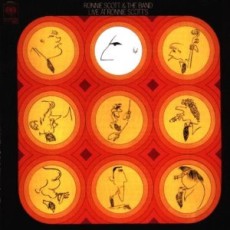
Tenor saxophonist Ronnie Scott was born Ronnie Schatt on the east side of London on January 28, 1927. He grew up in a single parent household after his father, dance band saxophonist Jock Scott separated from his mother shortly after his birth. His introduction to music was on a cornet he purchased from a local junk shop, then moved on to the soprano saxophone and finally settling into the tenor by his teens. Ronnie first starting playing in public performing with aspiring drummer Tony Crombie and was soon playing an occasional professional gig. After a stint with bandleader Carlo Krahmer and touring with trumpeter Johnny Claes, Ronnie joined the popular big band of Ted Heath in 1946.
However, changing economics made big bands increasingly unfeasible, and as bebop crossed the pond to the U.K., he and Crombie traveled to New York City to explore the source firsthand. Scott regularly returned to New York after signing on to play the Queen Mary’s transatlantic voyages alongside alto saxophonist Johnny Dankworth. Despite his travels Scott remained a cornerstone of the growing London bop scene, and in late 1948 he co-founded Club Eleven, the first U.K. club devoted to modern jazz. During this time he developed the lyrical but harmonically complex style that would remain the hallmark of his career.
In 1953 Scott formed a nine-piece group that made its public debut in conjunction with a London appearance by Norman Granz’s Jazz at the Philharmonic touring revue and working from arrangements by trumpeter Jimmy Deuchar, the Scott band’s debut proved to be a landmark moment in the history of British jazz heralding the true starting point of the postwar era. Yet in 1955, assembling a full-size big band proved creatively and commercially disastrous but left him a household name throughout Britain. In ‘57 he co-founded the Jazz Couriers with fellow tenor saxophonist Tubby Hayes, scaling to even greater heights of fame.
1959 saw Scott looking to create a jazz club emulating those of New York’s famed 52nd Street and on October 31st, with borrowed money, he opened Ronnie Scott’s Club at 39 Gerrald Street. Over the next two years as popularity grew, Scott hosted the likes of Dexter Gordon, Roland Kirk, Stan Getz, Sonny Stitt, Ben Webster and Sonny Rollins. By 1965 he moved the club to it’s present location on Frith Street, becoming the epicenter of London’s jazz community and bringing to the stage everyone from Ella Fitzgerald to Albert Ayler over the next decade.
At the time of his death on December 23, 1996, Ronnie Scott’s Club was perhaps the most famous jazz venue in all of Europe.

More Posts: saxophone
Daily Dose Of Jazz…
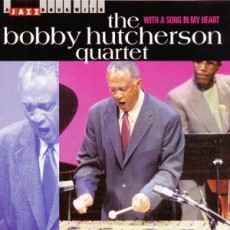
Bobby Hutcherson was born January 27, 1941 in Los Angeles, California and studied piano with his aunt as a child. Not enjoying the formality of the training he tinkered with it on his own, especially since he was already connected to jazz through a brother’s high school friendship with Dexter Gordon and a singing sister who later dated Eric Dolphy. But it was hearing Milt Jackson that made everything clicked for Hutcherson during his teen years, working until he saved up enough money to buy his own set of vibes.
He began studying with Dave Pike and playing local dances in a group led by his friend, bassist Herbie Lewis. Parlaying his local reputation into gigs with Curtis Amy and Charles Lloyd in 1960. And joined an ensemble led by Al Grey and Billy Mitchell. A year later he’s in New York at Birdland and ends up staying on the east coast as his reputation of his inventive four mallet playing spread.
Attracted foremost to more experimental free jazz and post-bop, he made early recordings in this style for Blue Note with Jackie McLean, Eric Dolphy, Andrew Hill, Granchan Moncur, but ironically his debut recording for the label in 1963, The Kicker, not released until 1999, demonstrated his background in hard bop and the blues.
His vibraphone playing is suggestive of the style of Milt Jackson in its free-flowing melodic nature, but his sense of harmony and group interaction is thoroughly modern. Easily one of jazz’s greatest vibraphonists, Bobby Hutcherson helped modernize the vibes by redefining what could be done with it — sonically, technically, melodically, and emotionally. In the process, he became one of the defining voices in the “new thing” portion of Blue Note’s glorious ’60s roster.
Throughout his career Hutcherson has performed or recorded with a who’s who list of avant-garde, free improvisation, modernist post-bop, straight-ahead, mainstream, fusion and bop jazz players on the scene, staying ever current in his message. As a leader he has recorded nearly four-dozen albums for Blue Note, Landmark, Columbia, Cadet, Timeless, Evidence, Atlantic and Verve. Vibraphonist Bobby Hutcherson maintained his reputation as one of the most advanced masters of his instrument until he passed away on August 15, 2016 in Montara, California.
More Posts: marimba,vibraphone
From Broadway To 52nd Street
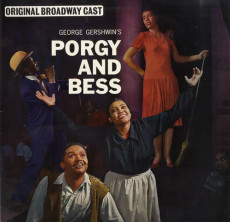
Porgy & Bess took the stage at the Alvin Theatre on October 10, 1935, running for only 124 performances. Written by Dubose Hayward with music composed by the Gershwins, and starred Todd Duncan, Anne Wiggins Brown, Warren Coleman and John W. Bubbles. The initial production was treated as such a major event that the larger dailies sent both their drama and music critics to cover the opening. Though not a commercial success from the ashes rose a score that has been performed by countless musicians but a few songs separated themselves to become individual classics and jazz standards such as Summertime, I Loves You Porgy, My Man’s Gone Now, It Ain’t Necessarily So, and There’s A Boat That Leaving Soon.
The Story: Set in Charleston, South Carolina in the tenements of Catfish Row, this opera follows the lives of Porgy, a crippled beggar, his love interest – the seductive Bess, her abusive man Crown and the slinky cocaine dealer Sportin’ Life who woos her away to New York City. The star-crossed lovers, Porgy and Bess, are doomed to struggle but triumph with dreams of life outside their community.
Broadway History: But while New Yorkers were enjoying the distraction of Broadway, the country remained engulfed in The Great Depression and in year five of the Dust Bowl’s “Dirty Thirties” in which the year hosted on April 14th the worst “black blizzard” causing such extensive soil erosion that would come to be known as Black Sunday. Some 5.3 million acres of the Southern Plains were damaged and the dust would blow all the way to east coast.
However, while part of the country was experiencing disaster Ella Fitzgerald was winning a one week performance at the Harlem Opera House, the “Swing Era” was in its infancy, Benny Goodman has secured a recording contract with Victor Records and snagged a spot on the Let’s Dance radio program and a live broadcast of his Palomar Ballroom performance in Los Angeles garnered him national following and a first-ever jazz concert at Carnegie Hall in New York. Tommy Dorsey would follow with a million-seller record with Irving Berlin’s Marie along with Artie Shaw’s version of Cole Porter’s Begin The Beguine.
Sponsored By

www.whatissuitetabu.com
More Posts: broadway