

Daily Dose Of Jazz…
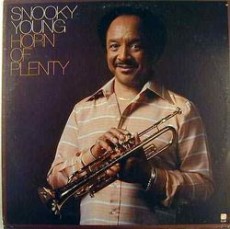
Snooky Young was born Eugene Young in Dayton, Ohio on February 3, 1919. Taking up the trumpet at the age of five, he didn’t begin making a name for himself until he joined the Jimmie Lunceford band as lead trumpeter in 1939, a relationship that lasted for three years.
He played a total of eight years over three stints with Count Basie, Lionel Hampton and was an original member of the Thad Jones/Mel Lewis Big Band. However, his longest engagement was as a studio trumpeter with NBC’s Tonight Show Band from 1967 to 1992 when Johnny Carson’s departure broke up the band and the network replaced it with a new, smaller group.
Young only recorded three albums as a leader but was a sideman on nearly three-dozen albums and he continued to perform in L.A. with several big bands and holds membership in the Clayton-Hamilton Jazz Orchestra. Known for his mastery of the plunger mute, he is able to create a wide range of sounds. He can make his horn speak, shout, growl, and sigh with his mutes while always swinging irresistibly.
On October 17, 2008 he received the NEA Jazz Masters Award. Trumpeter and flugelhornist Snooky Young passed away on May 11, 2011 in Newport Beach, California at the age of 92.

More Posts: flugelhorn,trumpet
From Broadway To 52nd Street
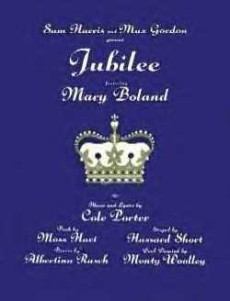
The Imperial Theatre aptly opened Jubilee on October 25, 1935 with music composed by Cole Porter and starring Melville Cooper, Mary Boland, Charles Walter and Margaret Adams. Running for 169 performances, entering into the jazz lexicon are two songs from the musical, Begin The Beguine and Just One Of Those Things.
The Story: Set approaching the anniversary of the coronation and the King and Queen admit they have become jaded with their luxurious but constrained life and Prince James & Princess Diana agree. When a royal nephew leads an insurrection, the royal family rushes into seclusion and emerges incognito. The queen flirts with a movie star, the princess has an affair with a writer and the prince takes a celebrated dancer out on the town. The king is happy to remain at home playing his beloved parlor games. Inevitably they are recognized, so when the insurrection dies, the royal family returns to its comfortable restricted world.
Broadway History: The first decade of the century witnessed the creation of numerous theatres in the new Longacre Square area, and, in 1902 when the Hotel Pabst was razed to allow the Times Building to be built on that spot, Longacre Square became Times Square. New theatres in the area included the Victoria at 42nd & 7th built in 1899; the Republic on 42nd built in 1900;; The Lyric and The New Amsterdam both a few doors down built in 1903. The following year the Lew Fields Theatre was built on the same block. There were several others built in the area from 39th to 45th streets, and some enterprising individuals were progressing even further uptown to Columbus Circle and Central Park West.
In 1900, Broadway (the Broadway we’re interested in) extended from The Star Theatre on 13th Street to the New York Theatre on 45th Street and patrons were paying $1.50 to $2.00 each for the best seats to see their favorite stars.
Sponsored By

www.whatissuitetabu.com
More Posts: broadway
Daily Dose Of Jazz…
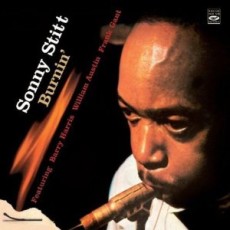
Sonny Stitt was born Edward Stitt on February 2, 1924 in Boston, Massachusetts but grew up in Saginaw, Michigan in a musical family and was given a strong musical background as a child. His father was a college music professor, his mother a piano teacher and his brother was a classically trained pianist.
Meeting Charlie Parker in 1943, the two found their styles extraordinarily similar, due in part to Stitt’s emulation. Considered on of Parker’s greatest disciples he was also influenced by Lester Young, both helping Sonny develop his own style, which would later influence John Coltrane.
Nicknamed the “Lone Wolf” by jazz critic Dan Morgenstern, attributing his relentless touring and devotion to jazz, Stitt recorded over 100 albums in his lifetime. His earliest recordings were with Stan Getz in 1945, he played in swing bands like Tiny Bradshaw’s big band and replaced Charlie Parker in Dizzy’s band, and sat alongside bop pioneers Dexter Gordon and Gene Ammons in Billy Eckstine’s big band in the forties.
Sonny began to develop a far more distinctive sound on tenor playing with other bop musicians Bud Powell and Eddie “Lockjaw” Davis. In the fifties he teamed up with Thad Jones and Chick Corea and experimented with Afro Cuban jazz. He joined Miles Davis briefly in 1960 but was fired for an excessive drinking habit he developed.
Stitt went on to record a number of albums with his long-time friend Gene Ammons, regarded as some of their best work of dueling partnerships; then ventured into soul jazz with Booker Ervin, recorded with Ellington alumnus Paul Gonsalves and was a regular at Ronnie Scott’s in London during the sixties.
By the 1970s, Sonny slowed his recording output slightly, experimenting with an electric saxophone called the “Variphone” heard on the album “Just The Way It Was – Live At The Left Bank” in ’71 and returning to the alto to record the classic “Tune Up” in 1972. Sonny joined the Giants Of Jazz along with Art Blakey, Kai Winding, Dizzy Gillespie, Thelonious Monk and Al McKibbon, and continued to record throughout the seventies.
A fiery tenor with enthusiastic solos, he was equally effective with blues and ballads, whether he was playing the alto, tenor or baritone. Sadness fell upon the jazz world on July 22, 1982 when Sonny Stitt passed away in Washington, D.C. after suffering a heart attack.

More Posts: saxophone

Daily Dose Of Jazz…
Joshua Redman was born February 1, 1969 in Berkeley, California to tenor saxophonist Dewey Redman and dancer Renee Shedroff. As a child he was exposed to various kinds of music at the Center for World Music in Berkeley and received early lessons in music and improvisation. Upon graduating from high school he matriculated through Harvard graduating summa cum laude. He then turned down an opportunity to study law at Yale to become a professional musician.
His career kicked into high gear after winning the Thelonious Monk International Jazz Saxophone Competition in 1991 and began focusing on developing his style beginning as a sideman alongside Javon Jackson on Elvin Jones’ Youngblood recording. He followed up with an appearance on his father’s 1992 album Choices. After a short apprenticeship period Redman began recording for Warner Brothers, first with his self-titled project and then Wish with Pat Metheny, Charlie Haden and Billy Higgins.
With successive albums from ’93 to ’96, Joshua briefly joined Chick Corea, recording and touring. From 1998 – 2002 he returned to recording as a leader bringing the world such albums as Beyond, Passage of Time and Elastic, the later bringing a more adventurous and playful Redman to the fore with the later including pianist/organist Sam Yahel and drummer Brian Blade.
Redman became the artistic director for San Francisco’s SF Jazz Collective from 2004-2007, made several television appearances including Reading Rainbow with Levar Burton and performed on the soundtrack for the Mia Farrow Story. On his album, Back East Redman paid tribute to Sonny Rollins 1957 album Way Out West, teaming up with musicians including Brian Blade, Christian McBride, Al Jackson, Joe Lovano, and his late father.
Joshua Redman is an inaugural member of the Independent Music Awards judging panel to support independent arts and continues to compose, tour and record.

Daily Dose Of Jazz…
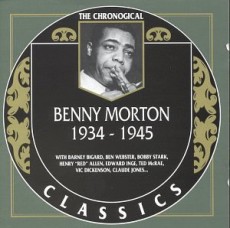
Benny Morton was born on January 31, 1907. Growing up in New York City, Benny was a graduate of the Jenkins Orphanage Band and was greatly influenced by church music as well as Dope Andrews, trombonist for Mamie Smith. By 1923, just 16 years old, he was gaining experience with the Clarence Holiday Orchestra and just three years later joined Fletcher Henderson. Swing was in and Benny moved on to spend six years with Don Redman and then three with Count Basie.
By 1938 he was recording with Clarence Holiday’s daughter Billie on My First Impression Of You and on The Sound Of Jazz. Morton went on to play with Teddy Wilson and Ed Hall in the 40’s and led his own band before playing in the Broadway pit for shows like Guys and Dolls and for Radio City Music Hall.
During the sixties and over the next two decades, the gentle and self-effacing trombonist was back in high jazz society with cornetist Wild Bill Davison and Bobby Hackett, The Saints and Sinners and the World’s Greatest Jazz Band.
One of the most sophisticated trombonists of the swing era, Benny Morton passed away on December 28, 1985.
More Posts: trombone