

The Quarantined Jazz Voyager
Politics, unfortunately, are an integral ingredient in getting their idea of bringing financial stability back to America. Let us continue to practice the use of common sense when it comes to the future of society. As I observe, public companies are following the suggestions of governors to allow entry without masks and without checking. I can’t get with the honor system.
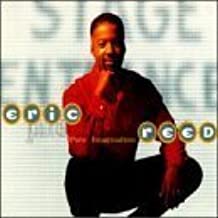
So in maintaining social distancing, this week I have selected the 1998 album Pure Imagination by pianist and composer Eric Reed, released through Impulse! Records. The album contains reinterpretations of traditional songs from classic Broadway and Hollywood productions.
Reed recorded the album on July 28~29, 1997 and was produced by Tommy LiPuma. The musicals from which the songs were taken are (2) West Side Story, (3) The King & I, (4) Willy Wonka & The Chocolate Factory, (5) 42nd Street, (6) A Little Night Music, (7) Porgy & Bess, and (9) Carousel.
It peaked at #8 on Billboard’s Top Jazz Album charts. All songs are written by famous songwriters of said productions except for the opening and closing tracks that were composed by Reed.
Track Listing | 49:52
- Overture ~ 2:02
- Maria (Leonard Bernstein, Richard Rodgers, & Stephen Sondheim) ~ 6:35
- Hello, Young Lovers (Rodgers and Hammerstein) ~ 5:16
- Pure Imagination (Leslie Bricusse, & Anthony Newley) ~ 4:04
- 42nd Street (Harry Warren & Al Dubin) ~ 4:07
- Send in the Clowns (Stephen Sondheim) ~ 4:54
- My Man’s Gone Now/Gone, Gone, Gone (DuBose Heyward, George & Ira Gershwin) ~ 8:15
- Nice Work If You Can Get It (George & Ira Gershwin) ~ 3:58
- You’ll Never Walk Alone (Rodgers and Hammerstein) ~ 2:18
- I Got Rhythm (George & Ira Gershwin) ~ 5:05
- Finale (Last Trip) ~ 3:40
- Eric Reed – Piano
- Brian Bromberg – Bass
- Reginald Veal – Bass
- Gregory Hutchinson – Drums

More Posts: adventure,album,club,genius,jazz,museum,music,piano,preserving,restaurant,travel
Daily Dose Of Jazz…
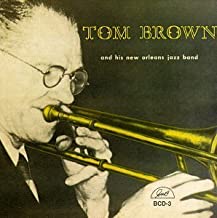
Tom Brown was born in Uptown New Orleans, Louisiana on June 3, 1888. He played trombone with the bands of Papa Jack Laine and Frank Christian, and by 1910 he was usually working with leading bands under his own name. The band played in a style then locally known as “hot ragtime” or “ratty music”. In early 1915, his band was heard by Vaudeville dancer Joe Frisco who then arranged a job for Brown’s band in Chicago, Illinois.
Tom Brown’s Band from Dixieland opened up at Lamb’s Cafe in Chicago, this band seems to be the first to be popularly referred to as playing Jass. The term jass, at that time, had a sexual connotation, which drew more people to come to hear the band out of curiosity. Realizing the publicity potential he started calling his group Brown’s Jass Band.
Heading to Chicago, Illinois he enjoyed over four months of success there before moving to New York City, where they played for an additional four months more prior to returning to New Orleans in 1916. Once home, Tom immediately put together another band with Larry Shields, Alcide Nunez, and Ragbaby Stevens, then went to work for Bert Kelly in New York City, replacing the Original Dixieland Jass Band at Reisenweber in 1918. He started doing freelance recording work with New York dance and novelty bands, then joined the band of Harry Yerkes.
Brown also played the Vaudeville circuit in the acts of Joe Frisco and Ed Wynn. Late 1921 he returned to Chicago and joined Ray Miller’s Black & White Melody Boys, with whom he made more recordings. During this period he also co-lead a dance band with his brother Steve. Back in New Orleans he played with Johnny Bayersdorffer and Norman Brownlee’s bands, making a few excellent recordings.
During the Great Depression he supplemented his income from music by repairing radios. He opened up a music shop and a junk shop on Magazine Street. He played string bass in local swing and dance bands. With the revival of interest in traditional jazz he played in various Dixieland bands in the 1950s. Making his last recording just weeks before his death, his trombone playing apparently did not suffer from the fact that he had neither teeth or dentures at the time. Trombonist Tom Brown, who also played string bass, passed away in New Orleans on March 25, 1958.

More Posts: bandleader,history,instrumental,jazz,string bass,trombone
Daily Dose Of Jazz…
Ernest Hood was born on June 2, 1923 in Portland, Oregon. During the 1940s he was a jazz guitarist in the Portland, Oregon area in the 1940s. He played with his brother Bill and saxophonist Charlie Barnet.
Hood contracted polio in the 1950s, which confined him to using a wheelchair for the rest of his life. No longer able to hold a guitar, he started playing the zither. He played zither on some of Flora Purim’s early albums.
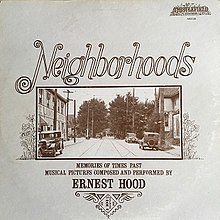
His only studio album, Neighborhoods, was recorded and self~released in 1975 and is a work of ambient music that explores the soundscapes of Portland, Oregon suburbia through a collage of field recordings layered with Hood’s zither and synthesizer melodies. Only one thousand copies were pressed during its original production run. After remaining in obscurity for over 40 years, it was reissued by Freedom to Spend in 2019.
Hood, who often went by Ern or Ernie, was a major figure in Portland’s music scene. He helped found KBOO, a nonprofit FM radio station that still exists today in the city. The radio show he hosted, Radio Days, on KBOO and KOAP, aimed for the same kind of audience his record Neighborhoods did, one that wanted to relive the serenity of the past.
He was also involved in launching the city’s first jazz club, The Way Out. Avant~garde zither and keyboardist, and radio host Ernest Hood, passed away in 1995.
More Posts: bandleader,club owner,history,instrumental,jazz,keyboards,music,radio host,zither
Three Wishes
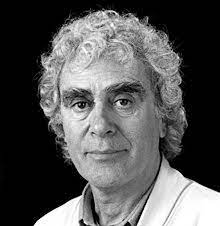
Nica’s curiosity led her to inquire of Charlie Mariano as to what would be his three wishes were and he told her:
- “I wish I had Bird’s heart and technique. But who needs the technique? If I had Bird’s heart, that would be enough.”
*Excerpt from Three Wishes: An Intimate Look at Jazz Greats ~ Compiled and Photographed by Pannonica de Koenigswarter

More Posts: baroness,history,instrumental,jazz,music,pannonica,saxophone,three,wishes

Daily Dose Of Jazz…
Marc Steckar was born on June 1, 1935 in Cherbourg, France. He began learning the cello from age eight, then played the trumpet. During his studies at the Paris National Conservatory, he switched to the trombone in 1953, which he studied with André Lafosse. After an interruption due to his military service in the Algerian War, he completed his training and in 1959 he received the second prize for trombone.
In the next few years he worked in the big band of Benny Bennet, in the Aimé Barelli orchestra in the Monte Carlo casinos and in Olympia where he played Marlene Dietrich and Nat King Cole, with whom he toured Europe. He played in the orchestra of Paul Mauriat accompanying Charles Aznavour, then in the big band of Daniel Janin who played behind Édith Piaf, Jacques Brel, Gilbert Bécaud and Sammy Davis Jr. in 1961.
Over the next few years he worked as a studio musician, among others for Michel Legrand , Vladimir Cosma and for various television shows, but also again at the Olympia for Roland Petit and Zizi Jeanmaire. Between 1973 and 1983, Marc accompanied Claude Nougaro with Eddy Louiss and Maurice Vander before becoming a member of Martial Solal’s big band. He recorded film music with Vander.
He went on to form Steckar TUBAPACK, and the Elephant Tuba Horde Big Band. Steckar is also on albums by François Jeanneau, Illinois Jacquet and Sonny Rhodes. Tubist Marc Stekar, who played trombone, bass trombone, euphonium, and was a composer, passed away on June 27, 2015 in Bessancourt, Val-d’Oise, France.
More Posts: bandleader,composer,euphonium,history,instrumental,jazz,music,trombone,tuba