

Daily Dose Of Jazz…
Maurice James Simon was born March 26, 1929 in Houston, Texas. Studying the saxophone in high school he was a classmate of Eric Dolphy during the 1945-46 school year. He appeared on an early 1945 Los Angeles, California recording led by Russell Jacquet along with Teddy Edwards, Charles Mingus, Bill Davis and Chico Hamilton.
1948 saw him again with Jacquet as leader, in an all-star band recording in Detroit, Michigan along with Sonny Stitt, Leo Parker, Sir Charles Thompson, Al Lucas and Shadow Wilson.
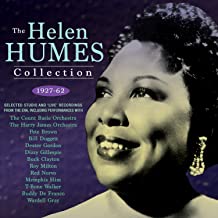
He went on to join the Gerald Wilson Orchestra that also had Snooky Young, Red Kelly and Melba Liston as members. In 1950 he recorded for Savoy Records backing Helen Humes in a big band with Dexter Gordon, Ernie Freeman, Red Callender and J.C. Heard.
He also played with Fats Domino, Papa John Creach, Big Maybelle, Faye Adams, Bumble Bee Slim, Percy Mayfield and B. B. King. In the 1970s he worked with the Duke Ellington orchestra. Baritone and tenor saxophonist Maurice Simon passed away on August 6, 2019.
More Posts: hisotry,instrumental,jazz,music,saxophone
The Quarantined Jazz Voyager
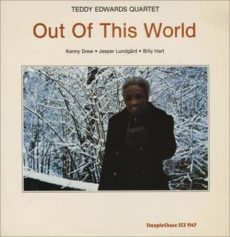
As social distancing and wearing masks continues to be our current state of affairs I had this thought of how this much we have seen in our lifetime, especially those of us who were born in the middle of the 20th century. So going into my music room I pulled down from the stacks Out of This World, a studio album by saxophonist Teddy Edwards. The album was recorded in Denmark on December 5, 1980 for the SteepleChase label. It was originally released with six tracks in 1981, however, the 1995 compact disc reissue added a seventh track. The session was produced by Nils Winther.
Track List: 57:30 All compositions by Teddy Edwards except where noted.
- No Name No. 1 ~ 6:00
- April Love ~ 6:47
- Out of This World (Harold Arlen, Johnny Mercer) ~ 11:07
- Summertime (George Gershwin, DuBose Heyward) ~ 8:29
- That’s All (Bob Haymes, Alam Brandt) ~ 8:00
- Cheek to Cheek (Irving Berlin) ~ 6:05
- Summertime [alternate take] (Gershwin, Heyward) ~ 10:48 Bonus track on CD reissue
- Teddy Edwards – tenor saxophone
- Kenny Drew – piano
- Jesper Lundgaard – bass
- Billy Hart – drums
More Posts: adventure,album,club,genius,jazz,museum,music,preserving,restaurant,saxophone,travel
Daily Dose Of Jazz…
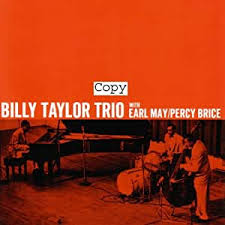
Austin Percy Brice Jr. was born on March 25, 1923 in New York City. He started his professional career began around the end of World War II, when he played with Benny Carter, Mercer Ellington, Luis Russell, and Eddie Cleanhead Vinson. Playing frequently in Harlem during the early 1950s he worked with Tiny Grimes, Oscar Pettiford, Tab Smith, Lucky Thompson, and Cootie Williams. In addition to leading sessions at Minton’s Playhouse, he also played with Billy Taylor from 1954 to 1956, George Shearing between 1956 to 1958, sharing screen time in the film The Big Beat, and Kenny Burrell 1958–59.
He played behind Sarah Vaughan on tour from 1959 to 1961, then became Harry Belafonte’s drummer for most of the 1960s, but he also worked with Ahmad Jamal, Carmen McRae and Mary Lou Williams in that decade. He led a group called the New Sounds in the early 1970s, and worked with Sy Oliver and Illinois Jacquet.
Though he led a group that was active in the ’70s, the somewhat anti-jazz vibe lent to the drummer’s decision to concentrate on Broadway orchestra work, settling in for long runs on two hot shows, Eubie and Bubbling Brown Sugar. He was also active accompanying the tap group the Copasetics. He was a first~ call musician for jazz festivals and recording sessions.
The repertoire of the Percy Brice Duo with Tom Smith features songcraft from the ’20s through the ’50s. Drummer and bandleader Percy Brice, also known by his nickname Big P, passed away in November 2020 at the age of 97.
More Posts: bandleader,drums,history,instrumental,jazz,music

Conversations About Jazz & Other Distractions
Conversations About Jazz Features
Drummer Gayelynn McKinney on March 25
HHM Digital invites you to join us for Conversations About Jazz & Other Distractions with host Carl Anthony on Thursday, March 25 at 7:30 pm (EST). His special guest will be acclaimed drummer Gayelynn McKinney. They will discuss the role of drummers and the messages they convey, McKinney’s career and sample some of her music. This free virtual program will stream on Hammonds House Museum’s Facebook and YouTube channels. Please consider making a donation via our website or during the show to support our programming. For more information about this and upcoming virtual events visit hammondshouse.org.
Gayelynn McKinney is one of the most accomplished drummers to come out of Detroit. Her father was the legendary Jazz pianist and composer, Harold McKinney, who once played with Billie Holliday. Her mother was a noted singer. McKinney began playing drums at the age of two in her dad’s basement, started taking lessons at age eight and had a drum set by age nine. In 10th Grade, she played drums in the Jazz band and saxophone in the Concert band. After graduating college, she and bassist, Marion Hayden, formed Straight Ahead Jazz Band – originally an all-female group – which continues to perform across the U.S. and internationally.
Here are a few highlights of McKinney’s career so far: Opening for Nina Simone in Switzerland (1990), Straight Ahead Jazz Band signs with Atlanta Records and begins decades of touring (1991), Performs at the Detroit Jazz Festival with Aretha Franklin (2004), Tours with Martha Reeves (2008), Performs with Freda Payne at Bird’s Basement in Australia (2019). For more information: gayelynnmckinney.com.
Hammonds House Museum is generously supported by the Fulton County Board of Commissioners, Fulton County Arts and Culture, the City of Atlanta Mayor’s Office of Cultural Affairs, The Community Foundation for Greater Atlanta, The National Performance Network, AT&T and WarnerMedia.
Hammonds House Museum’s mission is to celebrate and share the cultural diversity and important legacy of artists of African descent. The museum is the former residence of the late Dr. Otis Thrash Hammonds, a prominent Atlanta physician and a passionate arts patron. A 501(c)3 organization which opened in 1988, Hammonds House Museum boasts a permanent collection of more than 450 works including art by Romare Bearden, Robert S. Duncanson, Benny Andrews, Elizabeth Catlett, Jacob Lawrence, Hale Woodruff, Amalia Amaki, Radcliffe Bailey and Kojo Griffin. In addition to featuring art from their collection, the museum offers new exhibitions, artist talks, workshops, concerts, poetry readings, arts education programs, and other cultural events throughout the year.
Located in a beautiful Victorian home in Atlanta’s historic West End, Hammonds House Museum is a cultural treasure and a unique venue. During the COVID-19 pandemic, they continue to observe CDC guidelines, but look forward to welcoming in-person visitors soon! For more information about upcoming virtual events, and to see how you can support their mission and programming, visit their website: hammondshouse.org.
MEDIA: For artwork to go with this release here’s our Dropbox: http://bit.ly/HammondsHouseMuseum. For more information, contact Karen Hatchett at Hatchett PR, karen@hatchettpr.com.
More Posts: conversations,drums,history,instrumental,jazz,musicians
Daily Dose Of Jazz…
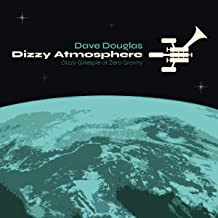
Dave Douglas was born on March 24, 1963 in Montclair, New Jersey and grew up in the New York City area, attending Phillips Exeter Academy, a private high school in New Hampshire. He was introduced to jazz by his father and as a young teen was shown jazz theory and harmony by pianist Tommy Gallant. He began performing jazz as a trumpeter during his junior year in high school while on an abroad program in Barcelona, Spain. After graduating from high school in 1981, he studied at the Berklee College of Music and New England Conservatory, both located in Boston, Massachusetts.
A move to New York City in 1984 had him studying at New York University with Carmine Caruso, and finished a degree in music. Early gigs included the experimental rock band Dr. Nerve, Jack McDuff, Vincent Herring as well as street bands around New York City. He played with a variety of ensembles and came to the attention of the jazz pianist, composer, and bandleader, Horace Silver, with whom he toured the US and Europe in 1987.
During the late 1980s, Douglas began playing with bands led by Don Byron, Tim Berne, Marty Ehrlich, Walter Thompson, and others in New York. He also played in the composer collectives Mosaic Sextet and New and Used.
Trumpeter, composer, and educator Dave Douglas has more than fifty recordings as a leader and over 500 published compositions. Has led and co-led quintets and sextets as well as electronic ensembles, won a Doris Duke Performing Artist Award, a Guggenheim Fellowship, an Aaron Copland award, and received Grammy Award nominations. As a composer, has received several commissions from among others from the Birmingham Contemporary Music Group, Essen Philharmonie, The Library of Congress, Stanford University and Monash Art Ensemble, which premiered his chamber orchestra piece Fabliaux in 2014.
He has served as artistic director of the Workshop in Jazz and Creative Music at the Banff Centre in Canada, co-founded the Festival of New Trumpet Music in New York, serving as its director. He is on the faculty at the Mannes School of Music and is a guest coach for the Juilliard Jazz Composer’s Ensemble. In 2016, he accepted a four-year appointment as the artistic director of the Bergamo Jazz Festival.
In 2005 Douglas founded Greenleaf Music, a record label for his albums, sheet music, podcasts, as well as the music of other modern jazz musicians. Greenleaf has produced over 70 albums.
More Posts: bandleader,educator,history,instrumental,jazz,music,producer,trumpet