

Requisites
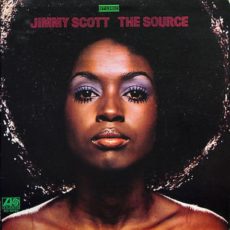
Jimmy Scott recorded The Source in 1969 and released it in 1970 for Atlantic Records consisting of eight compositions: Exodus, On Broadway, Our Day Will Come, I Wish I Knew, Unchained Melody, Day By Day, Sometimes I Feel Like A Motherless Child, This Love Of Mine.
Five songs on the album were arranged by Arif Mardin (tracks A1, A2, A4, B3, B4) and three by William Fischer (tracks A3, B1, B2). The string orchestras were directed and conducted by Gene Orloff and Selwart Clarke.
The personnel on the album consisted of bassist Ron Carter, drummer Bruno Carr, David Newman on flute and tenor saxophone (tracks A1, A2, A4 to B4), guitarists Eric Gale and Billy Butler (tracks A3, B3), pianist Junior Mance, Cissy Houston (vocals obbligato on track A2) and vocals by Jimmy Scott.
The cover photograph was taken by Joel Brodsky and designed by Loring Eutemey. The album was produced by Joel Dorn with engineers were Adrian Barber and William Arlt, remix engineers were Arif Mardin and Lewis Hahn and the liner notes were written by Nancy Wilson.

More Posts: choice,classic,collectible,collector,history,instrumental,jazz,music,vocal
The Jazz Voyager
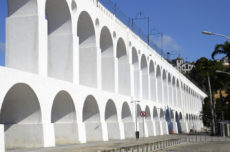
On the way back to South America now that I have my all night street cred established again after hanging out at Carnival, for a visit to the outside jazz party at Nova Lapa Jazz at R. Luis de Camoes, 30 – Centro, Rio de Janeiro, Brazil is in order.
It is here patrons listen into the wee hours to the jazz band bringing local and international tunes to life between the arches. Musicians will spontaneously show up to play, as they always do in Brazil. There’s nothing like sitting at a cafe and seeing musicians come in to jam with the band. Local vendors sell drinks – from beer to caipirinhas – all in plastic cups. It’s a casual, friendly vibe this Jazz Voyager will enjoy. Tomorrow, it’s Carnival!!! #wannabewhereyouare

More Posts: adventure,club,genius,jazz,museum,music,preserving,restaurant,travel,voyager
Three Wishes
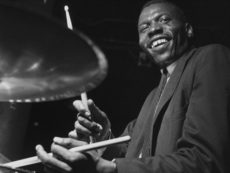
The question of three wishes was put to Elvin Jones by the baroness and he said…
- “Peace on earth.”
- “Complete acceptance and recognition of this music as a pure art form.”
- “To see an end of suffering for humanity.”
*Excerpt from Three Wishes: An Intimate Look at Jazz Greats – Complied and Photographed by Pannonica de Koenigswarter
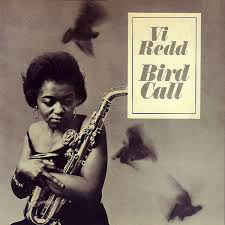
Requisites
The album Bird Call was recorded by alto saxophonist, vocalist and educator Vi Redd on June 15, 1962 for United Artists. The design and cover photograph for the album was created and taken by Frank Gauna.
She recorded If I Should Lose You, Summertime, Anthropology, All The Things You Are, I Rather Have A Memory Than A Dream, Now’s The Time, Just Friends, Perhaps/Cool Blues, I Remember Bird and Old Folks for a total of ten compositions over 42 minutes and 44 seconds.
Vi is best known as a Charlie Parker-influenced altoist, though she also sings on the 1962 Bird Call studio sessions. She leads an excellent band that included pianist Russ Freeman, bassists Leroy Vinnegar or Bob Whitlock, guitarist Herb Ellis, trumpeter Carmell Jones, vibraphonist Roy Ayers, and her then-husband, Richie Goldberg, on drums.
More Posts: choice,classic,collectible,collector,history,instrumental,jazz,music,saxophone,vocal

The Jazz Voyager
As I depart a wonderful stay in Amsterdam and shipping my purchases home, The Jazz Voyager leaves for Vienna, the city that has strongly identified with the masters classical music – Haydn, Mozart, Strauss but now very much appreciates the likes of of jazz musicians Charlie Parker and Duke Ellington. It’s all done at Porgy & Bess, the modern club located at Riemergasse 11, 1010 Wien, Austria.
Boasting ambience of a state-of-the-art mini concert hall, and room for 350 it has been designed to present top players to maximum advantage. The crowd at Porgy is respectful and attentive and an evening here is a pleasurable and comfortable experience – depending on who’s playing. A wide variety of top-of-the-range jazz is booked, from dazzling jazz and Latin musicians to the dark experimental broodings of central European virtuosi.
As with the name, the owners understand that jazz is historically defined as Afro-American music and innovative pulses still come from the “motherland of jazz”. These are two great reasons why the great American soloists of the music on the one hand, and the future generations on the other, are given programmatic consideration.
Admission about €20 with music every night, though the venue takes a summer break between mid-July and end of August. Reservations are advised at +43 1 512 8811. #wannabewhereyouare
More Posts: adventure,club,genius,jazz,museum,music,preserving,restaurant,travel,voyager