

Daily Dose Of Jazz…
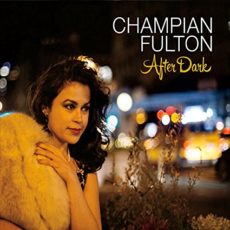
Champian Fulton was born on September 12, 1985 in Norman, Oklahoma to a jazz trumpeter father whose friends were Clark Terry and Major Holley. At five she took piano lessons from her grandmother and after trying trumpet and drums, she returned to piano and singing. When her father was hired to run the Clark Terry Institute for Jazz Studies, the family moved to Iowa. She went to jazz summer camp, where she founded the Little Jazz Quintet.
One of her early influences was Dinah Washington, particularly the album For Those in Love, which she played often as a young girl. She also admired Sarah Vaughan, Nat King Cole, Sonny Clark, Red Garland, Hampton Hawes, Wynton Kelly, Thelonious Monk, and Art Tatum.
Fulton graduated from high school in 2003, then attended State University of New York at Purchase, where she studied with trumpeter Jon Faddis.[4] After graduating, she moved to New York City to pursue a career as a pianist and vocalist. She has performed at various venues playing with Jimmy Cobb, Scott Hamilton, Frank Wess, Lou Donaldson, and Louis Hayes.
She has worked with the Lincoln Center for the Performing Arts, the Litchfield Jazz Camp and Rutgers University. In late 2015, she joined the faculty of the Jazz Arts Academy in association with the Count Basie Theatre Education Department to offer workshops in jazz vocals and jazz piano during the summer. In 2014 she received the Rising Star Female Vocalist Critics Poll from Down Beat Magazine. As a leader she has recorded eight albums and continues to perform and record.

Daily Dose Of Jazz…
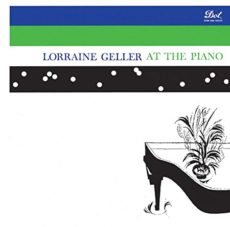
Lorraine Geller was born Lorraine Winifred Walsh on September 11, 1928, in Portland, Oregon. She started out with the all-female big band, Sweethearts of Rhythm, a successor to the International Sweethearts of Rhythm.
In 1950 she met alto saxophonist Herb Geller, who was then playing with Claude Thornhill, and married him the following year. Together they moved to Los Angeles, California where they played with many musicians of the West Coast jazz scene, such as Shorty Rogers, Zoot Sims, Stan Getz, and Red Mitchell to name a few. Lorraine also played on sessions with Charlie Parker and Dizzy Gillespie.
In 1957 she accompanied Kay Starr and performed at the first Monterey Jazz Festival in 1958. She recorded with Miles Davis and Chet Baker with the Lighthouse All Stars, Maynard Ferguson, Leroy Vinnegar and Conte Candoli. Sadly, pianist Lorraine Geller, who only recorded one album as a leader, passed away suddenly of heart failure on October 13, 1958 in Los Angeles at the age of 30.

More Posts: piano
Daily Dose Of Jazz…
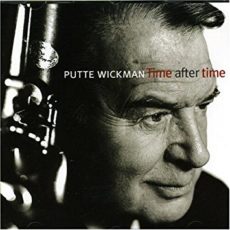
Putte Wickman was born Hans Olof Wickman on September 10, 1924 in Falun, Sweden and grew up in Borlänge, Sweden, where his parents hoped he would become a lawyer. He nagged them to allow him to go to high school in Stockholm. Arriving in the capital at 15 not knowing what jazz was, and not having access to a piano his mother gave him a clarinet and by then he had started to hang out with those with jazz records.
With Artie Shaw and Benny Goodman as his role models by 1944, he had already turned to music full-time. He was taken on as band leader at Stockholm’s Nalen and in 1945 the newly founded Swedish newspaper Expressen described him as the country’s foremost clarinet player.
For eleven years Putte led his own band at Nalen and during the 1960s he ran the big band at Gröna Lund, and at Puttes, the club he part-owned, at Hornstull in Stockholm. He gave church performances and concerts yearly and stayed active until shortly before his death. In 1994, Wickman received the Illis Quorum gold medal, the highest award that can be conferred upon an individual Swedish citizen by the Government of Sweden.
Clarinetist Putte Wickman, who considered himself self-taught having never taken a classes on the instrument and a member of the Royal Swedish Musical Academy, passed away on 14 February 2006 in Grycksbo, Sweden.

More Posts: clarinet
Daily Dose Of Jazz…
Jim Tomlinson was born September 9, 1966, in Sutton Coldfield, Warwickshire, England. He grew up in Northumberland and did not study music formally until well into his 20s. He played saxophone and ran a band as a hobby whilst studying for his degree he attended Oxford University where he studied philosophy, politics and economics while playing clarinet and saxophones, mostly the tenor, and developing his interest in jazz.
As a postgrad at London’s Guildhall School of Music and Drama he establish himself on the local jazz scene. With his reputation quickly spreading he was soon working with noted musicians Matt Wates, David Newton and Michael Garrick, recording with the latter on his 1997 session For Love Of Duke And Ronnie.
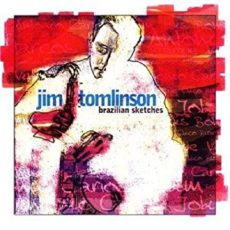
In the 90s he led his own quartet, touring the UK extensively in the UK and was often in the musical company of singer Stacey Kent. They married in 1991 and he appeared on her albums for Candid Records. Singed to Candid also, Jim released his debut album as leader, Only Trust Your Heart in 2000 giving him not only a UK but and international audience as well. This was followed by his sophomore project in 2003 titled Brazilian Sketches in 2003.
Tomlinson has gone on to work in a wide variety of groups, from Brian Ferry to experimental big band composer, Michael Garrick to leading and touring with his own quartet.
Tenor saxophonist Jim Tomlinson has released three albums, has been nominated for a Grammy and continues to compose, record and perform.

More Posts: saxophone
Daily Dose Of Jazz…
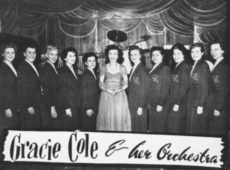
Gracie Cole was born Grace Elizabeth Agnes Annie Cole on September 8, 1924 in Rowlands Gill, County Durham, England. Her father Albert moved to Yorkshire in search of work as a miner when she was two years old. He played cornet in colliery bands, and taught her to play the cornet at the age of 12. She went on to play with local brass bands in her teens, including the Firbeck Colliery Band alongside her father. In 1939 at 15, she made her first broadcast on the BBC Radio for Children’s Hour.
From 1940, Cole appeared as a guest soloist in two concerts with the Besses o’ th’ Barn brass band, and played with various other bands including the Grimethorpe Colliery Band. In 1942 she became the first woman to compete for the Alexander Owen memorial scholarship and won by an unprecedented 21-point margin. That same year Cole switched to being a dance band trumpeter, initially joining Gloria Gaye’s All Girls Band, who toured playing theatres and forces entertainment shows organised by the Entertainments National Service Association.
Following WWII playing with Rudy Starlita’s All-American Band entertaining American G.I.s, she joined Ivy Benson’s band as lead trumpet and soloist, and toured Britain, Europe and the Middle East with them for the next five years. The Fifties saw her joining the George Evans Band, then joined the Squadronaires, but finding male prejudice uncomfortable, Gracie left to form her own all-female band in 1952 for the next four years. She would work with singers like Carol Carr and Cleo Laine and front an all-male band at Mecca Ballrooms.
From the 1960s she concentrated on bringing up her two daughters and played on a freelance basis. She was active in encouraging local brass bands, and was made a freeman of the City of London in 1990 Toward the end of the decade cornetist, trumpeter and bandleader Gracie Cole developed Alzheimer’s disease and passed away on December 28, 2006 in Westcott, Surrey, United Kingdom at the age of 82.

More Posts: trumpet