

Daily Dose Of Jazz…
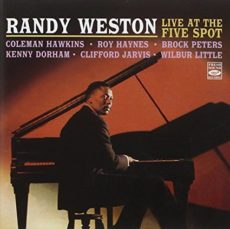
Clifford Jarvis was born on August 26, 1941 in Boston, Massachusetts and studied at Berklee College of Music in the 1950s. Moving to New York City, he established himself in jazz between 1959 and 1966 by recording with Chet Baker, Randy Weston, Yusef Lateef, Freddie Hubbard, Barry Harris, Jackie McLean, and Elmo Hope, and playing with Grant Green and Rahsaan Roland Kirk.
From 1962 to 1976 Jarvis performed and recorded with Sun Ra. He also played and recorded with Pharoah Sanders, Sonny Simmons, Alice Coltrane, Kenny Drew, Walter Davis, Archie Shepp and recorded with organist John Patton on the Blue Note album That Certain Feeling in 1968.
By the 1980s Jarvis moved to London, England, where he played with emerging musicians such as Courtney Pine. He worked in music education at Chats Palace Arts Centre in London and was senior drum tutor at Pyramid Arts Development, Dalston, from 1984 to 1994.
Hard bop and free jazz drummer Clifford Jarvis was an educator and performer until his passing on November 26, 1999 in London.

More Posts: drums
Daily Dose Of Jazz…
Pat Martino was born Pat Azzara in South Philadelphia, Pennsylvania on August 25, 1944 and began playing professionally at the age of 15 after moving to New York City. He resided with Les Paul for a while before moving into a suite in the President Hotel on 48th Street. He started playing jazz clubs like Smalls Paradise and would play at Smalls for six months of the year and then in the summer play at Club Harlem in Atlantic City.
Early in his career Martino played and recorded with Lloyd Price, Willis Jackson, Eric Kloss, Charles Earland, Richard “Groove” Holmes, Jack McDuff, Don Patterson, Trudy Pitts, Jimmy Smith, Gene Ludwig, Bobby Pierce and Joey DeFrancesco.
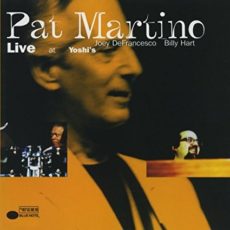
He has been awarded Guitar Player of the Year in Down Beat Reader’s Poll in 2004, NARAS Songs from the Heart Award, been nominated for a Grammy for Best Jazz Instrumental Album, Live at Yoshi’s, and Best Jazz Instrumental Solo on ‘All Blues‘ and has received Philadelphia Alliance Walk of Fame Award and National Academy of Recording Arts & Sciences “2nd Annual Heroes Award among others.
The list of jazz musicians he has performed and recorded as a sideman with are John Handy, Jimmy Heath, Charles McPherson, Sonny Stitt, The Philadelphia Experiment as well as released three-dozen albums as a leader. Guitarist and composer Pat Martino, noted for his mathematical approach to the instrument and plays in the post-bop, fusion, mainstream and soul jazz idioms, continues to perform and tour.

More Posts: guitar
The Jazz Voyager
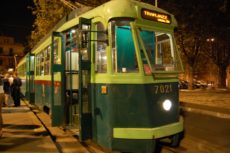
Heading back across the Atlantic to Rome, Italy and as they say, when in Rome… this weekend The Jazz Voyager will be embarking upon Tramjazz, a historical cable car converted into a traveling restaurant and concert hall. I will be enticed with a candlelit dinner, a jazz concert and a night tour of the center of the city. This is a project of Nunzia Fiorini and Anna Maria Sciannimanico and for about $80.00 takes each guest on a three hour culinary, musical and sightseeing adventure
One must be at the Piazza di Porta Maggiore at precisely 9:00 pm. This is the meeting point by the cable car platform near the ticket inspector’s cabin. They say it is where a 1947 Stanga railroad car will arrive and through the windows I will be able to observe the tables prepared and the candles lit. The band will already be in the turning platform in the middle of the carriage playing the first theme as the audience enjoys a flute of dry Spumante on the platform.
The cable car departs the station, the beer and the music begin to warm up and after a tour of the city it stops at the track of Parco de Celio, just in front of the Colasseo. Here dinner is served comprised of products from the Lazio region. All in all, I am looking forward to this evening. Hmmm… wonder what my attire will be. I think it will be prudent to check with Nunzia when I make my appointment at 339 6334700. #jazzvoyager#wannabewhereyouare

More Posts: adventure,club,genius,jazz,music,preserving,restaurant,travel,voyager
Daily Dose Of Jazz…
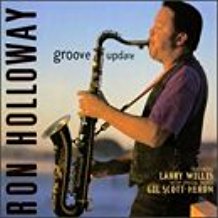
Ronald Edward Holloway was born on August 24, 1953 in Washington, D.C. to parents who met at Howard University and were avid jazz fans. He got his initial introduction from his father who favored saxophone and trumpet led albums and would add to his collection of Prestige and Blue Note jazz albums. Though he started with R&B-influenced Willis Gator Jackson it wasn’t long before he identified the sounds of Sonny Rollins, John Coltrane and Miles Davis as his principal influences.
After high school graduation, Holloway routinely practiced 8–12 hours a day, sat in with bands of all kinds and jam sessions, becoming familiar and performed with jazz, R&B, funk, rock, jazz fusion, blues, country and folk music groups. During the Seventies he had the great fortune to meet, play a tape of a performance and get standing invitations to play with anytime they were in town from Freddie Hubbard, Sonny rollins and Dizzy Gillespie. The latter would invite him to sit in with him at Ronnie Scott’s Jazz Club in London, England, an association that lasted well into the Eighties.
Straying from jazz Ron would move into funk and go on to become a member of Root Boy Slim and the Sex Change Band, Osiris, Gil Scott-Heron’s band Amnesia Express, and Dizzy Gillespie’s band, remaining a member until Dizzy’s passing in 1993. That same year he recorded his debut album as a leader on the Milestone label.
He would go on to perform and tour with Derek Trucks, the Allman Brothers, Susan Tedeschi, Gov’t Mule, and is currently a member of The Warren Haynes Band and leader of The Ron Holloway Band.

More Posts: saxophone
Daily Dose Of Jazz…
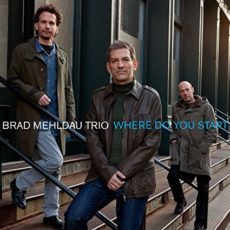
Bradford Alexander Mehldau was born August 23, 1970 in Jacksonville, Florida. His family moved to West Hartford, Connecticut, when he was 10, a move that introduced him to a new piano teacher and classical music an away from playing mostly simple pop tunes and exercises from books. By 14 he was listening more to jazz, including recordings by saxophonist John Coltrane and pianist Oscar Peterson.
Mehldau attended William H. Hall High School, played in its concert jazz band and from the age of 15 until he graduated from high school he had a weekly gig at a local club. He performed at weddings and other parties before winning the Berklee College’s Best All Round Musician Award for school students in his junior year.
Moving to New York City in 1988 he studied jazz and contemporary music at The New School, studied under pianists Fred Hersch, Junior Mance and Kenny Werner and drummer Jimmy Cobb. In 1989 Brad was part of saxophonist Christopher Hollyday’s band that toured for several months and a result assimilated the music of his principle influences Wynton Kelly and McCoy Tyner, and began to develop his own sound. By 20 he was playing in Cobb’s band with fellow student guitarist Peter Bernstein.
During the 1990s Mehldau first recorded on Hollyday’s The Natural Moment and toured of Europe with him, developed his left-hand playing, led his own trio and played at New York’s Village Gate. As a sideman he performed with saxophonist Perico Sambeat on tour and released his debut recordings as co-leader from a May concert in Barcelona, Spain. He went on tour with saxophonist Joshua Redman
Mehldau graduated from The New School in 1993 and formed his first long-term trio in 1994, with bassist Larry Grenadier and drummer Jorge Rossy. He recorded his debut as a leader Introducing Brad Mehldau for Warner Brothers. He went on to work with Lee Konitz, Charlie Haden, contribute to the soundtrack recorded for Midnight in the Garden of Good and Evil, release a compilation of standards on Live at the Village Vanguard: The Art of the Trio Volume Two followed by Songs: The Art of the Trio Volume Three. Not shying away from recording he ultimately has released 33 albums as a leader and has been a sideman on another 61 as well as nie soundtracks. He has performed and recorded with Pat Metheny, Dayna Stevens, Warren Wolf, Michael Brecker, Kurt Rosenwinkel, Joel Frahm, Wayne Shorter, Petra Haden, Vinicius Cantuária, John Patitucci, Charles Lloyd, Fleurine, Willie Nelson, Avishai Cohen, Anthony Wilson, Grant Stewart and Jesse Davis on the short list.
He has won Down Beat’s Readers Poll piano award in 1999, 2000, 2002, 2004, 2007, 2011, and 2012, was the 2006 winner of the Miles Davis Prize, awarded by the Montreal International Jazz Festival, received the Wigmore Medal and has been nominated for seven Grammy Awards. Pianist Brad Mehldau continues to perform, record and tour.
More Posts: piano