

Daily Dose of Jazz…
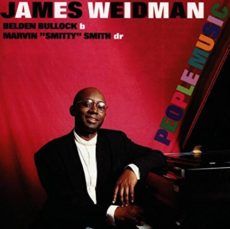
James Edward Weidman, Jr. was born in Youngstown, Ohio on July 23, 1953 to a saxophonist father who led his own band. He began playing piano when he was eight years old and eventually became the electric organist in his father’s group.
Attending Youngstown State University after graduating James spent two years playing locally before he moved to New York City in 1978. There he worked with Pepper Adams, Cecil Payne, Sonny Stitt and Bobby Watson, then became Abbey Lincoln’s pianist in 1982. This association continued into the early Nineties.
He went on to work with Steve Coleman, from 1987 to 1992 replacing Geri Allen in his Five Elements band, and with Jay Hoggard later in the 1980s. Throughout the 1990s he worked with Cassandra Wilson, Talib Kibwe, Kevin Mahogany, Belden Bullock, Max Roach, Woody Herman, Gloria Lynne, Archie Shepp, James Moody, Greg Osby, Slide Hampton, Dakota Staton and Marvin “Smitty” Smith.
Pianist and organist James Weidman who has released several albums as a leader in is a member of Joe Lovano’s Us Five band, continues to perform, tour and record.
Sponsored By

Voices From The Community

#preserving genius
Daily Dose Of Jazz…
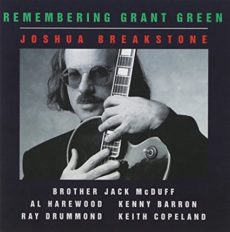
Joshua Breakstone was born July 22, 1955 in Elizabeth, New Jersey and came into the music business early in life watching Jimi Hendrix and Frank Zappa at the Fillmore East. He later became interested in jazz through Charlie Parker and Lee Morgan and found himself studying with guitarist Sal Salvador in Manhattan. By 1972 he was enrolled at the New College of the University of South Florida, graduated three years later and continued his studies at Berklee College of Music.
A move to Brazil for a few months brought him back to New York City to perform and teach. Joshua also taught privately and at the Rhode Island Conservatory of Music. In 1979, he recorded with Canadian saxophonist Glen Hall, with Joanne Brackeen, Cecil McBee, and Billy Hart participating and also worked with Vinnie Burke, Warne Marsh, Emily Remler, and Aaron Bell.
1983 saw Breakstone releasing his debut album, 4/4=1, followed by four more albums from 1986 to 1990 on the Contemporary Records label, with sidemen Pepper Adams, Kenny Barron, Dennis Irwin, Jimmy Knepper, Tommy Flanagan, Keith Copeland and Kenny Washington. He went on his first tour of Japan and has since played twice a year in Japan and has worked with Terumasa Hino, Monkey Kobayashi, and Eiji Nakamura.
Beginning in the Nineties he signed a contract with the Japanese label King Records, released four albums, moved to Evidence Records and worked with Grant Green sidemen organist Jack McDuff and the drummer Al Harewood, and recorded Sittin’ on the Thing with Ming on the Capri label in 1994. He would go on to record tribute albums to Thelonious Monk, Wes Montgomery, and Bud Powell. His latest album in 88 recorded in 2016. Guitarist joshua Breakstone, who has nearly two dozen albums as a leader to his credit, continues to compose, record and perform.
Sponsored By

www.whatissuitetabu.com
#preserving genius
More Posts: guitar
Daily Dose Of Jazz…
Arthur Edgehill was born July 21, 1926 in Brooklyn, New York and studied drumming during his youth. His first professional work came while touring with Mercer Ellington in 1948, and in 1953 he toured with Ben Webster. He went on to play with Kenny Dorham’s Jazz Prophets in 1956 and with Gigi Gryce and in 1957-58 toured with Dinah Washington.
He would go on to become a member of Eddie “Lockjaw” Davis’ quartet with George Duvivier and/or Wendell Marshall, and recorded with Shirley Scott, not only on her debut album, Great Scott! In 1958, but also on her Very Saxy album in 1959 with Eddie “Lockjaw” Davis, Buddy Tate, Coleman Hawkins, and Arnett Cobb on tenors.
Edgehill played in quartets led by Horace Silver, one featuring Cecil Payne, and at Minton’s with Hank Mobley and Doug Watkins, and jammed with Charlie Parker and Annie Laurie.
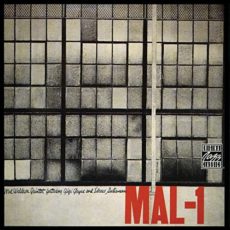
Hard bop jazz drummer Arthur Edgehill, originally spelt Edghill, not retired at the age of 90, was active from the 1950s through the 1970s. He appeared on several of the Prestige recordings from the Van Gelder Studios in Hackensack and Englewood Cliffs, New Jersey. He recorded on Mal Waldron’s debut album Mal-1 in 1956 and continued recording with Little Jimmy Scott, Mildred Anderson and David Amram among others.
Sponsored By
#preserving genius
More Posts: drums
The Jazz Voyager
The midwest was a blast but there’s nothing like the Big Apple and this Jazz Voyager has landed and is going to hang out with some longtime friends. However, the icing on the cake will be sitting in the audience of one of the country’s preeminent non-profit cultural centers and performance spaces, the Jazz Gallery.
It was founded in 1995 by Dale Fitzgerald, vocalist Lezlie Harrison and renowned jazz trumpeter Roy Hargrove who envisioned a hub and home for the jazz musicians and composers from around the world who come to New York to take part and enhance the city’s vibrant cultural scene.
Located at 1160 Broadway, 5th Floor, New York, NY 10001 in downtown Manhattan, the Jazz Gallery showcases progressive jazz music and gives artists, both young and old, a place to perfect their craft. They commission new works, pair young artists with established ones and provides rehearsal space for NYC’s jazz musicians.
The Jazz Gallery is open 3 to 5 nights per week, 50 weeks per year and you can check the schedule at http://www.jazzgallery.org/ or call for information on tickets prices ranging from $10 to $30 depending on performer. #jazzvoyager#wannabewhereyouare
Sponsored By
Voices From The Community
#preserving genius
More Posts: adventure,club,genius,jazz,music,preserving,restaurant,travel,voyager
Daily Dose Of Jazz…
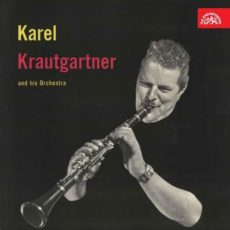
Karel Krautgartner was born on July 20, 1922 in Mikulov, Moravia and began to play piano at the age of eight. In 1935, after moving to Brno, he found interest mainly in the radio broadcasting and especially in jazz. He began to study clarinet privately with Stanislav Krtička, acquiring necessary skills and inherited a fanatic passion for clarinet construction and its components.
In 1936 Krautgartner founded the student orchestra Quick Band and six years later signed his first professional contract as a saxophonist in the Gustav Brom Orchestra in the hotel Passage in Brno. In 1943 he gradually created Dixie Club and started to arrange in the Benny Goodman and Glenn Miller styles. During 1945 – 1955, the core of the Dixie Club moved gradually to Prague and became a part of Karel Vlach orchestra. Karel became leader of the saxophone section and started to contributing his own compositions.
1956 saw him founding the Karel Krautgartner Quintet along with Karel Velebný. The group played in various line-ups modern jazz, swing, dixieland and accompanied popular singers. From 1958 to 1960 he performed with the All star band, an orchestra playing in west-coast style, and dixieland with Studio 5. Between 1960 and 1968 he became the head of the Taneční Orchestr Československého Rozhlasu (Dance Orchestra of Czechoslovakia Radio), renamed to Karel Krautgartner Orchestra in 1967.
Following the Soviet invasion of Czechoslovakia, he emigrated to Vienna, Austria in 1968 and became the chief conductor of the 0RF Bigband. Later he moved to Cologne, Germany. Clarinetist, saxophonist, arranger, composer, conductor and teacher Karel Krautgartner passed away on September 20, 1982 in Germany.
Sponsored By

#preserving genius