


Atlanta Jazz Festival… 1998
The year is 1998 and it is the inaugural year for Camille Russell Love as the new Director of the Bureau of Cultural Affairs. Mayor Bill Campbell is heading towards his second term as the city prepares for the annual weekend of jazz May 18th to the 26th in Piedmont and Woodruff Parks.
The lineup Ms. Love brought represented a host of the city’s finest vocalists and instrumentalist as well as national and internationally renowned jazz musicians Andy Milne, Bill Anschell, Bob Miles, Cascade Avenue Be-Bop Society, Dave Bass Quartet, David Freeman, Detroit All-Stars, Dianne Reeves, Georgia Grammy High School Band, Grout, GSU Faculty, Hilton Ruiz Quartet featuring Dave Valentin, Jeff Crompton Quartet, Joe Jennings with Life Force, Johnnie Eason, Kamal Abdul Alim, Kevin Mahogany, Lester Walker Project, Mark Turner Quartet, Miguel Romero, Mike Kelly Trio, Milkshake Quintet, Najmah Marchelle, Obie Jessie, Ojeda Penn, Phil Smith and the Atlanta Jazz Consortium, Rick Bell, Ron Taylor, Swing Association, The Trio and Tommy Macon and the Gentlemen of Jazz.
All the festivities are sponsored by The Atlanta Coca-Cola Bottling Company, The Atlanta Renaissance Hotel Downtown, the Atlanta Journal Constitution, Creative Loafing, Jazziz, WCLK 91.9 FM, WRFG 89.3 FM and WJFZ. #AJF40

#preserving genius
More Posts: festival,forty,free,history,jazz,music,tradition,years

Daily Dose Of Jazz…
Fumio Karashima was born on March 9, 1948 in Oita, Japan and began playing the piano at the age of three. He attended Kyushu University where his father was a music teacher.
He moved to New York City in 1973, staying for one year before returning to Japan. Back home, in 1975 he joined drummer George Ohtsuka’s band. In 1980 Fumio joined Elvin Jones’ Jazz Machine, a relationship that lasted for five years, and included four tours of Europe and the United States.
Switching his playing direction to being principally a solo pianist, however, he also led a quintet from 1988 to 1991. During the 1990s he frequently toured internationally. Pianist Fumio Karashima passed away from cancer at age 68 on February 24, 2017 in Tokyo, Japan.
Sponsored By

#preserving genius
More Posts: piano
Daily Dose Of Jazz…
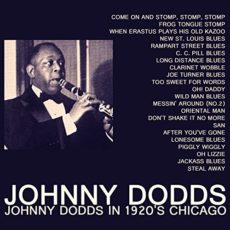
George “Little Mitch” Mitchell was born March 8, 1899 in Louisville, Kentucky and took up the cornet at the age of 12, joining a local brass band in Louisville. From 1921-3 he recorded with Johnny Dunn’s Original Jazz Hounds and Johnny Dunn’s Original Jazz Band on the Columbia label.
In 1926 Little Mitch recorded with the New Orleans Wanderers and New Orleans Bootblacks, taking the place of the unavailable Louis Armstrong. Shortly afterwards he recorded with Jelly Roll Morton’s Red Hot Peppers. He also went to record with Luis Russell, Johnny Dodds and The Earl Hines Orchestra.
Cornetist George Mitchell ended his active but short career on the 1920s jazz scene around 1931, never leading a recording session, opting to become a bank messenger. He passed away on May 22, 1972 in Chicago, Illinois.
Sponsored By

#preserving genius
More Posts: cornet
Daily Dose Of Jazz…
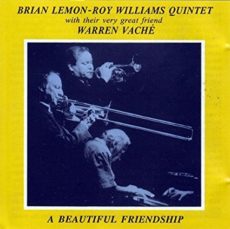
Roy Williams was born on March 7, 1937 in Bolton, Lancashire, England and began his career as a trombonist during the British trad jazz movement of the 1950s. He played with trumpeter Mike Peters and clarinetist Terry Lightfoot in the early Sixties, then joined trumpeter Alex Welsh’s Dixieland outfit in 1965, replacing Roy Crimmins. While with Welsh, he played with visiting American jazz players as Wild Bill Davison, Bud Freeman, and Ruby Braff.
Williams left Welsh in 1978 and joined Humphrey Lyttlelton’s band, staying with the latter for four years. In the ’80s he began working freelance and soon became a first call trombone playing with clarinetist Peanuts Hucko, tenor saxophonist Scott Hamilton, trumpeter Bent Persson and clarinetist John Barnes. He performed with The World’s Greatest Jazz Band.
Among Roy’s recordings are Gruesome Twosome on the Black Lion label, and Interplay for Sine Records, both with Barnes. In 1998 he co-led a swing-oriented quintet date with saxophonist Danny Moss titled Steamers! on the Nagel-Heyer label. Though not as active as he was up through the Nineties, trombonist Roy Williams won numerous jazz polls, toured Europe and the United States and remains a popular presence when he’s on the British mainstream jazz scene.

#preserving genius
More Posts: trombone
Daily Dose Of Jazz…
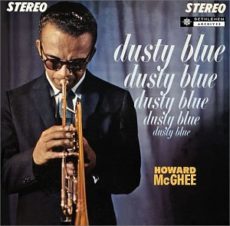
Howard McGhee was born on March 6, 1918 in Detroit, Michigan and originally played clarinet and tenor saxophone before taking up trumpet when he was 17. By 1941 he was playing in the territory bands led by Lionel Hampton, Andy Kirk being featured on McGhee Special, then with Count Basie and landing with Charlie Barnet from 1942-43. Participating in the fabled bop sessions at Minton’s Playhouse and Monroe’s Uptown House, he modernized his style away from Roy Eldridge, moving towards Dizzy Gillespie. However, it was in a club listening to the radio when he first heard Charlie Parker and became one of the early adopters of the new style, to the disapproval by older musicians like Kid Ory.
In 1946 a new label, Dial Records, organized some record sessions in Hollywood with Charlie Parker and the Howard McGhee combo. Joining these two were pianist Jimmy Bunn, bassist Bob Kesterson and Roy Porter on drums. He continued to work as a sideman for Parker playing on titles like Relaxin’ at Camarillo, Cheers, Carvin the Bird and Stupendous. Racial prejudice cut his California stay short when it became particularly vicious towards McGhee as half of a mixed-race couple.
Back in New York Howard he recorded for Savoy Records and had a historic meeting on record with Fats Navarro in 1948 on the Blue Note label. For much of the Fifties drug problems sidelined Howard but he resurfaced in the 1960s, appearing in many George Wein productions. His career sputtered again in the mid-1960s and he did not record again until 1976. He led one of three big jazz bands trying to find success in New York in the late 1960s. While the band did not survive, a recording was released in the mid-1970s.
He taught music through the 1970s, both in classrooms and at his Manhattan apartment. He was as much an accomplished composer and arranger as he was a performer. He recorded fifteen albums as a leader and held down sessions as a sideman with Dexter Gordon, Johnny Hartman, James Moody, Don Patterson, Joe Williams. Over the course of his career he would record for Felsted, Bethlehem, Contemporary, Hep, Black Lion, Sonet, SteepleChase, Jazzcraft, Zim, and Storyville record labels. Trumpeter Howard McGhee, known for his fast fingers and very high notes, passed away on July 17, 1987.
Sponsored By

Voices From The Community
#preserving genius
More Posts: trumpet