

Daily Dose Of Jazz…
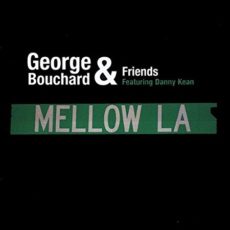
George Bouchard was born Feb. 4, 1944 in Buffalo, New York and was the eldest of three children. His father worked in a factory and the family lived for much of his childhood in an apartment above the family delicatessen. He took saxophone lessons from the owner of a music store but was mostly self-taught, drawing inspiration from famous musicians like Charlie Parker and John Coltrane.
When he was 19, on the night after President Kennedy was assassinated, he found solace watching a jazz band play at a nightclub near his Buffalo home and decided he wanted a career in music. He earned a degree in economics from the University at Buffalo and a master’s in music from Memphis State University. He served in the Navy from 1966 to ’69.
As an educator he spent more than thirty years as a professor teaching music at Nassau Community College and 40 years of teaching during the summers at the Jamey Aebersold Jazz Workshops at the University of Louisville in Kentucky. He released four compact discs as a leader, received numerous awards for excellence in music education and for advancing the arts on Long Island, wrote a widely used instructional book called Intermediate Jazz Improvisation, and performed regularly with his group, The George Bouchard Band.
Soprano saxophonist and composer George Bouchard passed away from cancer on August 12, 2015 in Westbury, New York at age 71.
Sponsored By


#preserving genius
More Posts: saxophone
Daily Dose Of Jazz…
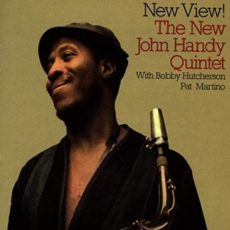
John Richard Handy III was born on February 3, 1933 in Dallas, Texas and first came to prominence while working with Charles Mingus in the 1950s. By the 1960s, he was leading several groups, among them a quintet with violinist Michael White, Jerry Hahn on guitar, Don Thompson on bass, and drummer Terry Clarke. This group’s performance at the 1965 Monterey Jazz Festival was recorded and released as an album and he received Grammy nominations for jazz performance of Spanish Lady and jazz composition for If Only We Knew.
As an educator Handy has taught music history and performance at San Francisco State University, Stanford University, the University of California, Berkeley, the San Francisco Conservatory of Music, and other schools.
The 1980s saw John working on the Mel Martin project Bebop & Beyond, recording tribute albums to Dizzy Gillespie and Thelonious Monk. He has recorded some eighteen albums as a leader for Roulette, Columbia, Impulse!, Warner, MPS, Milestone, Koch Int’l and Boulevard record labels. He has had one compilation released of selections from In The Vernacular and No Coast Jazz, and and has recorded two albums with Brass Fever, as well as, five albums during his time with Mingus.
Alto saxophonist John Handy, who also plays tenor and baritone saxophone, saxello, clarinet, oboe and sings, continues to perform and record.
Sponsored By

#preserving genius
The Jazz Voyager
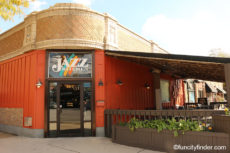
Heading off to the Midwest this weekend, to a place where the 500 race takes place, for a mix of local, regional, national and international touring flavor at The Jazz Kitchen. Opening its doors in 1994, this 140 seat room has been the premiere destination for jazz in the city and has garnered a rating as one of the Top 100 jazz clubs in the world by DownBeat Magazine.
They have presented such luminaries as Harry Connick Jr, Ray Brown, J.J. Johnson, Jane Monheit, Maynard Ferguson, Billy Cobham, Diane Schuur, John Scofield, Soulive, James Moody David “Fathead” Newman and numerous others over their 22 years.
The Jazz Kitchen is located at 5377 N. College Avenue, Indianapolis, Indiana 46220 / 317-253-4900. Tickets range from $7.00-$45.00 depending on the night and performer. An evening out is rated $-$$, and offers a cuisine that is NOLA meets Mid-West you can get etouffee, ‘po boys and crab cakes alongside your steaks, chops and burgers. Or you can opt for the fresh seafood or vegetarian fare if that is your desire.
Sponsored By

Voices From The Community
#preserving genius
More Posts: adventure,club,genius,jazz,music,preserving,restaurant,travel,voyager
Daily Dose Of Jazz…
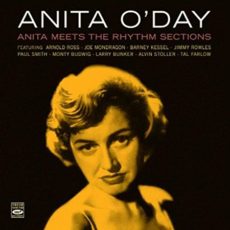
Joe Mondragon was born on February 2, 1920 in Antonito, Colorado. An autodidact on bass, he began working professionally in Los Angeles, California before serving in the Army during World War II. After his discharge he joined Woody Herman’s First Herd in 1946.
Over the next two decades, Mondragon became one of the more popular studio bassists for jazz recording on the West Coast, appearing on albums by June Christy, Buddy Rich, Buddy DeFranco, Marty Paich, Claude Williamson, Bob Cooper, Harry Sweets Edison, Gerry Mulligan, Art Pepper, and recording the Duke Ellington Songbook with Ella Fitzgerald in 1956. He also played on soundtracks for films such as The Wild One and Pete Kelly’s Blues.
Though Joe never recorded as a leader, he did however, record 45 albums as a sideman with Georgie Auld, Chet Baker, Louis Bellson, Buddy Bregman, Hoagy Carmichael, Herb Ellis, Jimmy Giuffre, Woody Herman, Harry James, Stan Kenton, Barney Kessel, Henry Mancini, Shelly Manne, Carmen McRae, Jack Montrose, Gerry Mulligan, Oliver Nelson, Art Pepper, Shorty Rogers, Pete Rugolo, Lalo Schifrin, Bud Shank and others.
Bassist Joe Mondragon passed away in July 1987 in Ohkay Owingeh, New Mexico.
Sponsored By

#preserving genius
More Posts: bass
Daily Dose Of Jazz…
James Black was born on February 1, 1940 in New Orleans, Louisiana and though he’s little known outside of his native city and never recorded an album under his own name, the drummer was a Crescent City legend. Soaking up the city’s trademark “second line” rhythms from a young age, by the early 1960s he was already doing session work for the likes of Fats Domino. His main interest was jazz, however, and he played in a group with the young Ellis Marsalis on piano and Nat Perrilliat on saxophone. This trio was part of the Nat Adderley 1962 session In the Bag, to which he contributed two compositions. The following year, Marsalis cut an underrated album of modern jazz called Monkey Puzzle and this time out Black handled four of the seven compositions, including the intricate 5/4 piece Magnolia Triangle, which ranks as perhaps his greatest work.
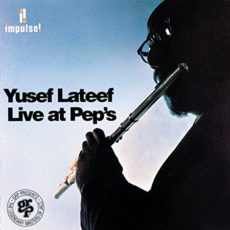
James went on to play with Yusef Lateef and Lionel Hampton in the mid-’60s. However, his career was interrupted by a stint in the Angola State Penitentiary,during which time he actually played in a prison band with blues pianist James Booker and saxophonist Charles Neville. The late Sixties saw him on the R&B circuit around New Orleans, and in 1968 became the house drummer at the Scram label. He played on Eddie Bo’s Hook and Sling, helping to make it one of the great New Orleans funk singles, and soon took his place alongside Smokey Johnson and the Meters’ Ziggy Modeliste as one of the city’s top funky drummers.
He continued to play jazz on the side as part of Ellis Marsalis’ band ELM Music Company. They took up residency at Lu and Charlie’s beginning in 1972 and became local favorites. During the ’70s, Black also led his own group, the James Black Ensemble, which often featured his longtime girlfriend “Sister Mary” Bonette on vocals. He attempted several times to record a full-length album, including once for the Sound of New Orleans label and another time at Allen Toussaint’s studio, but the sessions never progressed beyond a few tracks.
He would continue performing in New Orleans into the ’80s playing with Ellis Marsalis and then teenager Harry Connick Jr., and served as the drummer for the 1982 Marsalis Family album Fathers and Sons. Drummer James Black passed away of a drug overdose on August 30, 1988 in New Orleans.
Sponsored By

#preserving genius
More Posts: drums