

Daily Dose Of Jazz…
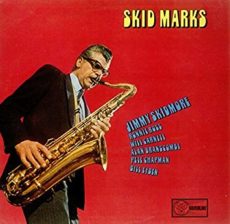
James Richard Skidmore was born on February 8, 1916 in Manor Park, London, England. After teaching himself to play tenor saxophone when he was 20, he played with Harry Parry and George Shearing, becoming especially active in the years immediately following World War II. He attracted attention as a member of the Vic Lewis Jazzmen and in the Fifties played and recorded with Kenny Baker and Humphrey Lyttelton, forming part of the latter’s non-traditionalist saxophone line-up alongside Tony Coe and Joe Temperley.
During the 60s and 70s he continued to perform in clubs but the frequency of his playing diminished. A combination of changing musical times and his own casual approach to his music adversely affected the success his talent deserved. In the mid-80s he still played in the London area and apparently took the jazz world a little more seriously than he had in the past. He celebrated his 80th birthday by appearing alongside his tenor saxophonist son Alan, who had gained the lion’s share of public attention from the mid-60s on..
Tenor saxophonist Jimmy Skidmore passed away on August 22, 1998 in Welwyn Garden City, Hertfordshire, England.
Sponsored By


#preserving genius
More Posts: saxophone
Daily Dose Of Jazz…
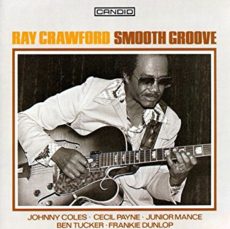
Ray Crawford was born on February 7, 1924 in Pittsburgh, Pennsylvania. During the war years from 1941-1943 he played tenor saxophone and clarinet with Fletcher Henderson but tuberculosis forced him to give them up.
Switching to guitar he became an important part of Ahmad Jamal’s early groups from 1949 to 1955. Ray’s ability to make his guitar sound like bongos by hitting it was soon adopted by Herb Ellis. He went on to record with Gil Evans from 1959 to 1960, then played off and on with Jimmy Smith from 1958 into the Eighties.
In the Sixties he settled in Los Angeles, California. He led fairly obscure records for Candid in 1961 that were not released until the 1980s, and also recorded for Dobre and United National record labels in the Seventies. Guitarist Ray Crawford, who played mainly in the hard bop and soul jazz genres, passed away on December 30, 1997 in his hometown of Pittsburgh.

#preserving genius
More Posts: guitar
Daily Dose Of Jazz…
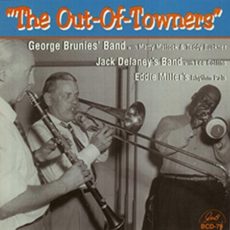
George Clarence Brunies, a.k.a. Georg Brunis was born into a musical family on February 6, 1902 in New Orleans, Louisiana.. His father led a family band with his brothers Henry, Merritt, Richard, and Albert who all became noted professional musicians. By the age of 8 he was already playing alto saxophone professionally in Papa Jack Laine’s band, but a few years later he switched to trombone.
Though Brunies never learned to read music, he played with many jazz, dance, and parade bands in New Orleans, quickly picking up tunes and inventing a part for his instrument. He first went to Chicago, Illinois in 1919 with a band led by Ragbaby Stevens, then worked the riverboats up and down the Mississippi River.
By 1921 he returned to Chicago and joined a band of his New Orleans friends playing at the Friar’s Inn, and this band eventually became famous as the New Orleans Rhythm Kings. His trombone style was influential to the young Chicago players, and his records were much copied. In this era Brunies was never bested as he could play anything any other trombonist could play as well or better. He would often end battles of the bands or cutting contests by outplaying other trombonists while operating the slide with his foot.
In 1924 after the Rhythm Kings broke up in Chicago, George joined the Ted Lewis band, which he played with through 1934. He spent some time with Louis Prima’s band, then landed a steady gig at the New York City jazz club Nick’s through 1938. In 1939 he joined Muggsy Spanier, with whom he made some of his most famous recordings. The following year he returned to Nick’s, where he remained through 1946 and then worked with Eddie Condon.
In 1949 Brunies returned to Chicago and landed at the 1111 Club leading his own band. Often showing off his unusual technical abilities and bizarre sense of humor at the same time, for example, he would lie on the floor and invite the largest person in the audience to sit on his chest while he played trombone. Believing that this name change would increase his good luck, on the advice of a numerologist, he changed his name to Georg Brunis in the late 1940s. While in residence every now and then other well-known jazz musicians would sit in and play until the wee hours.
Trombonist George Brunies, known as the King of the Tailgate Trombone, passed away in Chicago on November 19, 1974.
Sponsored By

Voices From The Community
#preserving genius
More Posts: trombone

Atlanta Jazz Festival… 1993
It’s 1993 and it’s Mayor Jackson final year of his third term as the festival mounts for another summer weekend of jazz. The perennial master of ceremonies, Ernest Gregory, with his deep resonating voice once again welcomes the festival patronage. As he introduces musicians and dignitaries, he warmly gives recognition of thanks to the myriad of sponsors and bridges the gap between each performance. All of this is backed by a well chosen soundtrack of music selected by the festival staff.
The year the festival’s lineup hosted Airto, Azanya, Scotty Barnhart, Dave Bass Quartet, Rick Bell, Vinnie Bernard, Jerry Byrd, Don Byron, Norman Connors, Charles Earland, Charles Fambrough, Nnenna Freelon, Joe Jennings, Stanley Jordan, Hal Galper Trio, Georgia State Faculty Ensemble, Roy Hargrove, Mark Helias, Louis Heriveau, Nancee Kahler, Earl Klugh Trio, Jon Lucien, Gloria Lynne, Dan Matrazzo, Meantime, Mulgrew Miler, Steve Nelson, Ken Professor Philmore, Flora Purim, Rebirth Brass Band, Grant Reed, Marlene Rice, Arturo Sandoval, Jimmy Scott, Audrey Shakir, Yusef Sharif, Rod Smith, Savannah Smith, Kirk Whalum, Wingspan with Kenny Garrett and Wild Magnolias & World Symphony Quartet.
Sponsoring all the festivities from May28th to June 4th at Underground Atlanta, Malibu Jacks, Atlanta Renaissance Hotel, Grant Park, Variety Playhouse, Woodruff Park and Chastain Park Amphitheater were the Atlanta Coca-Cola Bottling Company, Circuit City, goody’s Headache Powder, Soapstone Center for The Arts, Atlanta Renaissance Hotel, WCLK 91.9 FM, Creative Loafing, Variety Playhouse, Underground Atlanta, WVEE 103 FM, Popeye’s Chicken and Biscuits, South Dekalb Mall, Lawry’s Seasoning Salt, Advanced Media Television Producers, AT&T, Malibu Jacks, Concert Southern Promotions and Jim Scott Pianos, Organs, Keyboards.
#preserving genius
More Posts: festival,forty,free,history,jazz,music,tradition,years
Daily Dose Of Jazz…
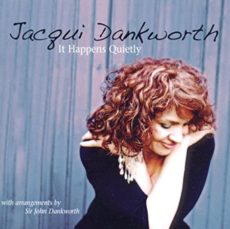
Jacqui Dankworth was born on February 5, 1963 in Northampton, Northamptonshire, England to Cleo Laine and John Dankworth. She attended St. Christopher School in Hertfordshire and is an alumna and fellow of Guildhall School of Music & Drama.
Her vocal talents led her to work as an actress with the Royal Shakespeare Company, the Royal National Theatre, and in West End Theatre. She played Cinderella in the musical Into the Woods and appeared the film Shoreditch, singing the song My Man by Billie Holiday.
In 2003, Jacqui released her first album, As the Sun Shines Down on Me on the Candid Records label. This album brought her to the attention of Michael Parkinson and BBC Radio 2, and she began appearing regularly on air throughout that year. She was featured on Courtney Pine’s album Devotion, and performed with Pine at the Royal Festival Hall as part of the London Jazz Festival.
She followed the success of As the Sun Shines Down on Me with the 2004 release, Detour Ahead. She has followed these two releases by recording Back to You, It Happens Quietly and Live To Love. Vocalist Jacqui Dankworth continues to perform, record and tour.
Sponsored By

www.whatissuitetabu.com
#preserving genius
More Posts: vocal