

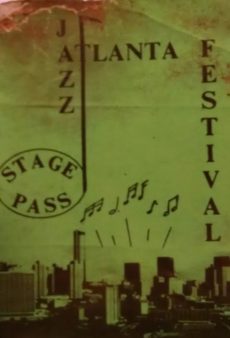
Atlanta Jazz Festival… 1980

More Posts: festival
Daily Dose Of Jazz…
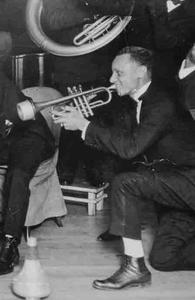
Amos White was born on November 6, 1889 in Charleston, South Carolina and grew up an orphan playing in the Jenkins Orphanage band in his teens. In addition, he traveled with minstrel shows and circuses.
After attending Benedict College, he returned to the orphanage to take a teaching position. During World War I, White played in the 816th Pioneer Infantry Band in France, then settled in New Orleans, Louisiana after the war.
Working as a typesetter, he played jazz in his spare time, working with Papa Celestin and Fate Marable among others. In the 1920s, he appeared on many records by blues singers such as Bessie Smith and Lizzie Miles, and played in the Alabamians. In 1928, he became the leader of the Georgia Minstrels.
In the 1930s, White moved to Phoenix, Arizona, where he played with his own group and with local dance groups, including Felipe Lopez’s. Later in the decade he relocated to Oakland, California, where he played locally into the 1960s in marching bands.
Trumpeter Amos White passed away on July 2, 1980 in Oakland, California.

Inspire A Young Mind
More Posts: trumpet
Daily Dose Of Jazz…
Johnny Windhurst was born John Henry Windhurst on November 5, 1926 in New York City, New York and was a self-taught trumpeter known for his solos. He considered Bix Beiderbecke, Wild Bill Davison, and Bunny Berigan among his influences and his feathery vibrato and mobility was mixed with the delicate playing style of Bobby Hackett.
At 15 he played his first public performance at Nick’s in New York City and made his professional debut during the spring of 1944 at one of Eddie Condon’s concerts at the Town Hall in New York City. At 18 years old, he was chosen to replace Bunk Johnson by Sidney Bechet to play at the Savoy Cafe in Boston, Massachusetts. Windhurst was initially recruited to the band to play the cornet and this engagement launched his career as a trumpeter.
He went on to play with Art Hodes and James P. Johnson at the Jazz at Town Hall concert in 1946. He then moved to the midwest and after a brief stint in the Chicago jazz scene he returned to the Savoy Cafe as a member of Edmond Hall’s band. Johnny eventually moved west to experience the West Coast jazz scene in California. His inability to read music had him declining gigs with Benny Goodman and Woody Herman while emphasizing his preference of informal jamming. Over the years, he played with musicians Louis Armstrong, Nappy Lamare, Walt Gifford, Edmond Hall and Eddie Condon. He led his own band, Riverboat Five, through Columbus, Ohio and Boston for several years, refraining from playing the most popular east coast venues and nightclubs to play college campuses and other small venues.
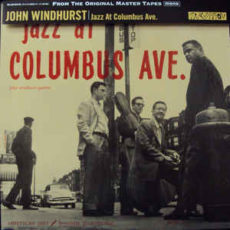
During the 1950s Windhurst worked with Ruby Braff in one of the groups known as Jazz at Storyville, performed at Condon’s club and performed with George Wettling, Jack Teagarden, Barbara Lea and took a stage role with actor Conrad Janis in an off-broadway musical titled, Joy Ride. He only made one recording with his swing quartet, the John Windhurst Quartet that included Buell Neidlinger as a sideman, titled Jazz at Columbus Avenue.
Throughout the 1960s and 70’s he opted to perform primarily in obscure venues in out-of-the-way corners of the USA. Despite his range of talent and success, Windhurst was seemingly content to hide from the big-time spotlight. He eventually moved upstate to Poughkeepsie with his mother, where he finished his career in a dixieland band at Frivolous Sal’s Last Chance Saloon. Several years later, after receiving an invitation to play the Manassas jazz festival in 1981, Windhurst passed away of a heart attack on October 2, 1981 in Dutchess County, New York.
Sponsored By

www.whatissuitetabu.com
More Posts: trumpet
Daily Dose Of Jazz…
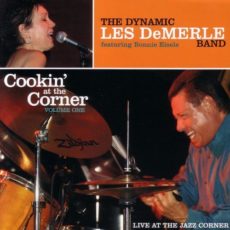
Lester William DeMerle was born on November 4, 1946 in Brooklyn , New York and studied drums and percussion from 1960 to 1965 with Bob Livngstone in New York, then music theory and harmony with Alf Clausen . At 16 he was jamming with Lionel Hampton and in 1966 he played with the Lee Castle led Dorsey band.
1967 found Les with Randy Brecker and Arnie Lawrence in the first band formation called Sound 67. By the late 1960s he joined with Joe Farrell and Lee Konitz in New York. By 1971 Les was moving to Los Angeles,California where he founded the band Transfusion, that became the house band at the Cellar Theatre. He also played with Michael Brecker, Eric Marienthal, David Benoit and Raul De Souza. In 1974 he joined Harry James at the Newport Jazz Festival and stayed for 12 years.
He recorded with the Heath Brothers on the album Smilin’ Billy Suite / A Day in the Life in 1976 on the Strata-East label, worked with Bunk Gardner and in the 1980s he worked on albums with his wife Bonnie Eisele. DeMerle has led big bands and made a series of albums on the Origin label including a tribute album to the classic Blue Note Records, Hittin’ the Blue Notes.
Les DeMerle is one of the few drummers who sings. He has accompanied Frank Sinatra, Sammy Davis Jr., Tony Bennett, Sarah Vaughan, Mel Tormé and Eddie Jefferson. He continues to perform, record and tour.
Dose A Day-Blues Away
Daily Dose Of Jazz…
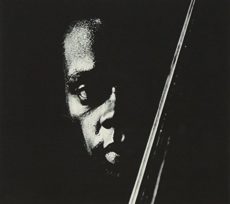
Henry Grimes was born November 3, 1935 in Philadelphia, Pennsylvania and took up the violin at the age of 12, then began playing tuba, English horn, percussion, and finally the double bass in high school. He went on to study at Juilliard, establishing a reputation as a versatile bassist by the mid-1950s.
At a time when bassist Charles Mingus was experimenting with a second bass player in his band, Grimes was the person he selected for the job. At twenty-two he was captured on film in the Bert Stern documentary of the 1958 Newport Jazz Festival’s Jazz on a Summer’s Day and as word spread among the musicians about his extraordinary playing, he ended up playing with six different groups in the festival that weekend: those of Benny Goodman, Lee Konitz, Thelonious Monk, Gerry Mulligan, Sonny Rollins, and Tony Scott.
Gradually growing interested in the burgeoning free jazz movement, Henry performed with most of the music’s important names, including Cecil Taylor, Don Cherry, Steve Lacy, Pharoah Sanders, Archie Shepp, and Albert Ayler. He released one album, The Call, as a trio leader on the ESP-Disk label in 1965 with clarinetist Perry Robinson and drummer Tom Price. By the late 1960s, he moved to California, his career came to a halt and after more than a decade of activity and performance, notably as a leading bassist in free jazz, completely disappeared from the music scene by 1970 and was often presumed dead.it was commonly assumed Grimes had died, having been listed as such in several jazz reference works.
Fortunately Henry was discovered him in 2002 alive but nearly destitute by Marshall Marrotte, a social worker and jazz fan. He was without a bass to play, renting a tiny apartment in Los Angeles, California, writing poetry and doing odd jobs to support himself. He had fallen so out of touch with the jazz world that he was unaware Albert Ayler had died in 1970.
Since his return in 2003 to a hero’s welcome at the free jazz Vision Festival, he has been performing at festivals, teaching lessons and workshops for bassists. William Parker donated a bass nicknamed “Olive Oil” for its distinctive greenish color and with David Gage’s help had it shipped from New York to Los Angeles, and others assisted with travel expenses and arranging performances.
Grimes has made up for lost time and over the course of his career, old and new, he has recorded over 90 sessions and performed with Anita O’Day, Mose Allison, Roy Burns, Andrew Cyrille, Paul Dunmall – Profound Sound Trio, , Walt Dickerson, Shafi Hadi, Roy Haynes, Rolf Kühn, Carmen Leggio, William Parker, Marc Ribot, Pharoah Sanders, Shirley Scott, Marilyn Crispell, Ted Curson, Archie Shepp, Billy Taylor, Cecil Taylor, Marshall Allen, Fred Anderson, Lennie Tristano, McCoy Tyner, Rashied Ali, Bill Dixon, Dave Douglas, Andrew Lamb, Joe Lovano, Roscoe Mitchell, William Parker, High Priest, Wadada Leo Smith, Cecil Taylor John Tchicai, and numerous others.
In the past few years, Grimes has also held a number of residencies and offered workshops and master classes at City College of New York, Berklee College of Music, Hamilton College, New England Conservatory, the University of Michigan at Ann Arbor, the University of Gloucestershire at Cheltenham, Humber College, and more. He has released or played on a dozen new recordings, made his professional debut on a second instrument, the violin, at Cecil Taylor’s side at Lincoln Center at the age of 70, and has been creating illustrations to accompany his new recordings and publications. He has received many honors in recent years, including four Meet the Composer grants and a Lifetime Achievement Award from Arts for Art / Vision Festival.
Bassist, violinist, composer and poet Henry Grimes is now a resident of New York City and has a busy schedule of performances, clinics, and international tours.
Sponsored By
