

Daily Dose Of Jazz…
Rudolph “Rudy” Van Gelder was born on November 2, 1924 in Jersey City, New Jersey. His interest in microphones and electronics can be traced to a youthful enthusiasm for amateur radio. Named for his uncle who had been the drummer in Ted Lewis’s band in the mid-1930s, he took trumpet lessons and trained as an optometrist at the Pennsylvania College of Optometry, in Philadelphia, thinking he could not earn a living as a recording engineer.
From 1943, after graduating, Van Gelder had an optometry practice in Teaneck, New Jersey, and moonlighted recording local musicians in the evenings who wanted 78-rpm recordings of their work. From 1946, Van Gelder recorded in his parents’ house in Hackensack, New Jersey, in which a control room was built adjacent to the living room, which served as the musicians’ performing area. The dry acoustics of this working space were partly responsible for Van Gelder’s inimitable recording aesthetic.
Interested in improving the quality of the playback equipment he acquired everything that could play back audio: speakers, turntables and amplifiers. One of Rudy’s friends, baritone saxophonist Gil Mellé, introduced him to Alfred Lion, a producer for Blue Note Records, in 1953. Within a few years he was in demand by many other independent labels based around New York City, such as Bob Weinstock, owner of Prestige Records. To accommodate each label – Blue Note, Prestige, Savoy, Impulse, Verve he assigned them to different days as Lion was more stringent with the sound of original music, Weinstock had essentially blowing sessions for some of the best musicians in jazz history.He also engineered and mastered for the classical label Vox Records in the Fifties.
Van Gelder worked during the day as an optometrist until the summer of 1959, when he moved his operations to a larger studio in Englewood Cliffs, New Jersey and became a full-time recording engineer. The new studio’s design was inspired by the work of Frank Lloyd Wright had high ceilings and fine acoustics with “no food or drink and do not touch microphones” policy as he himself always wore gloves when handling equipment.
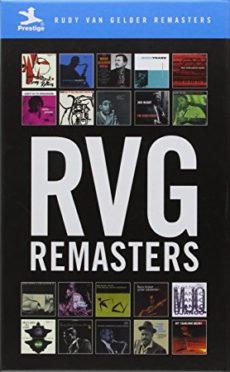
By 1967 the labels were beginning to utilize other engineers more regularly but Rudy remained active engineering nearly all of Creed Taylor’s CTI Records releases, a series of proto-smooth jazz albums that were financially successful, but not always well received by critics. He was not without his detractors. Despite his prominence in the industry, like Lion who didn’t care for the overuse of reverb, and Charles Mingus refused to work with him because he change the sound of his bass. He remastered the analog Blue Note recordings into 24-bit digital recordings in its RVG Edition series and also remasters of some of the Prestige albums, and was happy to see the LP go by the wayside because it was hard for him to get the sound the way he thought it should be.
He received awards and honors being named a fellow of the Audio Engineering Society (AES), received the society’s most prestigious award, the AES Gold Medal, named a Jazz Master by the National Endowment for the Arts, received the Grammy Trustees Award, and Thelonious Monk composed and recorded a tribute to Van Gelder titled Hackensack.
Producer and recording engineer Rudy Van Gelder, who specialized in jazz and regarded as the most important recording engineer of jazz by some observers, passed away at home in Englewood Cliffs, New Jersey on August 25, 2016. Among the several thousand jazz sessions he recorded are the acknowledged classics John Coltrane’s A Love Supreme, Miles Davis’s Walkin’, Herbie Hancock’s Maiden Voyage, Sonny Rollins’s Saxophone Colossus and Horace Silver’s Song for My Father.

Take A Dose On The Road

Daily Dose Of Jazz…
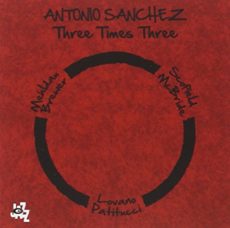
Antonio Sánchez was born on November 1, 1971 in Mexico City, Mexico and started playing drums at the age of five. By his teen years he had begun playing professionally. Attaining a degree in classical piano from the National Conservatory in 1993, he moved to Boston, Massachusetts, to study at Berklee College of Music. After a Magna Cum Laude graduation in Jazz Studies, he obtained a scholarship for a Masters in Jazz Improvisation at Boston’s New England Conservatory.
While still at the Conservatory in 1997, his teacher, Danilo Pérez, recommended Sánchez to Paquito D’Rivera for the drum chair in Dizzy Gillespie’s United Nations Orchestra, leading him to him touring with the orchestra. In 1997 Perez invited him to be a part of his acoustic trio, extensive touring, and the recording of the Grammy-nominated album Motherland. Post tour he joined Pat Metheny Group as the drummer after a series of auditions.
The group recorded two albums with Antonio the 2003 Grammy Award winning Speaking of Now, for Best Contemporary Jazz Album and in 2005 The Way Up. The Pat Metheny Trio, he and Metheny are joined by bassist Christian McBride on the recording Day Trip in 2008 and in 2012 he was the drummer on Pat Metheny’s album Unity Band.
In 2007 he recorded his debut solo album as a leader, Migration, with Metheny, Chick Corea, Chris Potter, David Sanchez, and Scott Colley. With his sophomore release, Live in New York, in 2010 Sánchez recorde the double live album at the Jazz Standard in New York after a US tour of Antonio’s band which included Miguel Zenon on alto saxophone, David Sanchez on tenor and Scott Colley on acoustic bass.
In 2013 he release of his third album New Life, and in 2014 Sánchez composed the music for the film Birdman, garnering for the soundtrack a nomination for 2014 Golden Globe Award for Best Original Score, a nomination for the 2015 British Academy Film Awards (BAFTA), but was disqualified to compete in the Academy Award for Best Original Score, because the film also contained a significant amount of classical music.
Drummer Antonio Sanchez has performed and recorded with Avishai Cohen, Alexei Tsiganov, Misha Tsiganov, Michael Brecker, Gary Burton, Chick Corea, Bendik Hofseth, Enrico Pieranunzi, Dewa Budjana, David Binney, Donny McCaslin, John Escreet and Matt Brewer among others, and continues to perform, record, tour and compose.
Sponsored By

More Posts: drums
Daily Dose Of Jazz…
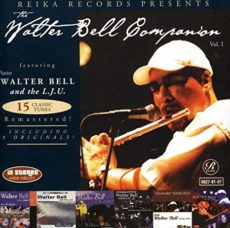
Walter Bell was born in Philadelphia, Pennsylvania on October 31, 1959 and is a self taught flutist and jazz historian. He moved to Richmond, Virginia to hone his craft and it was after this period of years that he rose to national prominence before moving back home. He is not one to double on saxophone, but stays true to his instrument having mastered the entire family of flutes from bass to piccolo. Carrying on the tradition of Herbie Mann, Hubert Laws, Yusef Lateef and Rhasaan Roland Kirk he focuses on jazz and Latin for his repertoire.
The founder and co owner of his own small label, Reika Records, Bell has released nine projects thus far. He performs nationally, has over 30 players that he rotates through his group, the Latin Jazz Unit. An in demand performer, he continually festivals, college & club dates and private receptions.
Flautist Walter Bell continues to perform and record, is the host a bi-monthly radio show on Washington D.C.’s WPFW Pacifica 89.3, performs a Sunday jazz brunch Hibachi in Philadelphia and still has time to produce and score TV themes for New Millenium studios with actor Tim Reid in Virginia.
Give The Gift Of Knowledge
More Posts: flute
Atlanta Jazz Festival… 1979
More Posts: festival
Daily Dose Of Jazz…
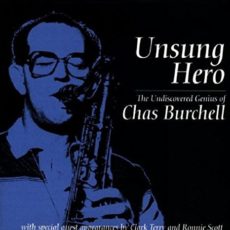
Chas Burchell was born Charles Burchell on October 30, 1925 in London, England. Originally a George Formby fan, he began learning the ukelele and then guitar, before hearing an Artie Shaw record that inspired him to take up the clarinet and play jazz.
Switching to alto saxophone, he started his own quintet in 1943. He tried the tenor saxophone before being drafted into the Royal Air Force, and then was transferred to the army in 1944. During the next three years he played in Greece with the British Divisional Band and following his discharge in 1947, worked in London with the Toni Antone Big Band.
By 1949 he gave up full-time musicianship and worked in a factory so that he would not have to perform music he did not like in order to make a living. A disciple of Lennie Tristano and a devoted admirer of Warne Marsh, Burchell continued to play part-time, leading his own quintet for more than 20 years, guesting with distinguished visitors such as Clark Terry, Emily Remler and Nathan Davis.
He recorded for Peter Ind’s Wave label and played with Ind in the group that backed Lennie Tristano’s only UK concert at Harrogate in 1968. Tenor saxophonist Chas Burchell, a supple, lyrical musician whose unpredictable twists and turns of phrase recall the style of his idol Marsh, died of a heart attack on June 3, 1986.
Put A Dose In Your Pocket
#preserving genius
More Posts: saxophone