

Daily Dose Of Jazz…
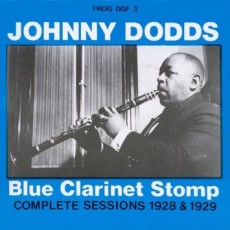
Johnny Dodds (pronounced dots) was born April 12,1892 in Waveland, Mississippi and moved to New Orleans in his youth, and studied clarinet with Loranzo Tio. He played with the bands of Frankie Duson, Kid Ory and Joe “King” Oliver.
Dodds went to Chicago, Illinois to play with Oliver’s Creole Jazz Band, with whom he first recorded in 1923. He also worked frequently with his good friend Natty Dominique during this period, a professional relationship that would last a lifetime.
After the breakup of Oliver’s band in 1924, he replaced Alcide Nunez as the house clarinetist and bandleader of Kelly’s Stable. He recorded with numerous small groups in Chicago, most notably Louis Armstrong’s Hot Five and Fot Seven, Jelly Roll Morton’s Red Hot Peppers and Lovie Austin.
Noted for his professionalism and virtuosity as a musician, and his heartfelt, heavily blues-laden style, Dodds was an important influence on later clarinetists, notably Benny Goodman.
Along with his younger brother drummer Warren “Baby” Dodds, they worked together in the New Orleans Bootblacks in 1926. As a leader he recorded prolifically between 1927 and 1929, recording for Paramount, Brunswick/Vocalion, and Victor. Affected by ill he recorded two more sessions in 1938 and 1940 both for Decca before passing away of a heart attack in Chicgo, Illinois on August 8, 1940. In 1987, clarinetist and alto saxophonist Johnny Dodds was inducted into the Down Beat Jazz Hall of Fame.

Take A Dose On The Road

Daily Dose Of Jazz…
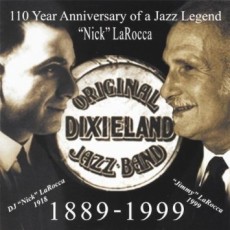
Nick LaRocca was born Dominic James LaRocca on April 11, 1889 in New Orleans, Louisiana to poor Sicilian immigrants. Attracted to the music of the brass bands in New Orleans as a child, he covertly taught himself to play the cornet against the wishes of his father who hoped his son would go into a more prestigious profession. From around 1910 through 1916 he was a regular member of Papa Jack Laine’s bands. A solid lead player with a strong lip allowed him to play long parades without let up or to play several gigs in a row on the same day.
In 1916 he joined Johnny Stein’s band to play a job in Chicago, Illinois, that subsequently became the Original Dixieland Jass Band and made their first commercially issued jazz recordings in New York City in 1917 that were hits, making them into celebrities. LaRocca led tours of England and the United States into the early 1920s, suffered a nervous breakdown. H retired from music until 1936 reuniting the ODJB for a successful tour and more recordings. He proclaimed that he and his band were the inventors of the now nationally popular swing music. Personality conflicts broke up the band again in 1937, and he again retired from music.
In the 1950s he wrote numerous vehement letters to newspapers, radio, and television shows, stating that he was the true and sole inventor of jazz music, damaging his credibility and provoking a backlash against him, his reputation and career. He donated his large collection of papers related to the O.D.J.B. to Tulane University in 1958 and worked with writer H.O. Brunn on the book The Story of the Original Dixieland Jass Band. Written during the Jim Crow era, he is acknowledge as an important figure, much in his own mind because he could not live with the thought that Negroes invented the music, in taking jazz from a regional style to international popularity, the leader of the most influential jazz band of the period from 1917 to 1921, and a good player in a very early jazz style on records.
Nick’s playing and recordings were an important early influence on such later jazz trumpeters as Red Nichols, Bix Beiderbecke and Phil Napoleon. His 1917 composition Tiger Rag is one of the most important and influential jazz standards of the twentieth century having some 136 cover versions by 1942 alone. It was covered by Louis Armstrong in several different versions throughout his career, while Duke Ellington, Art Tatum, Charlie Parker, The Mills Brothers, Frank Sinatra, Benny Goodman, Les Paul and Kid Ory also recorded important and influential cover versions of the jazz standard.
In 2006, his 1917 recording of Darktown Strutters Ball with the Original Dixieland Jass Band was inducted into the Grammy Hall of Fame. Cornetist Nick LaRocca, who was part of what is generally regarded as the first recorded jazz band, releasing the first jazz recording Livery Stable Blues in 1917, passed away on February 22, 1961 in New Orleans.
Give The Gift Of Knowledge
More Posts: cornet
Daily Dose Of Jazz…
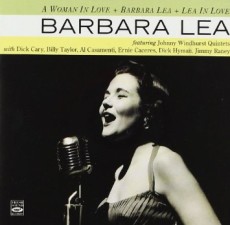
Barbara Lea was born Barbara Ann LeCocq on April 10, 1929 in Detroit, Michigan. A musical family, her musical heritage is traceable to a great uncle, Alexandre Charles LeCocq, an important nineteenth-century composer of French light opera. Her father changed their surname to Leacock and she shortened it to Lea when she began working professionally.
Boston was a hotbed of jazz in the late 1940s and early 1950s, allowing Lea to sing with major instrumentalists including as Marian McPartland, Bobby Hackett, Vic Dickenson, Frankie Newton, Johnny Windhurst and George Wein. She worked with small dance bands there before majoring in music theory at Wellesley College on scholarship. She also sang in the college choir, worked on the campus radio station and newspaper, and arranged for and conducted the Madrigal Group and brass choir concerts.
Barbara’s professional career started upon graduation with her early recordings for Riverside and Prestige. They were met with immediate critical acclaim that led to her winning the DownBeat International Critics’ Poll as the Best New Singer of 1956. She appeared in small clubs in New York and throughout the eastern U.S. and Canada, as well as on radio and TV.
With the near-demise of classic pop in the early 60s, Lea turned to the legitimate theatre, performing an impressive list of leading and feature roles in everything from Shakespeare to Sondheim. Moving to the West Coast received her M.A. in drama at Cal State Northridge and then returned to New York and taught speech at the American Academy of Dramatic Arts and acting at Hofstra University.
By the 1970s, with the resurgence of interest in show tunes and popular standards, Lea performed on NPR’s “American Popular Song with Alec Wilder & Friends”, appeared in two shows featuring the songs of Willard Robison and Lee Wiley, and received lengthy features in the New Yorker magazine. With her singing career was renewed she would consistently play the JVC, Kool and Newport Jazz Festivals as well as cabarets and concerts.
Jazz singer Barbara Lea, who also sang Dixieland, swing and cabaret, passed away on December 26, 2011 in Raleigh, North Carolina from complications of Alzheimer’s disease.
Put A Dose In Your Pocket
More Posts: vocal
Daily Dose Of Jazz…
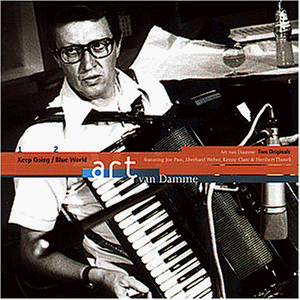
Art Van Damme was born on April 9, 1920 in Norway, Michigan. He began playing the accordion at age nine and started classical study when his family moved to Chicago, Illinois in 1934. By 1941 he joined Ben Bernie’s band as an accordionist and adapted Benny Goodman’s music to the instrument.
From 1945 to 1960 Art worked for NBC, performing on The Dinah Shore Show, Tonight, The Dave Garroway Show and other radio and TV shows with Garroway. He recorded 130 episodes of the 15-minute The Art Van Damme Show for NBC Radio.
Van Damme toured Europe and was popular with jazz audiences in Japan, regularly winning the domestic Down Beat Reader’s Poll for his instrument. Over the course of his career he recorded and released four-dozen albums for Capitol, Columbia, Harmony, BASF, Pausa, Finlandia, MPS record labels.
Retiring to Roseville, California, he continued to perform almost to the end of his life. Ill with pneumonia for several weeks, accordionist Art Van Damme passed away on February 15, 2010 at the age of 89.
Uplift Someone’s World
More Posts: accordion
Daily Dose Of Jazz…
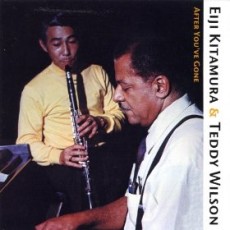
Eiji Kitamura 北村 英治 was born on April 8, 1929 in Tokyo, Japan. Devoting himself to clarinet, he was playing while still an undergrad at Keio University at in Tokyo. He made his debut at the age of 22.
Kitamura built a following in his country performing regularly on his television program. He first came to prominence in the United States at the 20th Anniversary Jam Session of the Monterey Jazz Festival in 1977. His following in Japan was built previous to this on his regular television program.
An interpreter of traditional jazz, the clarinetist prefers this genre over modern jazz. Much of his influence in his playing came from the swing of Benny Goodman and Woody Herman. He has recorded some two-dozen albums or more albums including a series of albums with Teddy Wilson as well as for CBS Sony, Concord and various Japanese labels over the course of his career.
Jazz Is Global – Share
More Posts: clarinet