


Review: Niki Harris & EC3 | Time & Rhyme
Every now and then, if you’re lucky, you run across a bandleader who understands how to make a joyful noise. The days of the solo arranger and set configuration of players have been replaced with diversity bringing new ideas to eleven old songs. On his latest project Time & Rhyme, producer and drummer EC has collaborated with Niki Haris (Gene Harris’ daughter) and together have selected an incomparable set list that is no small feat to honor. Kicking off the set is a Tyrone Jackson arrangement with vocalist Niki Harris swinging an upbeat, straight-ahead version of the Hart/Rodgers tune Falling In Love With Love.
Traveling across the musical landscape Niki again takes center stage to present a poignant and tender rendition of another Jackson arrangement of the Bell/Creed composition Stop, Look, Listen. Not many vocalists have made me sit down and listen as intently as she did with the clarity and beauty of her interpretation. I could attempt to describe the emotional delivery Ms. Haris rendered on this song that five guys out of the Philly sound machine made famous, but the effort would be feeble at best and would be an injustice as you listen to her immense talent.
To challenge oneself to play a master is EC’s forte and he delivers with aplomb Dizzy’s Night In Tunisia opening with a strong bass line and sliding easily into an Afro-Cuban beat that can only be viewed as homage to a rhythm so dear to Mr. Gillespie’s heart. I was immediately transported to the backstreets of Havana and the raucous clubs full of flute, percussion and mambo.
Jackson steps in again with an easy bossa nova arrangement utilizing Frankie Quiñones percussive endowment to compliment Niki’s voice on Abbey Lincoln’s Throw It Away. Interestingly modal, they take it to a middle-eastern groove towards the end of the song, which gives Lincoln’s tune a refreshing outlook.
One can only think of the hapless scarecrow in the Wizard Of Oz when you see the words If I Only Had A Brain. Having heard this catchy Arlen/Yarburg tune many times, I was curious about the arrangement that would set this apart from the pack. Wade Beach set the tone for bassist Zack Pride’s conversation with EC’s drums. One can actually envision walking down the yellow brick road as they playfully execute the melody.
Billy Paul pulled the world’s heartstrings with Me & Mrs. Jones, however, Niki emotes a sense of fun and enjoyment in her relationship with Mr. Jones. One gets the sense that she is as comfortable with the relationship the way it is as she is relating it with an under beat of this collaborative mid-tempo bossa nova arrangement by EC and Jackson. Artia Lockett adds her enjoyment in the background like two girls having fun on a double date.
Not much more than the title needs to be said about Swinging At The Haven. EC puts his foot in the stew on this arrangement and the guys stir it up well. If you aren’t tapping a toe, shaking a hip or snapping your fingers, then you don’t know swing. Let this be your introduction.
Lionel Bart sits alongside the many resident masters of the Great American Songbook having penned the music and lyrics to Where Is Love for the 1960 Broadway musical Oliver. It’s a ballad of a young orphaned lad longing to find someone to love him and Niki quietly portrays the emotional depth of the lyric causing one to sympathize for the plight of this lost waif.
Changing tempos, EC, Dominique Patrick-Noel and A.T. take us back to our roots in the motherland as the trio drums and chants through Black Codes. One can visualize the movements of the dancers in a celebration of raising their ancestors. Nice & Easy is exactly what Niki and company do with this mid-tempo 7/8 meter of straight swing and Afro-Cuban undertones. If an encore was ever warranted on a recording then this Mandel/Mercer classic Emily would be a fitting adieu. The guys maintain the light and airy touch of the composers had in mind, leaving this listener with a vision of blue skies, sundresses, laughter and play in a field of wildflowers. Allow them to take you where your heart wants to go.
On this session drummer Ernest “EC” Coleman enlists vocalist Niki Harris, pianists Tyrone Jackson and Wade Beach, bassists Craig Shaw and Zack Pride, Sam Skelton on tenor saxophone and flute, saxophonist Teddy Baker, percussionists Frankie Quiñones, Dominique Patrick-Noel and Arch A.T. Thompson and Artia Locke holding down the background vocals.
For the uninitiated to EC’s genius, as you listen to this compendium of talent and music, I implore you to keep in mind, these are not shy schoolboys or coy girls on their first date. They are uncompromising professionals who know how to swing as well as be that gentle giant in the room with an equally tender touch. They may make it look easy but it is far from being that simple. Time, patience and the talent of eleven musicians committed to their craft have given birth to this seamlessly entrancing orchestration of sound.
carl anthony | notorious jazz | april 11, 2016
Give A Gift Of Jazz ~ Share 
#preserving genius
More Posts: bandleader,drums,history,instrumental,jazz,music,review,vocal
Daily Dose Of Jazz…
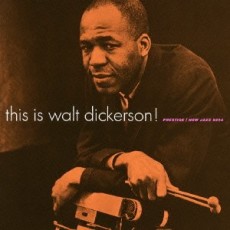
Walter Roland Dickerson was born on April 16, 1928 in Philadelphia, Pennsylvania. He graduated from Morgan State University in 1953 and after two years in the Army he settled in California. There the vibraphonist started to gain attention by leading a group with pianist Andrew Hill and drummer Andrew Cyrille.
During the Sixties in New York City was where he gained some further attention. He recorded four albums for Prestige Records and in 1962 Down Beat named him the Best New Artist.
Dickerson recorded his debut album This Is Walt Dickerson in 1961 on the New Jazz label and would go on to record six more before the end of the decade for New Jazz, Audio Fidelity and MGM record labels. He worked with Elmo Hope, arranging his 1963 album Sounds From Rikers Island.
From 1965 to 1975 he took a break from jazz, but later he worked again with Andrew Hill and Sun Ra. Beginning in 1975 after his return to performing he recorded Tell Us Only The Beautiful Things and Walt Dickerson 1976 on the Whynot label. He then began recording ten albums for the Danish Steeplechase label and one for Soul Note in 1978.
Vibraphonist Walt Dickerson, who was most notably associated with the post-bop idiom, passed away on May 15, 2008 from a cardiac arrest in Willow Grove, Pennsylvania.

Jazz Is Global – Share

More Posts: vibraphone
Daily Dose Of Jazz…
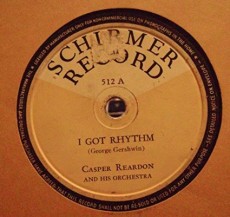
Casper Reardon was born on April 15, 1907 in New York City. He studied classical harp at the Curtis Institute of Music before going on to play for the Philadelphia Orchestra and then the Cincinnati Symphony Orchestra.
Before Reardon the harp had been used in dance music for the occasional flourish, but he is considered the first for using harp as a jazz instrument for solos and performances. By 1936 he was hailed as the World’s Hottest Harpist, and the following year he played Cousin Caspar in the film You’re a Sweetheart.
1938 saw him playing harp for the Broadway musical I Married An Angel. As a jazz musician Reardon can be heard performing on albums by Jack Teagarden and Paul Whiteman. As a leader Casper recorded a handful of records for Liberty Music Shops and Schirmer.
Classical and jazz harpist Casper Reardon passed away in New York City on March 9, 1941 at the age of 33.
Give A Gift Of Jazz – Share
More Posts: harp
Daily Dose Of Jazz…
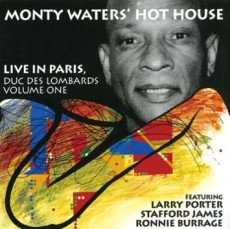
Monty Waters was born on April 14, 1938 in Modesto, California. He received his first musical training from his aunt and first played in the church. After college, he was a member of a rhythm & blues band and in the late 1950s he worked with musicians like B.B. King, Lightnin’ Hopkins, Little Richard and James Brown on tour.
In San Francisco Monty played with King Pleasure and initiated in the early 1960s a “Late Night Session” at Club Bop City. There he came into contact with musicians such as Miles Davis, John Coltrane, Art Blakey, Red Garland and Dexter Gordon, who visited this club after their concerts. In addition, he and Pharoah Sanders, Dewey Redman and and Donald Garrett formed a big band.
By 1969 Waters had made a move to New York City and toured with Jon Hendricks. During the 1970s he participated in the Loft Jazz scene and recorded as a sideman with Billy Higgins, Joe Lee Wilson, Sam Rivers, and Ronnie Boykins. Like many other jazz musicians, he eventually left the States in the 1980s for Paris, where he worked with Chet Baker, Johnny Griffin and Sanders again.
Following Mal Waldron and Marty Cook to Munich, he continued to work with musicians such as Embryo, Gotz Tanferding, Hannes Beckmann, Titus Waldenfels, Suchredin Chronov and Joe Malinga. Saxophonist, flautist and singer Monty Waters passed away on December 23, 2008 in Munich, Germany.
Inspire A Young Mind

Daily Dose Of Jazz…
Slick Jones came into the world on April 13, 1907. He was born Wilmore Jones in Roanoke, Virginia and worked with Fletcher Henderson from 1934 to 1936, then recorded and toured with Fats Waller from 1936 to 1941.
Following his time with Waller, he played with Stuff Smith, Eddie South, Claude Hopkins, Hazel Scott, and Don Byas. In the 1950s Jones worked with Sidney Bechet, Wilbur DePris and Doc Cheatham.
He record with Gene Sedric, Don Redman, Lionel Hampton and Una Mae Carlisle. He worked with Eddie Durham and Eddie Barefield in the 1960s. Though he never recorded as a leader, drummer Slick Jones remained active almost up until his death on November 2, 1969.
More Posts: drums