

Daily Dose Of Jazz…
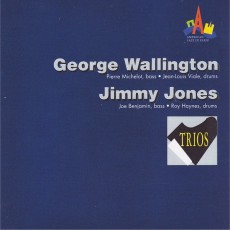
Jimmy Jones was born James Henry Jones on December 30, 1918 in Memphis, Tennessee and learned guitar and piano as a child. By the late 1920 he was playing in various orchestras in Chicago and played a trio with Stuff Smith in the mid 40s.
Following this period Jones would play with Don Byas, Dizzy Gillespie, J.C. Heard, Buck Clayton, Etta Jones and Sarah Vaughan into the early Fifties. He recorded with Clifford Brown in 1954 and toured Europe. During the Sixties he would play with Anita O’Day, Helen Merrill, Gil Evans, Dakota Staton, Morgana King, Harry Belafonte, Johnny Hodges, Clark Terry, Duke Ellington, Kenny Burrell and Cannonball Adderley on the short list.
Jimmy had a prolific career also as an arranger, working with Wes Montgomery, Nancy Wilson, Shirley Horn, Joe Williams, Billy Taylor and Chris Connor and recorded with Harry “Sweets” Edison, Ben Webster, Coleman Hawkins, Frank Wess, Milt Jackson and others. His recording catalog was limited as a leader releasing two album for the Riverside label in 1946. Jimmy Jones passed away on April 29, 1982 in Los Angeles, California.

Take A Dose On The Road
More Posts: piano
Daily Dose Of Jazz…
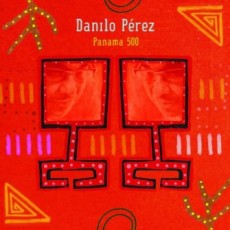
Danilo Pérez was born on December 29, 1965 in Panama and started his musical training at 3 years old on bongos with his father Danilo Sr., a professional bandleader and singer. By age 10 he was studying the European Classical Piano repertoire at the National Conservatory in Panama, eventually transferring to the Berklee College of Music to study Jazz composition.
During the yeas 1985 to ’88 while at Berklee, Danilo played with Jon Hendricks, Terence Blanchard, Claudio Roditi and Paquito D’Rivera. He would go on to tour Poland in ’95 and play the Summer Olympics in Atlanta in ‘96 with Wynton Marsalis, be a part of the Grammy winning album Danzon, perform at President Clinton’s Inaugural Ball and played piano on the Bill Cosby theme song.
Perez has had the fortune to play and record with such luminaries as Charlie Haden, Michael Brecker, Jack DeJohnette, Dizzy Gillespie, Tito Puente, Joe Lovano, Gary Burton, Wayne Shorter, Tom Harrell, Roy Haynes, Steve Lacy and many others.
Pianist and composer Danilo Perez, whose primary influence of style and thought was Dizzy Gillespie, but as a child gleaned from the recordings the styles of Gershwin, Ellington, Coltrane and Monk. He has recorded over a dozen albums, served as a professor at the New England Conservatory of Music, and serves as the artistic director of the Berklee College of Music Global Jazz Institute.
Dose A Day – Blues Away
More Posts: piano
The Jazz Voyager
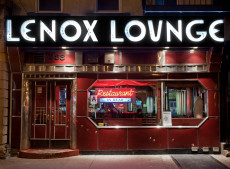
Lenox Lounge: 288 Lenox Avenue, New York City, NY / Telephone: 212-427-0253 / The historic Lenox Lounge and its Zebra Room is located between 124th & 125th Streets. A renowned landmark, it has been a significant destination for jazz in the Harlem community since its opening in the late 1930’s. It has served as the backdrop for many jazz legends. Join us for an exciting evening of dining and jazz in one of the few original art-deco clubs in New York City.
Next Stop: Unknown – Stay tuned in the New Year!
Sponsored By

Daily Dose Of Jazz…
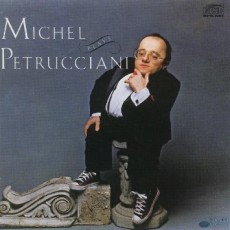
Michel Petrucciani was born on December 28 1962 in Orange, Vaucluse, France into a musical family with father playing guitar and brothers playing bass and guitar. He came into the world with a genetic disease that caused brittle bones and short stature. Due to this illness, throughout his career Michel was often carried to and from the piano when he performed.
Enthusiastic of Duke Ellington, his desire to be a pianist was driven by his main interest in jazz but trained for years as a classical musician giving his first professional concert at the age of 13. By the age of 18 he was part of a successful trio and in 1982 he moved to the US where he successfully encouraged Charles Lloyd to resume playing actively. Three years later, on February 22, 1985, with Petrucciani cradled in his arms, Lloyd walked onto the stage at Town Hall in New York City and sat him on his piano stool for what would be an historic evening in jazz history: the filming of One Night with Blue Note.
The following year Petrucciani recorded a live album with Wayne Shorter and Jim Hall and throughout his career has played with other greats like Dizzy Gillespie, Stephane Grappelli, Joe Lovano, Stanley Clark, Lenny White, Gil Goldstein and many others. He has recorded over thirty albums, wrote a biography, has a mosaic in the 18th district of Paris and in 1994 was granted a Legion d’honneur.
Michel Petrucciani, whose style is reminiscent of Bill Evans and Keith Jarrett, died on January 6, 1999 from a pulmonary infection, nine days after his 36th birthday. He was posthumously honored in 2009 with a special broadcast event on the French music channel Mezzo.
Inspire A Young Mind
More Posts: piano
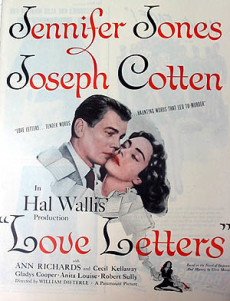
Hollywood On 52nd Street
Love Letters is a 1945 popular song composed by Victor Young with lyrics written by Edward Heyman. The song appeared, without lyrics, in the movie of the same name and was nominated for the Oscar for Best Song for 1945. The film starred Jennifer Jones, Joseph Cotton, Ann Richards, Cecil Kellaway, Gladys Cooper and Anita Louise.
The Story: The plot tells the story of American soldier Alan Quinton in Italy during WWII who has been writing letters for his friend Roger Morland to Victoria Remington, expressing feelings he could never say in person. Realizing she has fallen in love with him and that she will be disappointed in the real Roger, he abruptly leaves for paratrooper training in England. However, it is Alan who is falling in love with Victoria.
Injured, Alan discovers Roger and Victoria are both dead. Hereturns to England, spends time with his fiancé Helen Wentworth, lives at his aunt’s farm and is taken to a party by his brother. He meets Dilly Carson and Singleton, relates the Roger/Victoria story, Dilly realizes its Singleton and that the letters were somehow involved.
Singleton is actually Victoria, an amnesiac woman with two personalities, who killed his soldier friend, Roger. However, after spending time with her she realizes Alan is in love with her but not that she is Victoria. They marry after getting permission from her adopted mother, Beatrice Remington, bit the marriage is scarred by Alan’s love for Victoria.
Talking with Beatrice, Singleton begins to remember her abusive marriage to Roger and that it is Beatrice who stabbed him to death as Victoria attempts to save the letters thrown into the fireplace. Alan arrives at the house, Victoria recalls her true identity and they fall into each other’s arms.
Sponsored By

www.whatissuitetabu.com