

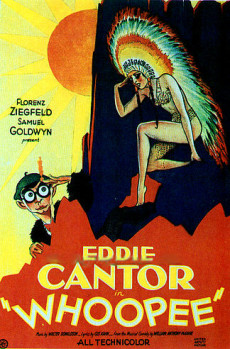
Hollywood On 52nd Street
Makin’ Whoopee! and My Baby Just Cares for Me are jazz classics. The former, a jazz/blues song with lyrics written by Gus Kahn and music by Walter Donaldson was first popularized by Eddie Cantor in the 1928 musical Whoopee!, and then reprised the role in the 1930 movie. Kahn and Donaldson also wrote the latter for the musical comedy film in 1930.
The title is a euphemism for sexual intimacy and the song itself has been called a “dire warning”, largely to men, about the “trap” of marriage. Makin’ Whoopee begins with the celebration of a wedding honeymoon and marital bliss, but moves on to babies and responsibilities, and ultimately on to affairs and possible divorce, ending with a judge’s advice.
The Story: In California Sheriff Bob Wells and the daughter of a rancher Sally Morgan are getting married. She, however is in love with Wanenis, whose part-Indian heritage presents difficulties. Sally abandons Sheriff Bob and their wedding, catching a ride with Henry Williams. Henry has problems of his own, being a hypochondriac, but Sally adds to his problems when she leaves a note saying they have eloped. A chase ensues, with the jilted Bob; Mary, who is Henry’s nurse and is in love with him; and a cast of others. Along the way they arrive at the Indian Reservation where Wanenis lives.
Sponsored By

www.whatissuitetabu.com
Daily Dose Of Jazz…
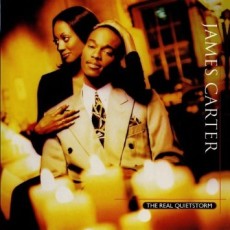
James Carter was born January 3, 1969 in Detroit, Michigan and learned to play under the tutelage of Donald Washington, becoming a member of his youth jazz ensemble Bird-Trane-Sco-NOW!! As a young man, he attended Blue Lake Fine Arts Camp and become the youngest faculty member at the camp. He first toured Europe (Scandinavia) with the International Jazz Band in 1985 at the age of 16.
By 1988, while at the Detroit Institute of Arts, Carter was a last-minute addition for guest artist Lester Bowie, which turned into an invitation to play with his new quintet in New York that following November at the now defunct Carlos 1 jazz club. This New York invite was pivotal in his career, putting him in musical contact with the world, and he moved to the city two years later.
James has won Down Beat magazine’s Critics and Readers Choice award for baritone saxophone several years in a row. He has performed, toured and played on albums with Lester Bowie, Julius Hemphill, Frank Lowe & the Saxemble, Kathleen Battle, the World Saxophone Quartet, Cyrus Chestnut, Wynton Marsalis, Dee Dee Bridgewater and the Mingus Big Band. On his 2000 album Chasin’ the Gypsy, he recorded with his cousin, jazz violinist Regina Carter.
An authority on vintage horns, Carter owns an extensive collection of them. He continues to be a prominent force as a performer and recording artist on the jazz scene since the late 1980s, playing saxophones, flute and clarinets.

Jazz Is Global – Share
Daily Dose Of Jazz…
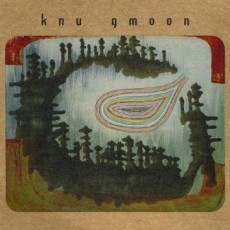
Noah Jarrett was born on January 2, 1978 and raised between New Jersey and New York City. He began studying the electric bass at age nine, after five years of violin. His initial interest was in the many forms of rock and spent most of his days after school playing in his basement with friends.
His taste would evolve and he would lean towards jazz, reggae, Indian, African and Gnawan music while also studying the classical traditions. For nine years he primarily has studied the double bass but still plays his electric bass, ultimately graduating from the New England Conservatory. Jarrett plays in a variety of groups around New York and Boston including current group Fat Little Bastard and The InBetweens. He accompanies virtuosic Malian kora player Mamadou Diabatein a variety of music settings.
In addition, Noah plays with a 14-piece band, the Brooklyn Qawwali Party, which commemorates the late Sufi singer Nusrat Faeh Ali Khan. The group uses Pakistani qawwali melodic and propulsive rhythms as a basis for further improvisations.
Double bassist Noah Jarrett has played with John Abercrombie, George Garzone, Bob Gulotti, Bill Goodwin and numberous other New York City musicians. He continues to perform and record.
Jazz Is Global – Share
More Posts: bass
Daily Dose Of Jazz…
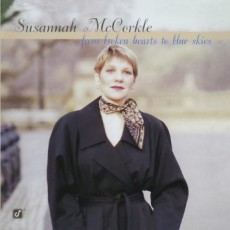
Susannah McCorkle was born on January 1, 1946 in Berkeley, California and studied modern languages prior to starting her career in singing. She was inspired to begin singing professionally after hearing some Billie Holiday recordings in Paris in the late Sixties, while also holding a position an interpreter at the European Commission in Brussels. But a move to London in 1972 sealed her commitment to pursue her singing career.
While in the UK, she made two albums which, although well received, In the late 1970s, Susannah returned to the United States and settled in New York City, where a five-month engagement at the Cookery in Greenwich Village brought her to wider public attention and elicited rave reviews and critical acclaim.
During the 1980s, McCorkle continued to record, maturing style and darkening the timbre of her voice. This greatly enhanced her performances and by the early 1990s, two of the Concord Record albums she recorded, No More Blues and Sábia, were enormously successful and made her name known to the wider world. She was recorded by the Smithsonian Institution, which at the time made her the youngest singer ever to have been included in its popular music series.
Thanks to her linguistic skills Susannah translated lyrics of Brazilian, French, and Italian songs. As an author she published several short stories as well as fiction in Mademoiselle and Cosmopolitan magazines, and non-fiction in the New York Times Magazine and American Heritage including lengthy articles on Ethel Waters, Irving Berlin Bessie Smith and Mae West.
Though a survivor of breast cancer, vocalist Susannah McCorkle suffered for many years from depression until finally committing suicide on May 19, 2001 at age 55. She leapt off the balcony of her 16th-floor apartment on West 86th Street in Manhattan. She was alone in her home at the time.
Put A Dose In Your Pocket
More Posts: vocal
Daily Dose Of Jazz…
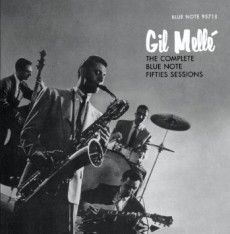
Gil Mellé was born December 31, 1931 in New York City and began his career in jazz as a post-bop baritone and tenor saxophonist, signed with Blue Note at the age of 19, becoming the first Caucasian on the label. Between 1953 and ’57 he recorded five 10” records and his debut 12” LP, Patterns in Jazz for Blue Note. Leaving the label he then went to Prestige releasing three albums.
In the 1950s, Mellé’s paintings and sculptures were shown in New York galleries and he created the cover art for albums by Miles Davis, Thelonious Monk and Sonny Rollins. During this period Gil played the tenor and baritone saxophone with George Wallington, Max Roach, Tal Farlow, Oscar Pettiford, Ed Thigpen, Kenny Dorham and Zoot Sims.
It was Mellé who introduced engineer Rudy Van Gelder to Alfred Lion, Blue Note’s founder, in 1952 after Lion was impressed with the sound of Mellé’s recordings. Abandoning jazz and moving to Los Angeles in the 60s his road led to composing for film and television, and experimenting with electronic music.
As a film and television composer, Mellé was one of the first to use electronic instruments that he built himself, was first to compose a main theme for Rod Serling’s Night Gallery series arranged entirely for electronic instruments as well as The Six Million Dollar Man. Gil composed more than 125 motion picture scores including That Certain Summer, The Andromeda Strain, The Judge and Jake Wyler.
Gil Mellé died of a heart attack on October 28, 2004 in Malibu, California.
Give The Gift Of Knowledge
More Posts: saxophone