

Daily Dose Of Jazz…
Patty Waters was born on March 11, 1946 in Iowa and started singing semi-professionally in high school. After school, she sang for the Jerry Gray Hotel Jazz Band, then her family moved to Denver, Colorado. There she started listening to Billie Holiday, whose life and singing had a profound influence on her.
The early 1960s saw her following the recommendation of friends to move to New York City. Albert Ayler heard her in a dining club and introduced her to Bernard Stollman, the owner of the experimental jazz label ESP-Disk. Her most influential albums, Sings released in 1965) and College Tour in 1966 were recorded on this label.
In the late 1960s, she spent time in Europe and then left the music world in 1969 to raise her son in California. Almost 30 years later she recorded the album Love Songs in 1996 and began performing in public again. In 2004 she released You Thrill Me: A Musical Odyssey, a collection of rare and unissued recordings from the years 1962–1979.
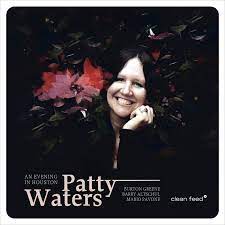
She returned in 2019 with the album Live recorded at the First Unitarian Congregational Church in Brooklyn. The album was followed in 2020 by another live recording entitled An Evening In Houston. That same year she released an unissued 1970 LP titled Plays via her own label.
Vocalist Patty Waters, best known for her free jazz recordings in the Sixties and her recording of the nearly fourteen minute version of the traditional song Black Is the Colour (Of My True Love’s Hair from Sings, which is rendered in a haunting, anguished wail, continues to record, perform and tour.

More Posts: bandleader,history,instrumental,jazz,music,vocal
Daily Dose Of Jazz…
Don Ferrara was born on March 10, 1928 in Brooklyn, New York and began playing trumpet at the age of ten, avidly listening to jazz and swing era giants on both radio and records. Roy Eldridge became and remained his single most important influence on his playing. In 1945 he had a brief stint with Jerry Wald’s band, then moved over to George Auld.
Enlisting in the Army in mid-1946, during this time he played in a band with bassist Red Mitchell, drummer Howie Mann and met Warne Marsh. It was through him that he became interested in the work of Lennie Tristano. After his discharge he began studying with Tristano, something he continued to do until the 1960s. During this same period, Don taught and played in the big band assembled by Gene Roland for a Charlie Parker recording session, though he missed the recording session because of a date clash. He then joined Woody Herman’s Third Herd. After a year he returned to New York where he gigged and taught and continued his own studies with Tristano.
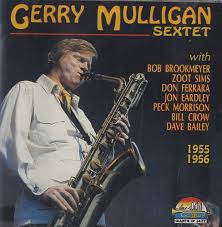
In the mid-1950s New York he played and sometimes recorded with various bands, including those of Lee Konitz and Gerry Mulligan. In the early Sixties Ferrara played a regular engagement with Tristano at New York’s Half Note Club and during the rest of the decade continued with his teaching. The early 70s, had him relocating to the west coast and joining Gary Foster’s teaching studio. He continued to live and teach in California through to the 90s, most of his teaching work being conducted at long range through audio cassettes.
Trumpeter Don Ferrara, who was also a skilled and highly individual soloist, died on January 18, 2011 in San Diego, California.
More Posts: history,instrumental,jazz,music,trumpet
Daily Dose Of Jazz…
Laurie Antonioli was born on March 9, 1958 in Marin County. California. At the age of sixteen she began playing guitar and performing primarily her own original music as well as that of the singer-songwriters of the era. In 1975 she won the American Songwriters Contest for high school students, studied jazz at Mt. Hood Community College in Gresham, Oregon and Cal State Long Beach. She took private lessons from Mark Murphy and Joe Henderson.
After graduation, Laurie continued composing and performing. In 1980 she toured Europe for eight months with New Orleans saxophonist Pony Poindexter. When he suffered a stroke, a record date in Paris with pianist Kenny Drew was canceled and they were unable to finish out their tour. Laurie brought Pony back to California where she lived and led her own bands based out of San Francisco.
1985 saw Antonioli signing with Catero Records and her first album was the live two-track Soul Eyes, with the title song given to her by composer Mal Waldron. She was accompanied by pianist George Cables. After a hiatus from music, she settled in Vienna, Austria from 2002 to 2006 and began recording again.
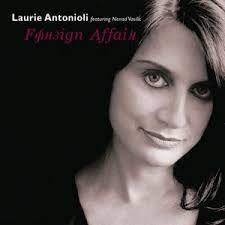
Her Nabel Records album Foreign Affair was a Balkan jazz hybrid recorded in Slovenia with musicians from Serbia, Albania, Germany, and the U.S. It was well received in Europe. Her next album The Duo Session enlisted Richie Beirach where she wrote lyrics to his compositions. Laurie also wrote lyrics to some Miles Davis tunes and free improvisation pieces. This recording was also well-received but like Foreign Affair was known primarily to European audiences.
As an educator she held the position of Professor of the Vocal Department at KUG University’s Jazz Institute in Graz, Austria from 2002 to 2006 while living and performing in Europe. Antonioli was offered a position at the California Jazz Conservatory in Berkeley, California as the school’s vocal program director and created an eight-semester vocal performance curriculum. Singer and record producer Laurie Antonioli, who between 1985 and 2018 she has recorded seven albums, continues to perform and record.
More Posts: educator,history,instrumental,jazz,lyricist,music,vocal
Daily Dose Of Jazz…
Richard Hyman was born in New York City on March 8, 1927 and grew up in suburban Mount Vernon, New York. His older brother, Arthur, owned a jazz record collection and introduced him to the music of Bix Beiderbecke and Art Tatum. Trained classically by his uncle, concert pianist Anton Rovinsky, who taught him touch and a certain amount of repertoire while he pursued Chopin on his own.
Enlisting in the U.S. Army in 1945, Dick was transferred to the U.S. Navy band department. After leaving the Navy he attended Columbia University where he won a piano competition with the prize being 12 free lessons with swing-era pianist Teddy Wilson. It was during this period Hyman fell in love with jazz.
During the 1950s Relax Records released his first two solo piano versions of All the Things You Are and You Couldn’t Be Cuter. Hyman recorded two honky-tonk piano albums under the pseudonym Knuckles O’Toole and recorded more as Willie the Rock Knox and Slugger Ryan.
In the 1950s and early 1960s Dick worked as a studio musician and performed with Tony Bennett, Perry Como, Guy Mitchell, LaVern Baker, Ruth Brown, Mitch Miller and many more. He played with Charlie Parker for Parker’s only film appearance and had a stint as music director for Arthur Godfrey’s television show from 1959 to 1961.
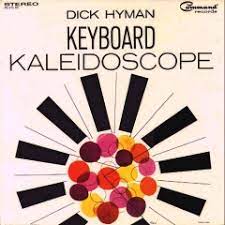
As a composer, arranger, conductor, and pianist he worked on eleven Woody Allen films as well as other films like Moonstruck and Scott Joplin. Hyman composed and performed scores for ballet and dance companies. In the 1960s, Hyman recorded several pop albums on Enoch Light’s Command Records using the Lowrey organ and then the Moog synthesizer.
Between 1970 and 2014 he recorded 112 albums as a leader, sixty-two as a sideman, and arranged four albums for Count Basie, Trigger Alpert and Flip Phillips. He has been a guest performer at jazz festivals and concert venues around the world. In 1995 pianist and composer Dick Hyman moved his wife Julia permanently to Venice, Florida.
More Posts: arranger,bandleader,composer,history,instrumental,jazz,music,piano

Daily Dose Of Jazz…
Herb Bushler was born on March 7, 1939 in New York City and played piano and tuba in his youth before picking up double bass. Classically trained in bass he has performed with symphony orchestras in this capacity.
In 1966 he began a longtime association with ballet and film composer Coleridge-Taylor Perkinson. Herb played with The Fifth Dimension in the 1960s. He worked extensively in jazz idioms in the 1960s and 1970s, including with David Amram, Ted Curson, Blossom Dearie, Tony Williams, and Paul Winter.
He first played with Gil Evans in 1967 and the association would continue on and off until 1981. During the 1970s Bushler recorded sessions with Enrico Rava, Joe Farrell, Ryo Kawasaki, David Sanborn and Harold Vick. He also worked with Dee Dee Bridgewater, Billy Harper, Les McCann, Enrico Rava, Joe Chambers, and Howard Johnson.
Bassist Herb Bushler, whose composition Herbs was recorded by David Sanborn, at 85 years old continues to occasionally play both double bass and electric bass.