

Daily Dose Of Jazz…
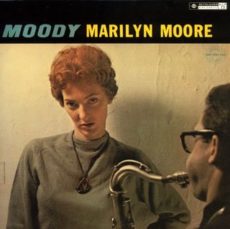
Marilyn Moore was born on June 16, 1930 in Chicago, Illinois. She began her singing career during the 1950s and recorded only one solo album as a leader on the Bethlehem label titled Moody Marilyn Moore in 1957.
Her vocal style was similar to Billie Holiday’s, and according to jazz critic Will Friedwald, the two were friends. When Marilyn was an aspiring teenager vocalist in California she wrote her for advice. They wrote some thirty letters to one another during the 1940s. Holiday encouraged her and advised her to look up producer John Hammond when she arrived in New York City.
Vocalist Marilyn Moore, the first wife of saxophonist Al Cohn, who played on her album and the mother of guitarist Joe Cohn, passed away on March 19, 1992 in Ft. Lauderdale, Florida.
Sponsored By


#preserving genius
More Posts: vocal
Daily Dose Of Jazz…
Melvin Moore was born on June 15, 1923 in Chicago, Illinois. In 1944 the trumpeter began his career playing with Lucky Millinder, then joined Duke Ellington’s Orchestra from 1948 to 1950. This he followed with performance in rhythm and blues bands. By 1951 he was recording with Dizzy Gillespie and singing on such titles as The Champ and Swing Low, Sweet Cadillac.
At the end of 1951 he was recording some vocal titles for King Records with Terry Gibbs, Billy Taylor, Mundell Lowe and Charles Mingus. In 1957 he was a member of Don Redman’s orchestra, the following year he recorded with John Pisano and with Billy Bean. Between 1964 and 1966 he worked with Gerald Wilson and he also accompanied Johnny Hartman. During the Sixties he performed on separate dates at the Monterey Jazz Festival with Mingus, Thelonious Monk and Dizzy Gillespie.
By 1967 he was playing in B.B. Kings band followed by the Seventies bands of Esther Phillips, T – Bone Walker, Don Sugarcane Harris, Johnny Otis, Jerry Garcia and Shuggie Otis and in the early 1980s with Ted Hawkins. Moore is not to be confused with the singer born in 1917, who sang with Jimmie Lunceford and Ernie Fields .
Trumpeter, violinist and singer of swing and bebop Mel Moore passed away on February 26, 1989 in New York City.
Sponsored By

#preserving genius
Daily Dose Of Jazz…
John Simmons was born June 14, 1918 in Haskell, Oklahoma and played trumpet at first, but a sports injury prevented him from continuing on the instrument. He picked up bass instead, landing his first professional gigs a mere four months after starting on the instrument. Early on he played with Nat King Cole and Teddy Wilson in 1937 before moving to Chicago, Illinois where he played with Jimmy Bell, King Kolax, Floyd Campbell, and Johnny Letman.
1940 saw him playing with Roy Eldridge and then spent 1941 to 1942 playing at various times with Benny Goodman, Cootie Williams, and Louis Armstrong. From 1942 to 1943 John played in the CBS Blue Network Orchestra, then played with Duke Ellington, Eddie Heywood and Illinois Jacquet through 1946, in addition to doing much studio work.
Simmons recorded with Lester Young, James P. Johnson, Hot Lips Page, Ben Webster, Billie Holiday, Sidney DeParis, Sid Catlett, Coleman Hawkins, Don Byas, Benny Carter, Bill DeArango, Al Casey, Ella Fitzgerald, Charles Thompson, Milt Jackson, Buddy Rich, Tadd Dameron, Matthew Gee, Maynard fErguson and Thelonious Monk among numerous others.
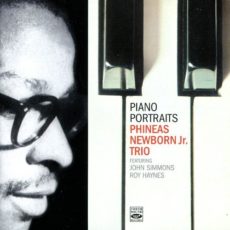
Much of the 1950s Simmons continued to work as a studio musician recording with Erroll Garner, Harry “Sweets” Edison, Art Tatum, and the Rolf Ericson/Duke Jordan band. One of his last associations was with Phineas Newborn in 1960 before ill health forced his retirement not long afterwards. Bassist John Simmons passed away on September 19, 1979 in Orange, New York.
Sponsored By

#preserving genius
More Posts: bass
Daily Dose Of Jazz…
Georges Arvanitas was born on June 13, 1931 in Marseille, France, to Arvanite Greek immigrants from Constantinople, Turkey. At age four he began studying piano and initially trained as a classical pianist. Influenced by Bud Powell and Bill Evans he switched to jazz in his teens.
At 18 he was called up for military duty and finding himself stationed in Versailles and his proximity to Paris, he was exposed to the city’s thriving postwar jazz culture. Soon he was moonlighting at clubs alongside American musicians such as Don Byas and Mezz Mezzrow. After completing his service, Arvanitas relocated permanently to Paris where he led the house band at the Club St. Germain before he graduated to the city’s premier jazz venue, the legendary Blue Note. There he played with Dexter Gordon and Chet Baker. As his notoriety grew, he became a leader and with bassist Doug Watkins and drummer Art Taylor recorded 3 A.M. in 1963. The trio would go on to win the Prix Django Reinhardt and the Prix Jazz Hot for the album.
Georges spent half of 1965 in New York City collaborating with saxophonist Yusef Lateef and trumpeter Ted Curzon on The Blue Thing and the New Thing for Blue Note. A year later he returned stateside on tour with trombonist Slide Hampton’s big band. A respected session player earning the nickname Georges Une Prise (One-take George) for his reliable efficiency and mastery and worked closely with Michel Legrand.
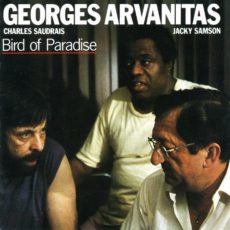
Best remembered for a series of LPs he cut with bassist Jacky Samson and drummer Charles Saudrais, the trio endured from 1965 to 1993. He was received the Chevalier des Arts et des Lettres award in 1985. Unfortunately his failing health forced him to retire from music in 2003 and two year later pianist and organist Georges Arvanitas passed away in Paris on September 25, 2005.

#preserving genius

Daily Dose Of Jazz…
Monika Herzig was born June 12, 1964 in Germany and studied piano in her childhood. After receiving a scholarship in 1987 from the pedagogical institute in Weingarten, Germany for a one-year exchange program at the University of Alabama. Arriving in the United States in 1988 with one suitcase and a guitar, she went on to complete her Doctorate in Music Education and Jazz Studies at Indiana University, where she is a faculty member.
She recorded with the jazz fusion group BeebleBrox and has produced four albums as leader of the Monika Herzig Acoustic Project. Peace on Earth was released locally in Indianapolis, Indiana in 2008 and was released nationally in 2009 on the Owl Studios label.
She was awarded 1994 Best Original Composition, Let’s Fool One by DownBeat, was a two times finalist with BeebleBrox in 1994–1996, was a winner with Oliver Nelson Jr., WTPI Winter Jazzfest Competition in Indianapolis, and in 2000, 2003 and 2005 was the recipient of the Individual Artist Grant from the Indiana Arts Commission. Pianist Monika Herzig continues to perform, record and tour.
Sponsored By

Voices From The Community
#preserving genius
More Posts: piano