

Daily Dose Of Jazz…
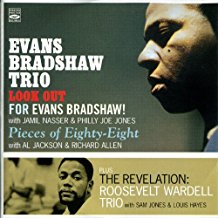
Jamil Nasser was born George Joyner on June 21, 1932 in Memphis, Tennessee and learned to play the piano from his mother as a child. He took up the bass at age 16 and as a student at Arkansas State University he led the school band. He played bass and tuba in bands while stationed in Korea as a member of the U.S. Army and following his discharge he played with B.B. King in 1955 and 1956.
Moving to New York City in 1956, Jamil played with Phineas Newborn, Sonny Rollins, Gene Ammons, Evans Bradshaw, Randy Weston, Herbie Mann, Charlie Rouse, Kenny Burrell, Mal Waldron, Red Garland and Lou Donaldson before the decade was over. He toured Europe and North Africa with Idrees Sulieman in 1959, then went to Paris, France and recorded with Lester Young. He briefly lived in Italy briefly from 1961 to 1962 during which time he recorded with Eric Dolphy, then returned to New York City and formed his own trio, playing for the next two years. In 1964 he began working with Ahmad Jamal, a relationship lasting until 1972. He closed out the rest of the decade playing with Al Haig.
The 1980s and 1990s saw Nasser performing on many sessions with among others George Coleman, Clifford Jordan, Jimmy Raney, Harold Mabern, Gene Ammons and Hideaki Yoshioka.
Double bassist, electric bassist and tubist Jamil Nasser, who never recorded as a leader but is also credited on some of Ahmad Jamal‘s recordings as Jamil Sulieman, passed away on February 13, 2010 in Englewood, New Jersey.
Sponsored By


#preserving genius
More Posts: bass
Daily Dose Of Jazz…
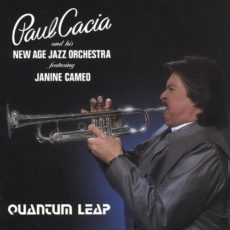
Paul Cacia was born on June 20, 1956 and at age 10 he took up playing the trumpet. A protege of the master Claude Gordon and private pupil of Cat Anderson, he was also mentored by Stan Kenton, Louie Bellson, and Don Ellis.
His professional career began as the lead trumpet for the Al Hirt Big Band in New Orleans, Louisiana and The Ray Anthony Orchestra. His first recording session was a duet with Stevie Wonder, leading to over a decade as a top call studio musician in Los Angeles, California. As a soloist and bandleader, his career began before sixty thousand people as the opening act for the rock group Chicago. Paul has also shared billing with Tito Puente and Pia Zadora.
Hard bop trumpeter, big band leader and producer Paul Cacia recorded for the Alexander Street, Outstanding and Happy Hour labels. He has produced The Mormon Tabernacle Symphony & Chorus, the Los Angeles Raiders Big Band and has been the personal manager to Peggy Lee. For over fifty years he has been known as one of the world’s greatest high note trumpet showmen until his retirement in 2016.

#preserving genius
More Posts: trumpet
Daily Dose Of Jazz…
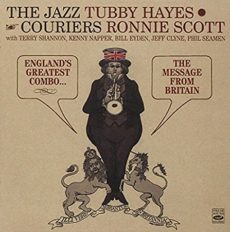
Philip Francis Bates was born June 19, 1931 in Brixton, London. After playing bass on regular gigs at London’s 51 Club with Harry Klein and Vic Ash throughout 1956, he joined The Jazz Couriers with Tubby Hayes and Ronnie Scott. After the Couriers disbanded,
Bates went on tour with Sarah Vaughan and played with the Lennie Metcalfe Band on the Cunard liner the RMS Mauretania. By the early 1960s he was working with Johnny Dankworth and Ronnie Ross, among others, before joining Dick Morrissey’s Quartet from 1962 until 1968. During that period he also played with the Harry South Big Band, as did the other members of the quartet, and with the Tony Kinsey Quintet.
In 1968 he played briefly again with Tubby Hayes and from 1968 on, he worked as a session musician, accompanying visiting American musicians such as Sonny Stitt, Jimmy Witherspoon, Judy Collins and Tom Paxton. He spent five years touring Europe with Stéphane Grappelli in the late 1970s and in the Eighties and 1990s he led his own trio. At 86, double bassist Phil Bates seldom performs, if at all.
Sponsored By
Voices From The Community
#preserving genius
More Posts: bass
Daily Dose Of Jazz…
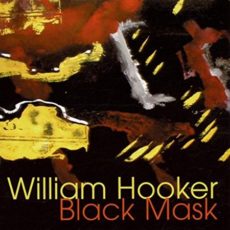
William Hooker was born on June 18, 1946 in New Britain, Connecticut. He began his music education singing in the church choir before receiving private drum lessons from the age of 10. He training continued as he played in the Nathan Hale Junior High, New Britain High School and Central Connecticut State College bands.
Starting off playing in rock and roll bands it wasn’t until he was sixteen that he got into jazz, learning standards from an older musician who taught him the essentials of leading a band. During his college years he listened to as many records and live performances as he could, gaining a wealth of knowledge. He also was a member of an organ trio as he matriculated through college and has since performed as a leader of many ensembles in San Francisco, California and New York City, leaning towards avant-garde, improvised and new music.
He has performed or recorded with Billy Bang, Thurston Moore, David Murray, David S. Ware, William Parker, Melvin Gibbs, Donald Miller, DJ Olive, Elliott Sharp, Malachi Thompson, Zeena Parkins, Lee Ranaldo, DJ Spooky, Rob Brown, Roy Campbell, Mark Hennen, Steven Bernstein, Roy Nathanson, Jason Hwang, Dave Soldier, Sabir Mateen, Glenn Spearman, Joseph Celli, Ellen Christi, Liudas Mockūnas, among many others.
Lauded by Downbeat, The Wire and the San Francisco Chronicle as an inspired and fluent drummer who gives long performances of consistent energy and is a kingpin of the free jazz world, drummer and composer William Hooker continues to perform, compose and record.
Sponsored By

www.whatissuitetabu.com
#preserving genius
More Posts: drums
Daily Dose Of Jazz…
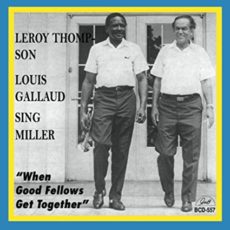
Sing Miller was born James Miller in New Orleans, Louisiana on June 17, 1914. He started out his career singing with the Harmonizing Browns Quartet and playing banjo, but in the late 1920s he switched to piano. He did solo freelance work and as an accompanist in New Orleans in the 1930s, playing with Percy Humphrey for a time.
Serving in the military during World War II, after his discharge he played with Earl Foster’s band from 1945 to 1961. During the 1960s he was a regular at Preservation Hall, working with Kid Thomas Valentine, Kid Sheik Colar, The Humphrey Brothers, Jim Robinson, and Polo Barnes. He did asolo tours of Europe in 1979 and 1981, and recorded two full-length albums under his own name, a 1972 effort for Dixie Records and one in 1978 for Smoky Mary.
Pianist Sing Miller, who was a longtime performer on the New Orleans jazz scene, passed away on May 18, 1990.
Sponsored By

#preserving genius
More Posts: piano