

Daily Dose Of Jazz…
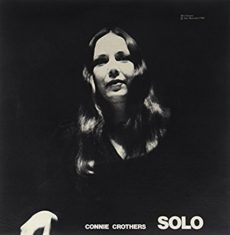
Connie Crothers was born on May 2, 1941 in Palo Alto, California and began studying classical piano at age 9. She went on to major in music and composition at the University of California at Berkeley. While matriculating her teachers put less emphasis on emotional expression and more on procedure, structure and compositional rigor, which did not find a likeable place in her mind.
She subsequently became a student of pianist Lennie Tristano. After Tristano’s death in November 1978, she founded the Lennie Jazz Foundation and recorded a memorial concert album in his honor.
Her debut recording Perception was released in 1974 on the Steeplechase label. She went on to record another twenty albums as a leader over the course of her career and four as a sidewoman. In 1982 she recorded the album Swish with drummer Max Roach for New Artists Records, a label she and Roach founded. She also recorded in groups with, among others, Bud Tristano, Linda Satin, Richard Tabnik and Cameron Brown.
Pianist Connie Crothers, who mainly played in the avant-garde and free jazz genres, passed away of lung cancer in Manhattan, New York City on August 13, 2016.

#preserving genius
More Posts: piano
Daily Dose Of Jazz…
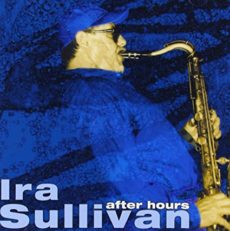
Ira Sullivan was born May 1, 1931 in Washington, D.C. and was taught trumpet by his father, saxophone by his mother and played both in the 1950s Chicago, Illinois with Charlie Parker, Lester Young, Wardell Gray and Roy Eldridge, garnering a reputation as a fearsome bebop soloist. After playing briefly with Art Blakey in 1956, he mastered alto and baritone saxophone before moving south to Florida and out of the spotlight in the early Sixties.
Sullivan was reluctant to travel which limited his opportunities to play with musicians of the first rank, but he continued to play in the Miami area, often in schools and churches. Hanging out with local younger players Jaco Pastorius and Pat Metheny, led to teaching and to broadening of his own musical roots to include the lessons of John Coltrane’s music and elements of jazz rock.
Adding flute and soprano saxophone to his armoury, Ira moved to New York City and in 1980 formed a quintet with legendary bop trumpeter Red Rodney where they worked on new material and fostered young talent to produce some fresh and stimulating music. He and his longtime friend and collaborator jazz pianist and vibraphonist Stu Katz, co-led a multi-night performance with at Joe Segal’s Jazz Showcase in Chicago.
Ira has performed and/or recorded with Red Rodney, Erin McDougald, Rob Block, Art Blakey, Frank Catalano, Kelly Sill, Charles Heath, Eddie Harris, Roland Kirk, Marc Berner, Lin Halliday, J. R. Monterose, Rita Reys and Billy Taylor and numerous others.
Trumpeter, flugelhornist, flautist, saxophonist, and composer Ira Sullivan has recorded as a leader and taught at the Young Musicians Camp each summer at the University of Miami passed away on September 21, 2020, of metastatic pancreatic cancer in his Miami, Florida home at age 89
Sponsored By
Voices From The Community

#preserving genius
More Posts: bandleader,flugelhorn,flute,history,instrumental,jazz,music,saxophone,trumpet
Daily Dose Of Jazz…
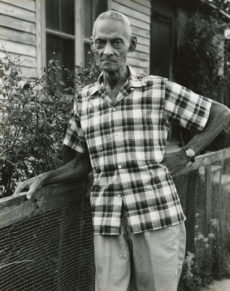
Lawrence Duhé was born April 30, 1887 in La Place, Louisiana. He played with Kid Ory in his youth, and followed Ory to New Orleans, Louisiana. There he played clarinet with Ory, King Oliver, Frankie Duson, and led his own band in Storyville.
Duhé moved to Chicago, Illinois in 1917 and his band became popular in the clubs and dance halls. They played in the stands at the notorious 1919 World Series. During the Roaring Twenties he led Sugar Johnnie’s New Orleans Creole Orchestra comprised of Lil Hardin, Sidney Bechet, King Oliver, Freddie Keppard, tubby Hall and Mutt Carey among others.
By the mid-1920s he had returned to New Orleans and for a time played with Armand J. Piron. After touring with the Rabbit Foot Minstrel Show, Lawrence worked out of Lafayette and New Iberia in Southwest Louisiana with such musicians as Evan Thomas and Bunk Johnson before retiring from music in the 1940s.
Clarinetist and bandleader Lawrence Duhé, passed away in Lafayette, Louisiana in 1960.
Sponsored By

www.whatissuitetabu.com
#preserving genius
More Posts: clarinet
Daily Dose Of Jazz…
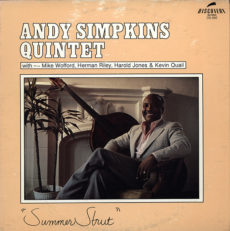
Andrew Simpkins was born on April 29, 1932 in Richmond, Indiana and first became known as a member of the group The Three Sounds, with which he performed from 1956 to 1968. After departing he joined George Shearing until 1974, and from 1979 to 1989 toured with Sarah Vaughan.
In the Seventies he settled in Los Angeles, California and became respected as a top-quality bassist and widely known as a solid and reliable studio musician.He performed with singers Carmen McRae and Anita O’Day, instrumentalists Gerald Wiggins, Monty Alexander, Buddy DeFranco, Don Menza, and Stéphane Grappelli, and many others.
He recorded three albums as a leader and also played acoustic bass on the 1997 Cover Album recording with Pat Boone titled In a Metal Mood: No More Mr. Nice Guy. Throughout his career not only did he record prolifically with The Three Sounds, he recorded with Kenny Burrell, Victor Feldman, Lalo Schifrin and Joe Williams.
Bassist Andy Simpkins passed away of stomach cancer on June 2, 1999 in Los Angeles.
Sponsored By

#preserving genius
More Posts: bass
Daily Dose Of Jazz…
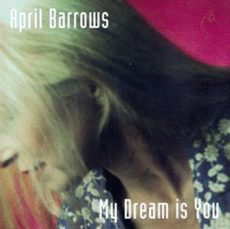
April Barrows was born on April 28, 1954 in Milford, Connecticut and grew up in the San Francisco Bay area where she moved with her family when she was five. The first music she heard came from listening to her mother’s collection of boogie-woogie 78s by such pianists as Meade “Lux” Lewis, Albert Ammons and Pinetop Smith. Singing along with the records and imitating the sounds she learned the formats. She became a record collector herself as a teenager and was always interested in older styles.
She played violin for a few years and in high school sang and played rhythm guitar. Barrows performed duets with a country singer, frequently performing roots music, and learned both steel guitar and electric bass. For a time she had a regular day job as a chemist but her main dream was to become a professional musician.
In the late ’70s she spontaneously quit her job and headed for Nashville where her talents were quickly recognized. She played electric bass in a variety of bands for the next six years working with the Judds’ first band, the Memphis Horns, Vassar Clements, and even Woody Herman. In 1985 she switched her focus and became a songwriter and while she had success writing country, bluegrass, and blues songs, her true love was writing and performing her own new swing tunes.
In addition to her jazz inspirations of Ella Fitzgerald, the Boswell Sisters, Mildred Bailey, Louis Armstrong, Ivie Anderson, Bing Crosby, Ruth Etting, Annette Hanshaw and Cliff Edwards, she listened to Bob Dylan, country music and rock of the ’60s. While continuing in the commercial field, she has recorded as a leader, her debut release of original swing tunes on My Dream Is You followed by her sophomore project All You Need Is the Girl. Vocalist, guitarist and composer April Barrows is currently working on a third project with clarinetist Evan Christopher and cornetist Duke Heitger, and continues to compose and perform.
Sponsored By

#preserving genius
More Posts: electric bass,guitar,vocal