

Daily Dose Of Jazz…
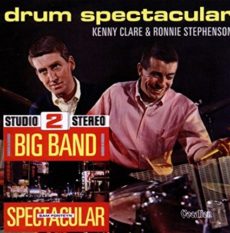
Ronnie Stephenson was born January 26, 1937 in Sunderland, England and as a boy wanted to become a tap dancer like his idol Gene Kelly, but he was persuaded by his father and his pianist brother to take up the drums. Already playing his first public gig the same week he took his first drum lesson at the age of 14, Ronnie was soon working with his elder brother Bob’s band, and then with the Ray Chester’s Sextet. Moving to Birmingham he joined the Cliff Deeley Band at the Tower Ballroom, and played for several months before going on the road.
At 16 he joined singer Lita Roza, a national star who had left the Ted Heath band to tour the variety theatre circuit as a soloist. The 10 months he spent with her garnered him great experience in the music business. Conscripted into the Army, Stephenson performed in The Royal Signals Band until he was demobbed in 1957. Having a close association with Ronnie Scott, he spent two years in Scott’s Quartet, playing the club and accompanying many visiting stars.
He toured Germany with Tom Jones in 1969 and then sat the resident drum chair with the Kurt Edelhagen Band after moving to Cologne, Germany with his wife and two children. After three years with Edelhagen, Ronnie teamed up with pianist Paul Kuhn in Berlin, Germany and toured all over Europe with a variety of bands and artists. He played on the Bond themes Diamonds Are Forever and You Only Live Twice and on other film scores, including Chitty Chitty Bang Bang. Stephenson joined the Theater des Westens Orchestra in Berlin from 1981 to 1995, and taught at the University of Berlin from 1990 to 1993. He retired from music due to poor health, settled in Scotland, and turned to golf as a restorative, becoming a member of Strathmore Golf Club.
Drummer Ronnie Stephenson, one of the most in-demand drummers of the British jazz scene, passed away on August 8, 2002. Over the course of his career he performed or recorded with Sonny Rollins, Stan Getz, Wes Montgomery, Zoot Sims, Quincy Jones, Paul Gonsalves, Johnny Griffin, Roland Kirk, Gerry Mulligan, Sonny Stitt, Barney Kessel, Benny Golson, Benny Goodman, Nelson Riddle, Ella Fitzgerald, Mel Tormé, Tony Bennett, Ronnie Ross, Stan Tracey, Ted Heath, Dick Morrissey, Terry Smith, Jack Parnell, John Dankworth, Tubby Hayes, Cleo Laine, Peter Herbolzheimer, Horst Jankowski, Paul Kuhn, Rolf Kuhn, Kenny Clarke, Victor Feldman, Heinz von Hermann and Hans Rettenbacher, among many others including pop stars Matt Monro, Engelbert Humperdinck, Cilla Black and Shirley Bassey.

Dose A Day-Blues Away

#preserving genius
More Posts: drums
Daily Dose Of Jazz…
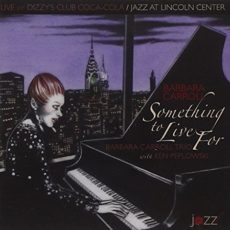
Barbara Carroll was born Barbara Carole Coppersmith on January 25, 1925 in Worcester, Massachusetts. She began her classical piano training at age eight, but by high school decided to become a jazz pianist. She attended the New England Conservatory of Music for a year, but left it as it conflicted with working for bands.
In 1947 Leonard Feather dubbed her “the first girl ever to play bebop piano”. The following year her trio, which featured guitarist Chuck Wayne and Clyde Lombardi on bass, worked briefly with Benny Goodman. Personnel changes would occur later with Charlie Byrd replacing Wayne and Joe Shulman replaced Lombardi. After Byrd’s departure, Carroll decided to have it be a drums, bass, and piano trio.
The 1950s saw Barbara and her trio working on Me and Juliet by Rodgers and Hammerstein. Then the decade saw her career ebb due to changing musical tastes and personal concerns. However, by 1972 she revived her career due to a renewed interest in her work. In 1975 she worked on an A&M recording session with Rita Coolidge and by 1978 she was touring with Coolidge and Kris Kristofferson. In the following two decades she became known as a cabaret performer.
She has recorded for DRG, Venus, Harbinger and Birdland record labels, with her latest of eight albums, Barbara Carroll Plays At Birdland, released in 2016. Pianist and vocalist Barbara Carroll, who received a MAC Lifetime Achievement Award and the Mary Lou Williams Women in Jazz Award, she continues to perform and record until she passed away on February 12, 2017.

Daily Dose Of Jazz..
Robert Coull Wellins was born January 24, 1936 in Glasgow, Scotland and studied alto saxophone and harmony with his father Max, and also played piano and clarinet when young. Joining the RAF as a musician playing tenor saxophone and after demobilization he played with a few Scottish bands before moving to London. England in the mid-1950s.
He was a member of the Buddy Featherstonhaugh quintet between 1956 and 1957 with Kenny Wheeler. Around that time Wellins also joined drummer Tony Crombie’s Jazz Inc., where he first met pianist Stan Tracey, and then joined Tracey’s quartet in the early 1960s.
In the mid-1970s he led his own quartet with pianist Pete Jacobsen, bassist Adrian Kendon and drummer Spike Wells. Ken Baldock, and then Andy Cleyndert in the 1980s would replace Kendon. He also worked with Lionel Grigson in 1976 and by the end of the 1970s he was a member of the Jim Richardson Quartet.
The 1980s had him forming a quintet with fellow saxophonist Don Weller and Errol Clarke on piano, Cleyndert and Wells, while the latter featured guitarist Jim Mullen and Pete Jacobsen on piano. Following this group, Wellins led various quartets that included pianist Liam Noble, bassist Simon Thorpe and Dave Wickens on drums. He renewed his association with Spike Wells and put together a quartet with pianist Mark Edwards and bassist Andrew Cleyndert.
In 2012, Wellins was the subject of a documentary film, Dreams are Free, directed by Brighton-based director Gary Barber, tracing the rise, fall and redemption of Wellins. It covered his addiction and depression, how he overcame it and rediscovered the desire to play after ten years away from jazz.
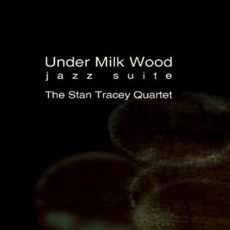
Tenor saxophonist Bobby Wellins, best known for his 1965 collaboration with Stan Tracey on jazz suite inspired by Dylan Thomas’s Under Milk Wood, passed away on October 27, 2016 after being ill for some years.
Take A Dose On The Road
#preserving genius
More Posts: saxophone
Daily Dose Of Jazz…
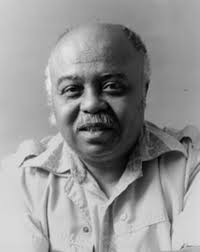
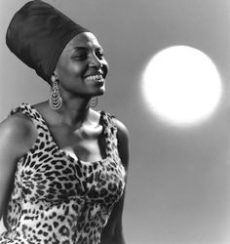
Photographer Chuck Stewart was born in Henrietta, Texas in 1927 and grew up in Tucson, Arizona. He received a Kodak Brownie camera as a present when he was 13 years old and used it that same day to take photos of Marian Anderson, who had come to visit his school. After they were developed, he was able to sell his photos for two dollars, making him a professional photographer from the first day he took pictures. He attended Ohio University as a photography major, one of the only two universities in the United States that offered the program at the collegiate level and the only one that would then accept African American students.
While in college, his friendship with photographer Herman Leonard helped him make connections with record companies in New York City. His clients would include Impulse, Mercury, Reprise and Verve, for whom he took cover photos of artists such jazz and R&B icons as Louis Armstrong, Count Basie, Ray Charles, Miles Davis, Ella Fitzgerald, Duke Ellington, Lionel Hampton, Rahsaan Roland Kirk, Charles Mingus, Eric Dolphy, Max Roach, Sonny Rollins, Sarah Vaughan and Dinah Washington, appearing on more than 2,000 albums and in publications including Esquire, Paris Match and The New York Times, as well as in the Encyclopedia of Jazz by jazz journalist Leonard Feather. He also worked for Chess Records in Chicago and its Argo subsidiary.
Stewart always tried to capture his subjects in as flattering a pose as possible, saying “I didn’t want them picking their nose or scratching their behind. It was important to me that I take a picture of a person in a manner that I thought they looked best.” During the 1950s and 1960s he was turned down for more lucrative advertising photography when agencies said that their clients “don’t have black people down here sweeping the floors” and would rather resign the account than accept him.
A widowed father of three children, Stewart has lived in Teaneck, New Jersey since 1965 in a home furnished with carpeting and fixtures that he received from some of his photography assignments. Despite having a piano in his home and exposure to many of music’s greats, Stewart remarked that he himself “couldn’t play Chopsticks”, even after years of lessons.
In conjunction with Stewart’s recognition with the Milt Hinton Award for Excellence in Jazz Photography, Jazz at Lincoln Center presented an exhibition titled Looking at the Music: The Jazz Photography of Chuck Stewart, which ran from November 2008 to February 2009. In 2014, 25 of Chuck’s photographs documenting the recording of John Coltrane’s A Love Supreme were inducted into the Smithsonian.
Photographer Chuck Stewart passed away on January 20, 2017.
#preserving genius
More Posts: photography
Daily Dose Of Jazz..
Fred Lee Beckett was born on January 23, 1917 in Nettleton, Mississippi and began playing horn in high school. He began playing the trombone professionally in Kansas City, Missouri in the 1930s. Soon after beginning his career he landed a job with Eddie Johnson’s Crackerjacks in St. Louis, Missouri.
He went on to play with Duke Wright, Tommy Douglas, Buster Smith and Andy Kirk over the next few years. Beckett spent time as well in a territory band with Prince Stewart and played a gig in Omaha, Nebraska with Nat Towles. Towards the end of the Thirties he played with Harlan Leonard.
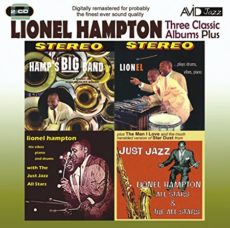
The early 1940s saw Fred performing and recording extensively with Lionel Hampton, and providing trombone support behind Dinah Washington recordings. Serving in the Army during World War II he contracted tuberculosis and passed away of the illness on January 30, 1946. He was twenty-nine years old.
Sponsored By
#preserving genius
More Posts: trombone