

Daily Dose Of Jazz…
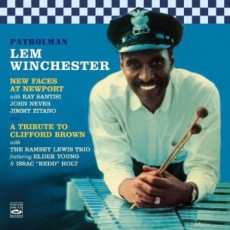
Lem Winchester was born in Philadelphia, Pennsylvania on March 19, 1928. He played piano, baritone and tenor saxophone before settling on the vibraphone. Formerly a police officer, he pursued music as a hobby in Wilmington, Delaware. He turned to music full-time after an appearance at the 1958 Newport Jazz Festival. He was soon working with some of the top names in jazz, making his debut recording with pianist Ramsey Lewis.
Winchester recorded a handful of albums as a leader, mostly for Prestige Records and made sideman appearances with Oliver Nelson, Jack McDuff, Shirley Scott, Benny Golson, Tommy Flanagan and Johnny “Hammond” Smith.
The career of hard bop vibraphonist Lem Winchester was cut short when he passed away from an unsuccessful demonstration of a trick with a revolver on January 13, 1961 in Indianapolis, Indiana. He was 32 years old.

Dose A Day-Blues Away
More Posts: vibraphone
Daily Dose Of Jazz…
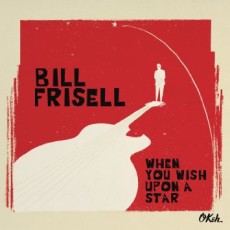
Bill Frisell was born William Richard Frisell on March 18, 1951 in Baltimore, Maryland, but spent most of his youth in the Denver, Colorado area. He studied clarinet with Richard Joiner of the Denver Symphony Orchestra as a youth, graduated from Denver East High School, and went to the University of Northern Colorado to study music. His original guitar teacher in Denver was Dale Bruning, then after studying with Johnny Smith and graduating from Northern Colorado, Bill went to Berklee College of Music and studied with Jon Damian and Jim Hall.
Frisell’s major break came when guitarist Pat Metheny was unable to make a recording session, and recommended Frisell to Paul Motian who was recording Psalm in 1982 for ECM Records. This led to his becoming ECM’s in-house guitar player, and worked on several albums. His first solo release was In Line, featuring solo guitar and duets with bassist Arild Andersen.
Frisell’s first group to receive much acclaim was a quartet with bassist Kermit Driscoll, drummer Joey Baronon and Hank Roberts on cello. Many other albums with larger ensembles were recorded with this trio as the core after the departure of Roberts.
In the 1980s he lived in Hoboken, New Jersey and his access to New York City had him active in the city’s music scene. He forged an early partnership with John Zorn, was a member of the quick-change band Naked City, and became known for his work in Motian’s trio, along with saxophonist Joe Lovano. By 1988 he moved to Seattle, Washington and in the early 1990s Bill made two of his best-reviewed albums: his survey of Americana with Have A Little Faith and This Land, a complementary set of originals.
Frisell has recorded with Jan Garbarek, Douglas Septemberon, Ryuchi Sakamoto, Rickie Lee Jones, Elvis Costello, Suzanne Vega, Arto Lindsay, Loudon Wainwright III, Vic chestnut, Van dyke Parks, Buddy Miller, Ron Sexsmith, Chip Taylor, Fred Hersch, John Pizzarelli, Matt Chamberlain, Tucker Martine and Lee Townsend among others.
He has branched out by performing soundtracks to silent films of Buster Keaton, provided music for his friend Gary Larson’s TV version of The Far Side, contributed music to the 2000 film Finding Forrester, and has won a Grammy in 2005. Over the past decade guitarist Bill Frisell, who also plays clarinet and tenor saxophone, has continuously performed, recorded and toured.
Take A Dose On The Road
More Posts: guitar

Daily Dose Of Jazz…
Jessica Williams was born on March 17, 1948 in Baltimore, Maryland. She began her music career young, taking piano lessons at the age of four and began classical training at the Peabody Conservatory of Music when she was seven. She moved to Philadelphia, Pennsylvania during her teens and began playing with the quintet of former Miles Davis drummer, the Philly Joe Jones.
In 1977, moving to San Francisco, California, she played in various house bands, such as Eddie Harris, Dexter Gordon, Tony Williams and Stan Getz. She also became the house pianist for the Keystone Korner. Over the course of her career Williams has recorded for Candid, Fantasy, Timeless, Concord, Jazz Focus, Hep and MaxJazz record labels.
Jessica began her own record label in 1997, called Red and Blue Recordings, to release her own original material. In addition, she established her own publishing company, JJW Music, and runs her own Internet CD mail-order business.
She is a three-time Grammy nominated pianist, was awarded a Fellowship from the John Simon Guggenheim Memorial Foundation for composition and has performed at the 2004 and 2006 Mary Lou Williams Women In Jazz Festivals at the Kennedy Center in Washington, D.C. Pianist and composer Jessica Williams continues to perform, tour and record.
Give The Gift Of Knowledge
More Posts: piano
Daily Dose Of Jazz…
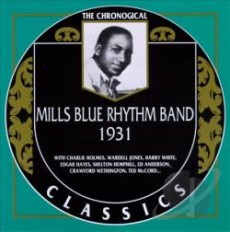
Shelton “Scad” Hemphill was born on March 16, 1906 in Birmingham, Alabama. While still in his teens when he played trumpet in the Fred Longshaw band that accompanied Bessie Smith on recordings in 1924–25. In 1924, at age 18, he enrolled at Wilberforce University in Ohio and was a member of Horace Henderson’s student band alongside the likes of Ted and Castor McCord.
Moving to New York late in the 1920s, he played with Benny Carter and Chick Webb before joining the Mills Blue Rhythm Band. He played with this group from 1931 to 1937, and then joined Louis Armstrong from 1937 to 1944. He followed with a five-year stint with Duke Ellington until 1949.
By the 1950s, he played occasionally in New York City but left music due to mounting health problems later in the decade.
Trumpeter Shelton Hemphill passed away in New York City on January 6, 1960 just two months and ten days before his 54th birthday. His demise was noted in the syndicated column of veteran music critic Ralph J. Gleason.
Put A Dose In Your Pocket
More Posts: trumpet
Daily Dose Of Jazz…
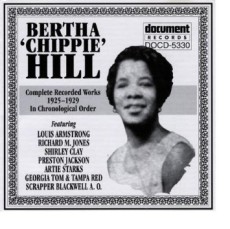
Bertha “Chippie” Hill was born on March 15, 1905 in Charleston, South Carolina, one of sixteen children. Her family moved to New York City in 1915 and she began her musical career working as a dancer in Harlem. By the time she turned 14 in 1919 she was working with Ethel Waters and while working a t stint at then popular nightclub Leroy’s, was given her nickname Chippie because of her young age.
Chippie performed with Ma Rainey as part of the Rabbit Foot Minstrels before establishing her own song and dance act and touring on the TOBA (Theater Owners Booking Association) circuit in the early 1920s. Settling in Chicago around 1925 she worked at various venues with King Oliver’s Jazz Band, first recorded with Okey Records and was backed by Louis Armstrong and pianist Richard M. Jones. She also recorded a vocal duet in 1927 with Lonnie Johnson, another duet in 1928 with Tampa Red in 1928. Over the course of four years from 1925 to 1929 she recorded twenty-three titles.
In the 1930s she retired from singing to raise her seven children, however in 1946 Bertha Hill staged a comeback in 1946 with Lovie Austin’s Blues Serenaders, recorded for Rudi Blesh’s Circle label and began appearing on radio, in clubs and concerts in New York, including the 1948 Carnegie Hall concert with Kid Ory. She sang at the Paris Jazz Festival, and worked with Art Hodes in Chicago.
Bertha “Chippie” Hill returned to New York City in 1950 and was tragically run over by a car and killed on May 7, 1950 at the age of 45.
Uplift Someone’s World
More Posts: vocal