

Daily Dose Of Jazz…
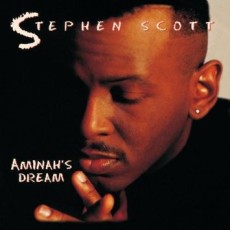
Stephen Scott was born March 13, 1969 in Queens, New York. He started piano at the age of five, and progressed rapidly to the point where he was taking private lessons at Juilliard at 12. Grounded in classical music, he was also exposed to reggae and salsa on the radio. It was in high school that he was introduced to jazz, giving Justin Robinson credit.
By the age of 18, Scott was playing in the Betty Carter band and soon began performing or recording with the likes of the Harper Brothers, Wynton Marsalis, Bobby Watson and Bobby Hutcherson.
Beginning in 1991, as a leader and solo artist, Stephen recorded a stream of mainstream albums for Verve and Enja record labels, using mixtures of fellow young lions Roy Hargrove, Craig Handy, Peter Washington, Christian McBride, Jeff “Tain” Watts, Lewis Nash and esteemed veterans like Joe Henderson, Ron Carter and Elvin Jones as sidemen. Henderson returned the invite on his commercial breakthrough Lush Life, the same year and also recorded with Freddie Hubbard and Sonny Rollins.
Jazz pianist Stephen Scott continues to perform, tour and record fusing his neo-bop music base with soul jazz tendencies with Latin rhythms.

Give A Gift Of Jazz – Share
More Posts: piano
Daily Dose Of Jazz…
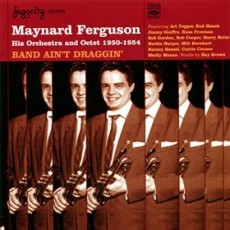
Willie Maiden was born William Ralph “Willie” Maiden in Detroit, Michigan on March 12, 1928. He began on piano at age five and started playing saxophone at 11. He spent most of his career playing in big bands, and while he copiously recorded as a sideman, he never led his own session.
Willie worked with Perez Prado in 1950 and arranged for Maynard Ferguson from 1952 into the 1960s. He played with Charlie Barnet in 1966, and played baritone sax in addition to arranging for Stan Kenton between 1969 and 1973.
As an educator, hard bop tenor saxophonist and arranger Willie Maiden who also played alto and baritone, taught at the University of Maine in Augusta until his passing on May 29,1976.
Inspire A Young Mind
More Posts: saxophone
Daily Dose Of Jazz…
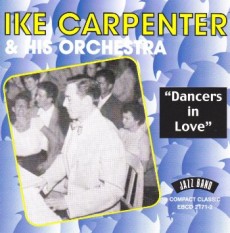
Ike Carpenter was born Isaac M. Carpenter on March 11, 1920 in Durham, North Carolina. He began performing on piano with bands at a very young age, in the mid-1930s. After graduating from college, he performed with a number of successful musicians, including Johnnie Davis.
In 1944, Ike worked briefly as a pianist in Boyd Raeburn’s first influential jazz group, then put together his first band, working gigs on the East coast. In 1947 he relocated to Hollywood where he formed a popular 12-man band that played primarily in the Los Angles area, but touring up the West coast as far as Canada.
By the 1950s, Carpenter left the band scene, and worked as an accompanist for Ice Capades performers. Late in the decade he briefly returned as a bandleader with small groups, before retiring to his hometown in North Carolina.
Recording for the Modern Records label, much of his music was arranged by noted jazz arranger and composer Paul Villepigue. Over the years he played and recorded with Lucky Thompson, Gerald Wilson, Ted Nash, and George Weidler among others. His band was featured in two Hollywood musical films in the 1950s, Rhythm and Rhyme and Holiday Rhythm. Bandleader and jazz pianist Ike Carpenter, popularly active in the post-World War II years on the West Coast, passed away on November 17, 1998 in his hometown of Durham. He was 78.
Dose A Day-Blues Away
More Posts: piano
Daily Dose Of Jazz…
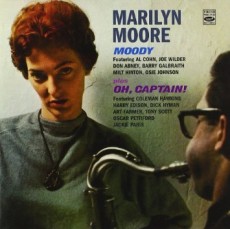
Don Abney was born John Donald Abney on March 10, 1923 in Baltimore, Maryland. He studied piano and French horn at the Manhattan School of Music, playing the latter in an Army band during military service.
After being honorably discharged from the Army he played in ensembles with Wilbur de Paris, Bill Harris, Kai Winding, Chuck Wayne, Sy Oliver, and Louis Bellson. He had a sustained career as a session musician recording with Louis Armstrong, Benny Carter, Oscar Pettiford, Ella Fitzgerald, Carmen McRae, Sarah Vaughan, Eartha Kitt and Pearl Bailey. His studio work included playing on a large number of recordings for more minor musicians such as Marilyn Moore, as well as on R&B, pop, rock, and doo-wop releases.
After moving to Los Angeles, California and settling in Hollywood, he worked as musical director for Universal Studios/MCA. He appeared as a pianist in the film Pete Kelly’s Blues behind Ella Fitzgerald. Additional credits include recording and arrangements for the film Lady Sings the Blues.
After touring with Anita O’Day in the 1980s he moved to Japan in the early Nineties and toured there with considerable success, and playing weekly at Tokyo’s Sanno Hotel. Upon his return to the United States in 2000, pianist Don Abney, who never recorded as a leader, passed away of complications due to kidney dialysis on January 20, 2000 in Los Angeles, California.
Inspire A Young Mind
More Posts: piano
Daily Dose Of Jazz…
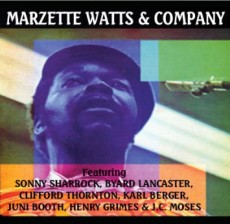
Marzette Watts was born March 9, 1938 in Montgomery, Alabama. Early in his life he played piano but did not play regularly in his teens. While studying at Alabama State College he became a founding member of SNCC, however, this association led to his being forced to leave the state at the behest of the governor.
He moved to New York, where he lived in a loft building on Cooper Square where Leroi Jones aka Amiri Barak lived and with whom he participated in the Organization of Young Men.. Watts returned to college in New York, completing his studies in 1962; and then moved to Paris to study painting at the Sorbonne and began playing saxophone for extra money.
Returning to New York in 1963, Marzette studied under Don Cherry, played in his loft and around the city with Juini Booth, Henry Grimes, J.C. Moses, and others. He also continued painting, producing work strongly influenced by Willem de Kooning. His loft attracted many established and up-and-coming musicians who would hang out there and play at parties, including Ornette Coleman, Cecil Taylor, Don Cherry, Archie Shepp and Pharoah Sanders.
By 1965 he devoted himself to music more fully, moved to Denmark for further study. Moving back and forth between Europe and New York City, while in New York he recorded an album for ESP-Disk and another for Savoy Records, and aught briefly at Wesleyan University.
He wrote film scores and did production work for his own films, eventually abandoning music to work in film and record production. Late in his life he moved to Santa Cruz, California but free jazz tenor and soprano saxophonist, bass clarinetist and sound engineer Marzette Watts passed away in Nashville, Tennessee of heart failure on March 2, 1998.
Dose A Day-Blues Away